
Why The Nature Stack: Land Can Do More Than One Thing
More and more, I find myself coming back to one idea: we need to stop thinking about land as a single-purpose asset. When managed with intention, land can do many things at once.
It produces food. It stores and filters water. It provides habitat. It stores carbon. It supports rural economies and communities. In some places, it produces energy. And some landscapes provide enormous value simply by remaining intact.
The problem is that we haven't been particularly good at quantifying all of those different forms of value—or creating economic systems that reward landowners for producing them.
We know how to put a price on a bushel of corn, an acre of farmland, a megawatt of electricity, or a pound of beef. We're much less effective at putting a value on an acre that absorbs floodwater, provides habitat, stores carbon, protects a watershed, or builds healthier soil. And when those benefits aren't valued, they are easy to lose.
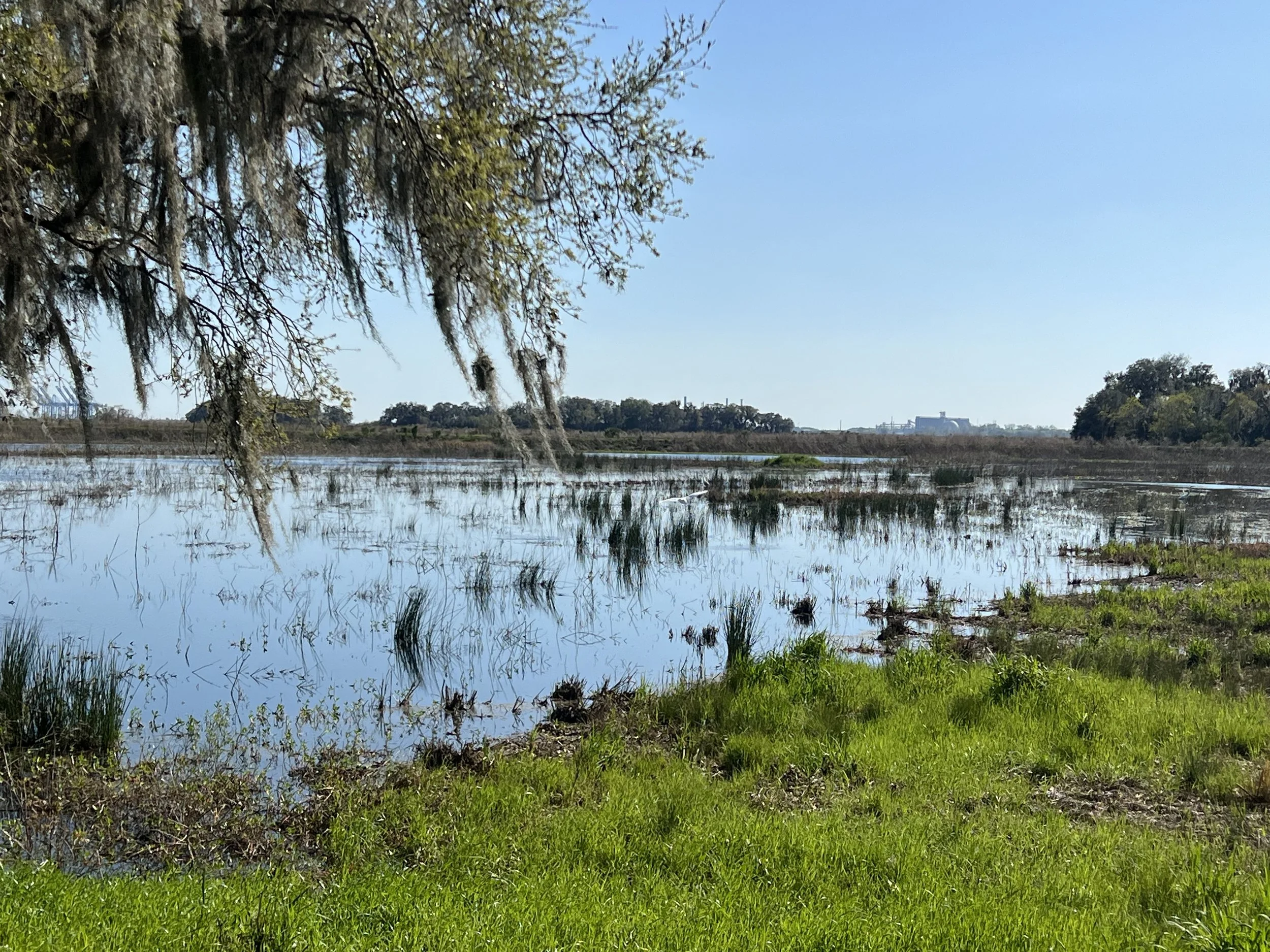
The challenge—and the opportunity
Over the next 20 years, we're going to have to figure out how to restore nature while facing increasing competition for land. Farmland values have risen dramatically. Some regions are confronting declining water supplies. Others are experiencing heavier and more frequent rainfall and flooding. Globally, food insecurity remains a serious challenge.
The United States is incredibly fortunate to have extraordinary agricultural and natural resources. Productive land capable of producing food will continue to be enormously valuable. But I don't think the choice is—or should be—between productive land and nature.
The opportunity is to build an economic system that recognizes all the things productive land can do. An acre can produce food and retain water. It can support agriculture and provide wildlife habitat. It can generate energy and support grazing. It can produce an economic return and store carbon.
And in places where the ecological value is especially important, conservation itself can be the productive use. These functions aren't separate from our ability to produce food over the long term. They're part of what makes that production possible.
Around the world, we've seen what happens when landscapes lose topsoil, vegetation and water function. Eventually, their ability to support people declines too. Here in the United States, we still have an enormous opportunity to change course—to restore function to our landscapes while continuing to produce the food, energy and economic activity our communities need.
What if we stacked the value?
For the last 15 years, many of the conversations I've found most interesting have ultimately come back to some version of the same question:
How do we get people to pay for nature? How do we create markets for ecosystem services? How do we make sure those markets actually support long-term stewardship?
How do we combine conservation with productive uses so restoration becomes economically attractive rather than something that constantly has to compete with them?
How do we stack public funding, private investment, agricultural revenue and ecosystem-service payments to make projects possible that otherwise wouldn't happen?
This is increasingly the work we're doing at Land Steward Partners: looking for all the different ways we can stack value and capital on land to make restoration and conservation economically viable.
And it's also the idea behind a new project I've been working on.
Introducing The Nature Stack
Today, I'm launching a new podcast called The Nature Stack.
The premise is intentionally broad. I want to have conversations with people across the entire land-use ecosystem: farmers and ranchers, conservationists, scientists, land trusts, investors, renewable-energy developers, food and agriculture companies, water practitioners, policymakers and the people building entirely new markets around nature.
Because there isn't going to be one model for restoring land. Some landscapes may combine grazing, wildlife habitat and carbon storage. Others might combine agriculture with renewable energy. Yet others may incorporate coral reef restoration with sustainable fisheries and ecotourism.
Some restoration projects may depend on public conservation funding layered with private investment. Some may be entirely publicly or privately funded.
And some places are simply too ecologically important to intensively use at all—but may provide tremendous economic value through flood protection, water storage, biodiversity or other ecosystem services.
We need to get much more creative about putting these projects together. We need to think about stacking capital as well as stacking value.
And we need to look outside our own corners of the conservation world for ideas. What can we learn from industries that have successfully scaled? What models being tested in Europe, Africa or Asia could be relevant here? What approaches are already working in communities across the United States that most of us simply haven't heard about yet?
That's what I want The Nature Stack to explore.
This isn't a doom-and-gloom podcast. It’s…surprisingly upbeat.*
There is tremendous urgency to this work. I feel it every day. But there are also incredibly exciting things happening.
People are building new markets. Farmers and ranchers are experimenting with different production systems. Scientists are giving us better ways to measure ecological outcomes. Companies are investing in water, carbon and biodiversity. Conservation organizations are testing new financial models.
There are stories everywhere about things that are actually working. I want this podcast to be a place to find those stories—to learn from each other, share ideas and hopefully give more people the confidence to try something new.
In some ways, this is also a return for me. Earlier in my career, I co-hosted a podcast called This Is Altitude with Allyson Sand and Michael Svedeman. We published 22 episodes in 2018 and 2019 exploring sustainability across a wide range of industries.
The old podcast was pre-AI and thus alot more work, so we took a break when life got busy.
It was a valuable experience because it helped me understand which questions I kept wanting to come back to. They were about food. Land. Agriculture. Conservation. And the people responsible for stewarding the landscapes all of us depend on.
The Nature Stack is much more focused on those questions. At its core, I'm interested in something pretty simple:
How do we scale the restoration of nature?
My hypothesis is that we do it by creating good outcomes for the people who depend on it—through financial, health, recreation, and resiliency outcomes.
Because we can't have conservation without people. And we can't have thriving communities without functioning landscapes. We need both.
Episode One: Solar, sheep and a family farm
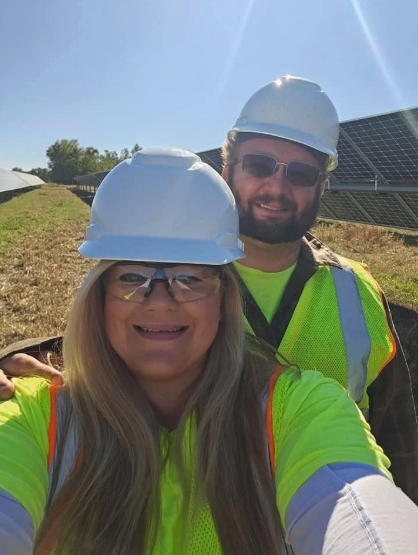
For the first episode, I'm talking with Brooke Watson of Illinois Solar Grazing. Brooke's story is almost a perfect example of why I wanted to create this podcast. She married into a multigenerational farming family and is now raising her own family while working in conservation and building a solar-grazing operation.
Her sheep graze vegetation underneath solar arrays—turning land being used to generate electricity into agricultural land at the same time. But the reality is much more interesting than simply putting sheep underneath solar panels.
We talk about the economics of raising sheep, the complexities of grazing solar sites, what it means to build a viable agricultural business while raising a young family, and why stewardship of the land matters to her family.
It's a story about energy. It's a story about agriculture. It's a story about conservation. But ultimately, it's a story about people, land, food and community. It's a nature stack.
A Personal Connection for Me
That's why I wanted Brooke to be the first guest. There’s also a personal interest for me in Brooke’s story. She’s a mother, like me. She is balancing all that comes with being a mom and working a full-time job and working for a better future to leave for our kids. Too often, we are expected to leave our home life at home and compartmentalize ourselves in our professional career. I’m kind of done with that—I’m fortunate to be a mom of three kids and it is a huge part of the reason I do what I do professionally. I care deeply about all of the children that are going to be building lives over the next several decades. This reality connects me to the work, so I talk about it with Brooke and I’ll keep talking about in future conversations. It doesn’t matter if you are a mother or a parent at all—this show is for anyone who cares about the world we are leaving for the next generation.
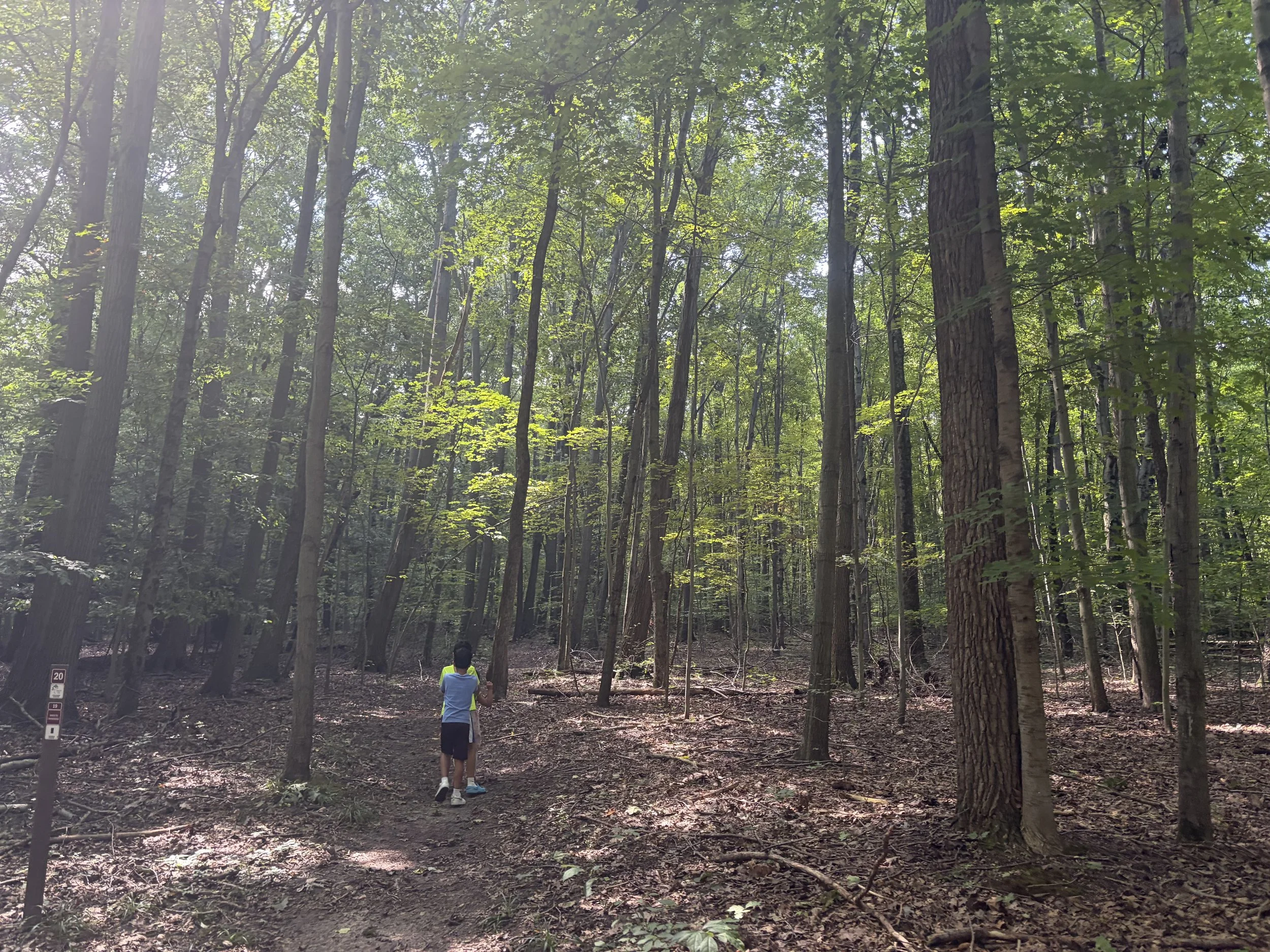
Hiking through the woods is one of the main ways we enjoy nature with our kids—as long as you prepare yourself for light complaining and have snacks handy. Here they are at the Jens Jensen Nature Preserve this summer.
There is an enormous amount of work ahead of us if we're going to restore our landscapes over the coming decades. But I also think we have more tools, more ideas, more capital and more people interested in solving these problems than we've ever had before.
It feels like there's momentum. I want to use The Nature Stack to help build on it.
The first episode of The Nature Stack is out today. I hope you'll listen, subscribe, and follow along.
*This is an early 2000s movie reference that informs my work—do the hard work, but try to do it with joy and humor.