
No Net Loss Doesn’t Go Far Enough. We Also Need a Framework for Net Gain.
Some people who read my article last week—especially those who work in the wetlands industry—might reasonably ask: Why don’t we just strengthen the Clean Water Act, provide greater clarity around which wetlands and waters are federally protected, and actually enforce those protections?
They’re not wrong.
We absolutely should strengthen and consistently enforce protections for wetlands and other aquatic resources. We should all be motivated to reduce the continued draining, filling, and destruction of wetlands.
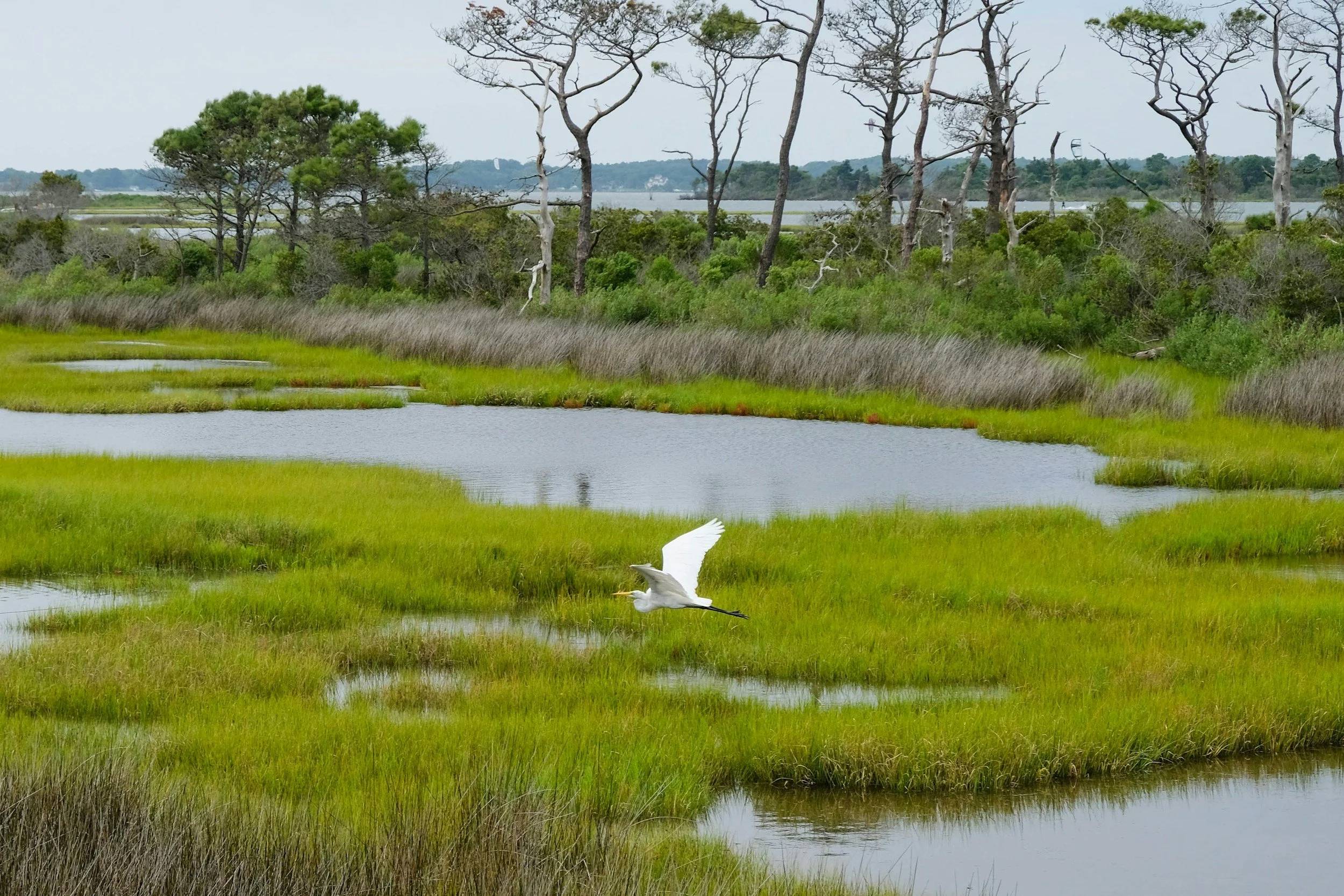
Photo Credit: @saralea
Wetlands are critical infrastructure.
They store floodwater. They filter pollutants and improve water quality. They can support groundwater recharge and water availability. They provide space for rivers and floodplains to accommodate high-water events. And, of course, they provide immense biodiversity benefits and critical habitat for fish, wildlife, and migratory birds.
Sometimes we discount how much wildlife matters to us—especially those of us in cities. But we hunt that wildlife. We take vacations to go see that wildlife. We tell stories to our children about that wildlife. And as wildlife migrates across enormous stretches of agricultural land, grasslands, and arid landscapes, wetlands provide critical places to stop, feed, and rest.
The Clean Water Act created an important federal framework for protecting the nation's waters. But the extent of that protection depends in part on which waters are considered “waters of the United States,” or WOTUS, and therefore fall within federal Clean Water Act jurisdiction.
During my time working in the wetland mitigation industry, I saw tremendous value in the regulatory and mitigation framework that grew out of the Act. But I also came to believe that it doesn't go far enough.
Mitigation solves a specific problem
The wetland mitigation market was designed primarily to compensate for permitted impacts to aquatic resources. If a project damages a regulated wetland or stream and mitigation is required, the developer may be able to purchase credits from a mitigation bank or otherwise compensate for those impacts.
That framework has created a real market for ecological restoration. But the buyer is only there because of a regulatory obligation.
What happens when a community wants to restore wetlands that disappeared decades ago because it needs more flood storage today? What happens when a municipality wants to invest upstream to improve water quality? Or when a corporation wants to invest in the resilience of a watershed that supports its facilities or supply chain?
Those buyers may not have a new permitted wetland impact to offset.
Technically, they might be able to support restoration in other ways, including purchasing available credits in some circumstances. But mitigation credits weren't designed around these buyers' needs. The project may be in the wrong location. The ecological outcomes represented by the credit may not correspond to the service the buyer needs. Or mitigation credits may simply be an unnecessarily expensive mechanism for achieving a different objective.
We need another way to value and pay for the ecosystem services nature provides.
Mitigation ensures no net loss. We need more investment to enable net gain.
This distinction matters.
Better wetland protection and enforcement of mitigation requirements can help prevent us from making the problem worse. And Congress needs to act to provide greater statutory clarity around which wetlands and waters are protected under the Clean Water Act, rather than leaving the scope of federal jurisdiction to repeatedly shift through administrative rulemaking, litigation, and court decisions.
But even strong protection of remaining wetlands doesn't automatically restore what we've already lost.
Across the country, aquatic systems have been heavily altered. Wetlands have been filled and developed. Others have been drained for agriculture. Streams have been channelized. Floodplains have been disconnected. Drainage systems have fundamentally changed how water moves across landscapes.
We cannot solve that legacy simply by doing a better job protecting what remains.
If we want to restore some of what has been lost, we need an economic mechanism that rewards the creation of new ecological infrastructure—not only the mitigation of new damage.
Build a market for ecological infrastructure
That means developing a framework through which we can qualify, measure, invest in, and develop ecological infrastructure projects outside of the traditional mitigation market.
That doesn't mean lowering the bar.
The outcomes should still be measurable. They should be verifiable. The underlying assumptions should be based in science. Projects need appropriate durability, monitoring, and long-term stewardship.
But they don't necessarily need to follow exactly the same structure as a regulatory mitigation project.
And the capital stack can be much broader.
Existing conservation programs through USDA and NRCS could contribute where they accelerate restoration. Municipalities could invest where projects provide flood-risk reduction or water-quality benefits. Corporations could participate where watersheds are important to their operations or supply chains. Private capital could fund projects where reliable revenue streams can be attached to measurable ecological performance.
And restoration doesn't need to happen exclusively on private land. Public and state lands contain degraded water resources too, and many land managers simply lack sufficient restoration funding.
A broader ecological infrastructure market could create more flexibility around both who pays and how projects are procured and financed.
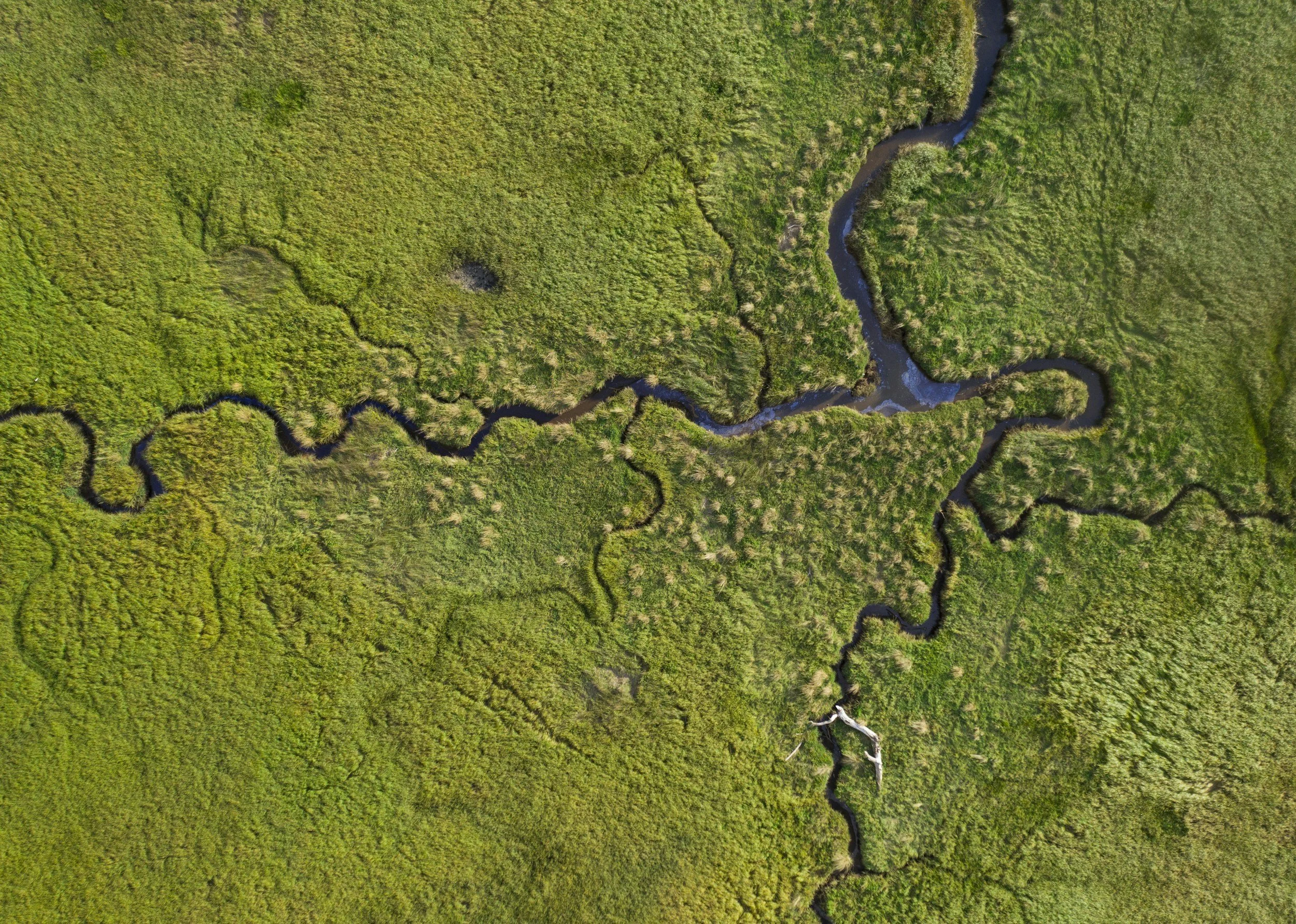
Photo Credit: @dmey503
We should borrow what works
We don't need to reinvent everything. The wetland mitigation industry has already taught us a great deal about how to turn ecological outcomes into something that can be financed and transacted. We can learn from its approaches to durability, enforcement, long-term stewardship, watershed-based planning, crediting, and verification. But the market we're trying to build has a different purpose.
Mitigation asks, essentially: How do we compensate for a new impact?
Ecological infrastructure asks a different question: What ecological function does a watershed need, where do we need it, and who benefits enough from that function to help pay for it?
Those are complementary markets.
We need strong enforcement of the Clean Water Act and durable protection for existing wetlands and waters. And we need a mechanism that makes it economically rational to restore wetlands, floodplains, streams, and other natural infrastructure that we've already lost.
One keeps us from digging the hole deeper. The other helps us climb back out. If we want a more resilient water system, we need both.