
Rewilding and Food Production—We Need Both.
In the last few years, my imagination has been captured by stories of rewilding around the world. There is the story of the Oostvaardensplassen in the Netherlands, a huge rewilding project (over 13,000 acres) in one of the world’s most densely populated countries. This strategy was originally deployed for flood relief, but through the reintroduction of large native herbivores, the reserve has seen the return of native and rare bird species and other wildlife.
There is also Isabella Tree’s beautiful book Wilding which describes the 3500-acre historic Knepp Estate, originally a hunting park for English royalty and most recently, an operational dairy farm that was intentionally returned to nature over the last 20 years.
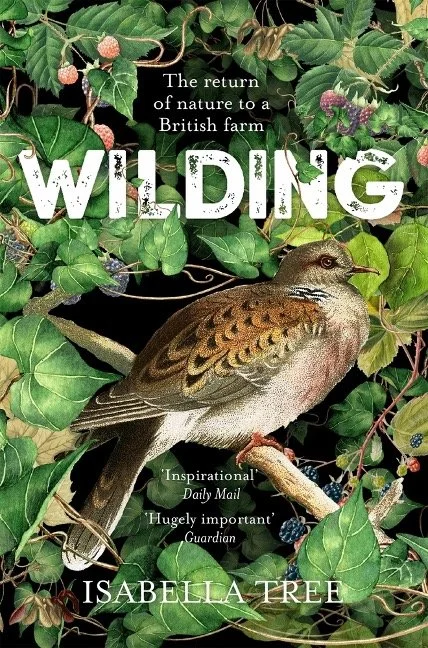
A Must Read for any aspiring nature-minded farmer, or regenerative agriculture-minded consumer
In their efforts to give nature space to regenerate, they have seen a return of native bird species, including the imperiled turtle dove, regrowth of oak trees that require an open canopy to thrive, and clear signs that biodiversity can return even where it had been completely suppressed. One of the biggest reasons for the turtle dove’s decline—removal of 100,000 miles of hedge rows across England in the name of maximizing food production since 1950. These thorny hedge rows provided safe nesting habitat and their primary food source during the nesting season. It wasn’t removal of a single pristine “wild” habitat—it was the removal of hundreds of thousands of micro habitats across Britain’s farms.
Everyone in the US seems to know the story of returning wolves to Yellowstone National Park and how that single species reintroduction dramatically reshaped forests and rivers for the better (the beavers’ return also played a significant, although less well known, role). These stories highlight how resilient nature is—how quickly it can return if we give it the space and even better, a gentle push.
These are just a few of the many examples of “rewilding” taking hold across the world, and they give me hope that we haven’t yet tipped past the point of no return ecologically.
At the same time, we need to consider the effect of “leakage”, which refers to the concept that we might “rewild” or restore certain regions, particularly in abandoned or degraded farmland, only to shift the destruction of nature elsewhere in the world to replace the production of food or other goods. As an example, we remove cows from landscapes in the US so that waterways and forests can recover, but then import beef that was fed soy grown in deforested regions of the Amazon.
Leakage is incredibly hard to trace and establish causality, but it is an unavoidable reality of the global supply chain. This inevitable connection between nature and food/fiber production is one we ignore at our own peril. As populations become increasingly city-centric, leaving rural areas less populated and typically producing less food, it makes sense that farmland will be abandoned on the fringes and nature can reestablish. But we can’t just trust that it is on balance a good thing—we need to also think about where our food comes from and make sure that we are building resilient food supply chains in areas that are already disturbed—and shifting that production to systems that co-exist with nature.
If we rewild the northern hemisphere because we import much of our food from elsewhere, but plunder tropical regions and the southern hemisphere to grow that food, we lose the fight on climate change, on global biodiversity loss, and on social progress for many regions. We are all responsible for not just what we grow and produce in our own country, but what we consume. We cannot rewild our backyard in the name of sustainability and then source products from other parts of the world that are destroying biodiversity.
While we obviously cannot know what is happening in every country or dictate global sourcing, we can focus on building self-sustaining ecosystems and resilient food supply chains in our own “backyard”. At Land Steward Partners, we aren’t trying to eliminate food production in the name of conservation. We are working with land stewards who produce better food while also restoring nature. The fact that this is not only possible, but more economically profitable is incredibly exciting. Bison are the epitome of this thesis—we can restore overgrazed and degraded landscapes through regenerative rotational grazing, while producing one of the healthiest protein sources on the planet. We can produce nutrient dense food and provide habitats for migrating waterfowl. We can provide livelihoods for rural ranchers and store carbon in soils.
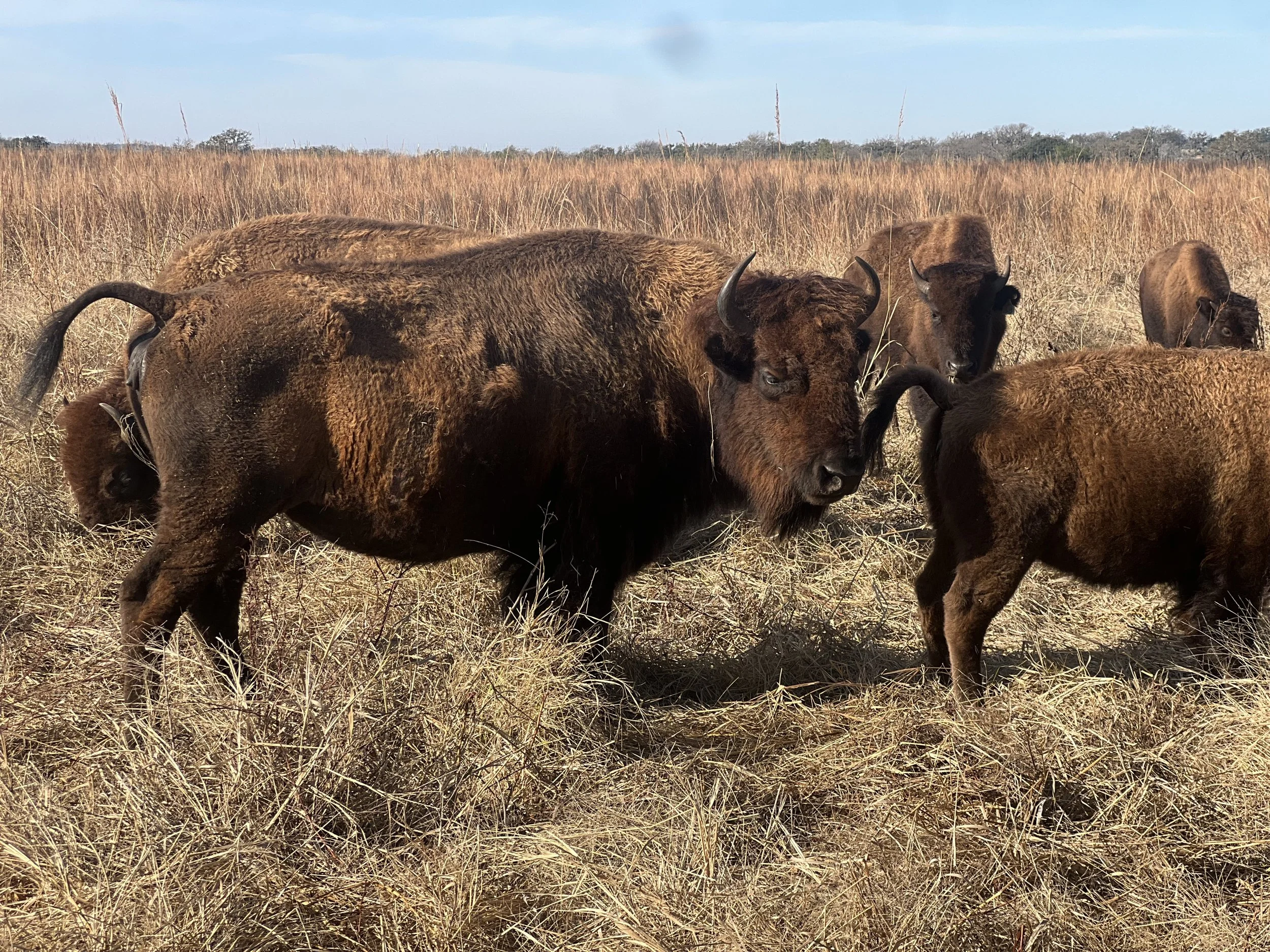
Bison at Roam Ranch in Fredricksburg, TX (an Audubon Certified Bird-Friendly Ranch)