
Making Fast Friends in the Regenerative Farming Community
Finding Common Ground from the City to the Farm
Seeking Out Farmers to Understand Farming
Seems obvious that if you want to understand farming, you would go talk to a farmer. But as someone who lives in downtown Chicago, grew up in the suburbs of St. Louis, and rarely crossed paths with farmers in my day-to-day life, finding this opportunity in 2018 for me was more elusive than you might imagine.
As uncomfortable as it can be to go to an event where I know no one, I often have to go anyway in the career I have chosen. Luckily, I have found that when I am willing to be vulnerable and venture outside of my comfort zone, I almost always meet people that end up sparking creativity and incredible partnerships. On a cold Chicago day in March 2018, I met my friend Will for the first time at the Good Food Expo. It was a Friday and I had taken the day off work to attend the event, since it had little relevance to my actual job at the time and I thought my boss might laugh if I asked to go on company time/dime. My day job was working for a renewable energy developer, supporting the environmental permitting for utility scale wind and solar projects in the Great Plains and Western US. I spent most of my days reviewing biological reports about birds, big game, and wetlands that existed in the potential or operational wind and solar projects and meeting with state and federal wilding permitting agencies. My company used this information to determine setbacks and other strategies to minimize impacts to those natural resources from the construction and operation of an energy project. What did this have to do with the Good Food Expo? Well, nothing, if you asked my employer. But for me, I saw the connection—almost all of these energy projects were built on farms and ranches.
As I reviewed report after report on these rural farms, I couldn’t help noticing that there seemed to be a lot of wildlife in these places.[1] I also came to appreciate that farms and ranches make up most of the land use in the US (~880M-1B acres or ~30-40% of land in the US). This conflicted with preexisting narratives in my head—1. that “real” wildlife lives only in “wild places” and 2. farms were dead zones devoid of wildlife habitat. I had read articles and books describing modern farms as a major source of carbon emissions, degraded water quality, topsoil erosion, and loss of habitat. How did this equate with what I was seeing in these reports? I needed to square these two realities in my head, which led to more reading—about the history of farming in the US, regenerative agriculture, and ultimately, seeking out opportunities to talk to farmers in real life…at the Good Food Expo.
I couldn’t remember the exact setting, but Will remembered we met at the end of day happy hour. He grabbed a beer and I sat down at his table like a creep to ask annoying questions of a stranger! When he asked what brought me to this event, I shyly admitted that I was interested in regenerative agriculture—knowing I was way out of my depth. If anyone there wanted to call me out for attending a conference about something I knew very little about, they would have been totally reasonable to do so. But lucky for me, that’s not really the vibe of the regenerative agriculture community. Instead, Will was thrilled to hear that I was interested and believed in regenerative agriculture. He was eager to tell me about his farm, his recent investment in an organic spirits distillery, and his practical experience managing a regenerative organic farm. It was the beginning of a friendship that’s going on ten years, fueled by our shared curiosity about how to bring more of this positive land stewardship to reality.
A Leader in Regenerative Organic Farming at Scale
Will is a farmer from Paxton, Illinois, a small town in Ford County—about 110 miles from downtown Chicago. Will’s family owns 480 acres, all of which is organic and utilizes the classic regenerative cropping practices (i.e., diverse crop rotation, cover cropping, integration of animals to build soil fertility, and no-till) and then some.
The farm wasn’t always certified organic—the official conversion happened in the early 2000s, under the management of Will’s parents (more here about Will’s parents). But the farm had always stayed close to the regenerative practices that used to be standard farming practice, before the “green revolution”. His grandfather and uncle utilized mostly organic practices to grow corn, oats, and hay, but began to supplement with the use of pesticides, herbicides, and fertilizers when these chemical additives were introduced in the 50s. Luckily for Will’s family farm, however, these foundational practices were never abandoned, and when the National Organic Program finalized organic regulations in 2000, Will’s family saw an opportunity which aligned with their personal dislike for using chemicals on their farm. Will’s parents bought an 80-acre field to connect two separate parcels of family land that had been separated by a conventional farm and co-founded the Midwest Organic Famers Co-op. The Glaziks saw an opportunity to build on what they were already doing and access a value-added organic market.
Will’s personal story is particularly compelling not only because he is the second generation of a profitable regenerative organic farm, but also because he has continued to diversify his farm through value added products and is actively sharing his learnings so that others can benefit from his experience.
Will and his brother farm 800 acres together, 480 acres of which he rents from his parents, and the rest is rented from other landowners. His favorite crop to grow is corn—as he describes it, the most beautiful crop there is. But a regenerative farm requires a diverse crop rotation, which means he also grows soybeans, wheat, oats and rye.
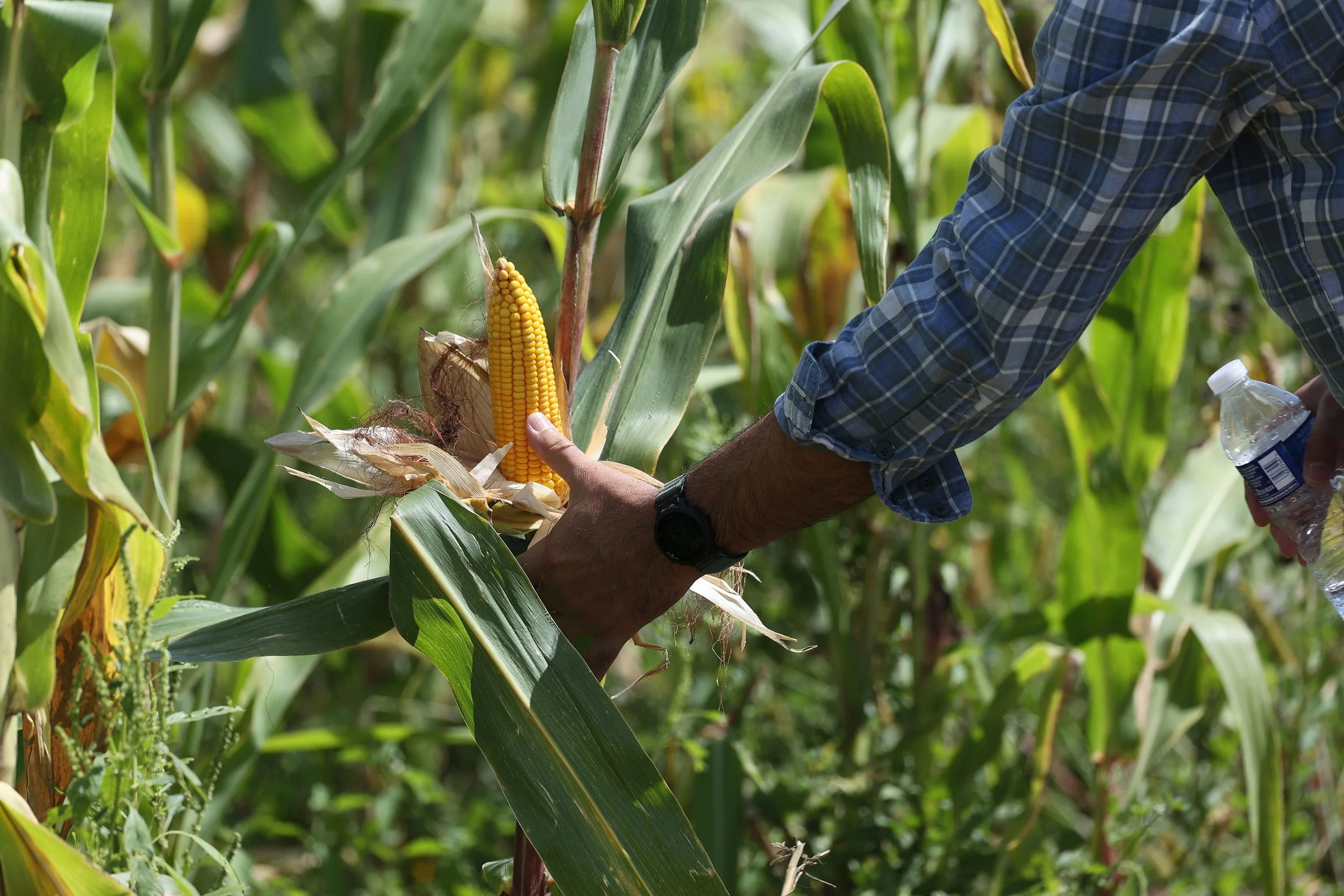
Photo: Corn ready for harvest on Will’s farm.
Will partners with a neighbor to lease some of his land to grow row crops, and as part of their partnership, his neighbor runs his cows through Will’s farm to graze on crop residue and cover crops. Will’s dad also rotates his herd through some of the fields, providing natural fertility and building soil organic matter the old-fashioned way (and practically free for Will). This reduces or eliminates the need for artificial inputs like chemical fertilizer. Will’s wife is a veterinarian, which is an amazing skillset to have around a farm with livestock!
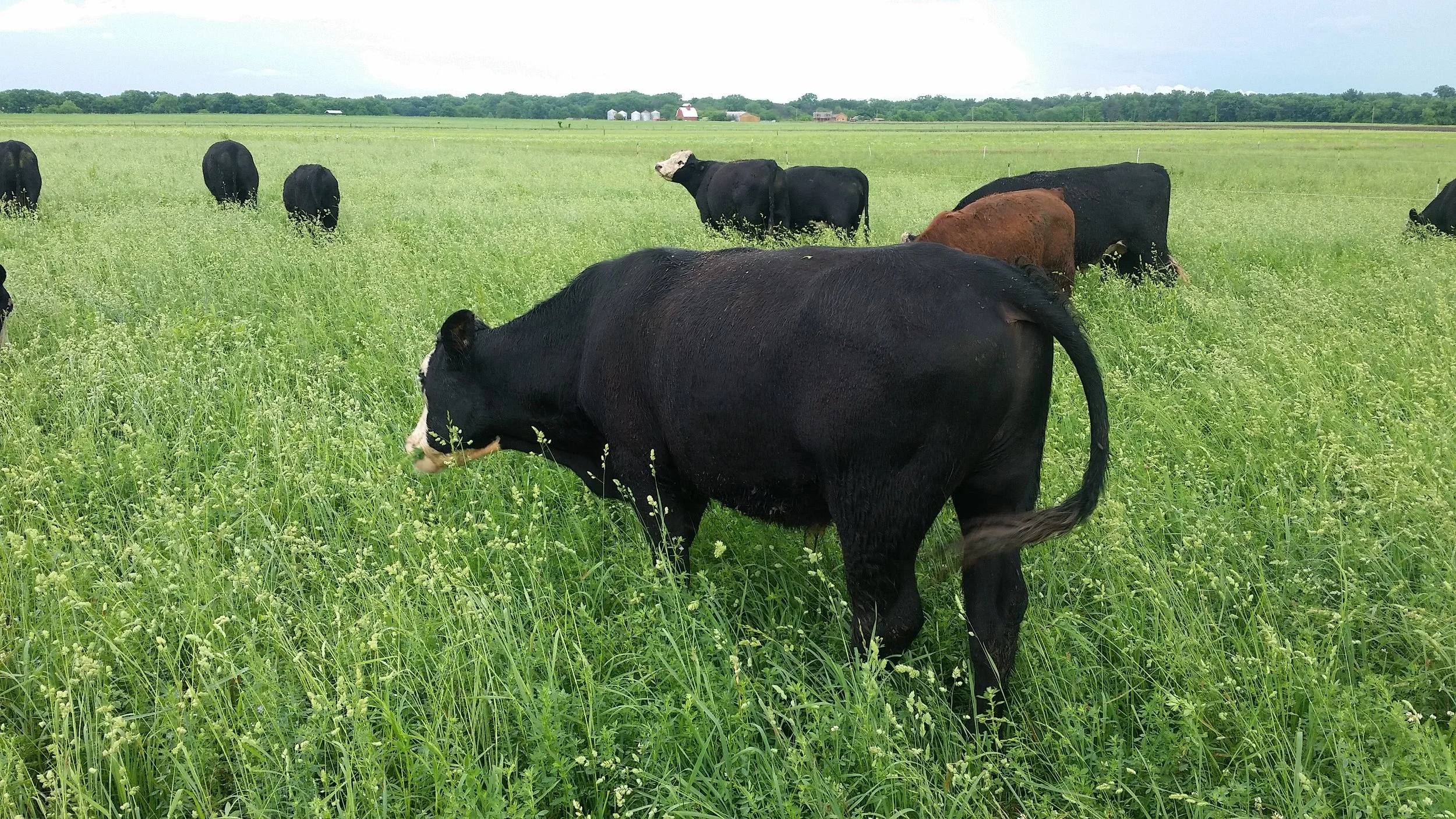
Photo: Cows play their role fertilizing the land on Cow Creek Organics and providing meat for the family.
On top of these traditional crops, Will worked with NRCS to plant a mix of perennial trees and shrubs in his organic buffer. Every organic farmer needs a 25-foot edge-of-field buffer to account for drift spray from conventional neighbors. In this buffer, Will must follow organic practices, but he cannot sell these crops as “organic” in case they have residual chemicals from his neighbors’ farming operation. Many farmers just plant corn or beans in this acreage and sell it for the commodity market price—if it grows under these suboptimal conditions, maybe even losing money. But for Will, this presented another opportunity for diversification. He planted a variety of species in his buffer (hybrid poplars, white oaks, willows, hickory, and aronia berries). The perennial tree buffer helps slow down water as it drains from Will’s fields, provides habitat for wildlife, and filters any excess nutrients that might run off the fields. Financially, as a worst-case scenario, Will has created a wind break, a new high value crop (aronia berries), and a timber harvest in the future. Best case scenario, he has all that and he can use the white oaks for an “estate label” for his other business, Silver Tree Beer & Spirits.
Building in a Captive Buyer & Higher Margin Products
In 2017, Will co-founded the distillery with his siblings in Paxton, which sells whiskey, vodka, and gin made from organic regenerative grains grown by his brother Dallas and him. His other brother Clayton manages the taproom, and his sister Abby manages events and marketing.
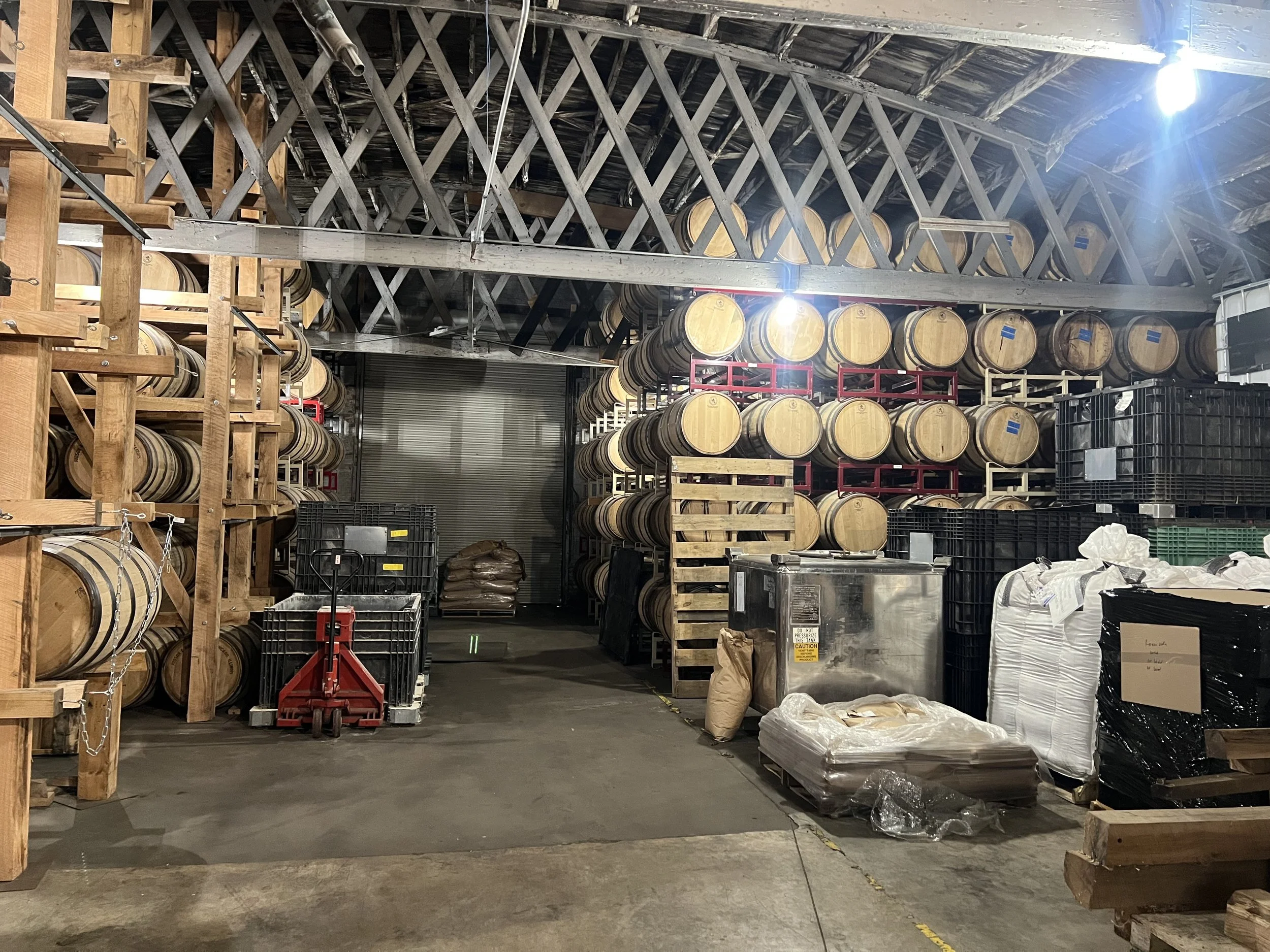
Photo: Barrels of Silver Tree product in the Distillery in Paxton, IL.
By creating the distillery, the family has developed a built-in end user for its grain, with additional revenue to be made from selling the spirits and beer. I was fortunate to attend a dinner hosted at Silver Tree and the Land Connection in October, and to spend the day trying my hand at bottling whiskey. For my Chicago friends, you can pick up some Silver Tree at Binny’s. Sorry in advance if you get a bottle with a lopsided label…
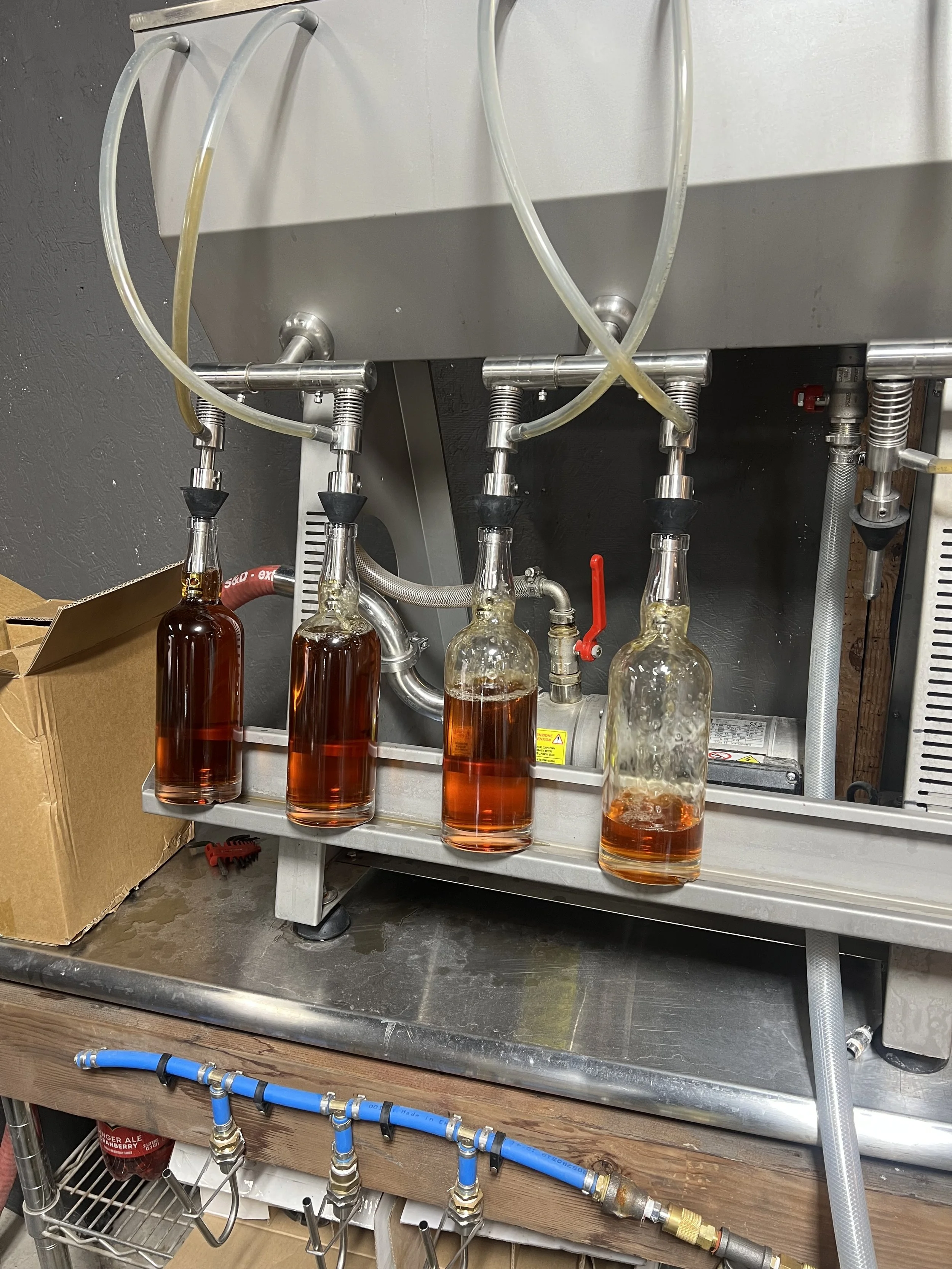
Photo: Bottling whiskey at Silver Tree.
It’s Not Scalable, but it’s Highly Replicable
On top of farming and the distillery, Will is a regional markets consultant for the Rodale Institute, an agricultural research and education nonprofit that furthers the growth of organic regenerative agriculture across the US. One of Will’s responsibilities in this role is hosting and facilitating events to educate farmers on new perennial cropping strategies, like those he has employed on his own farm.
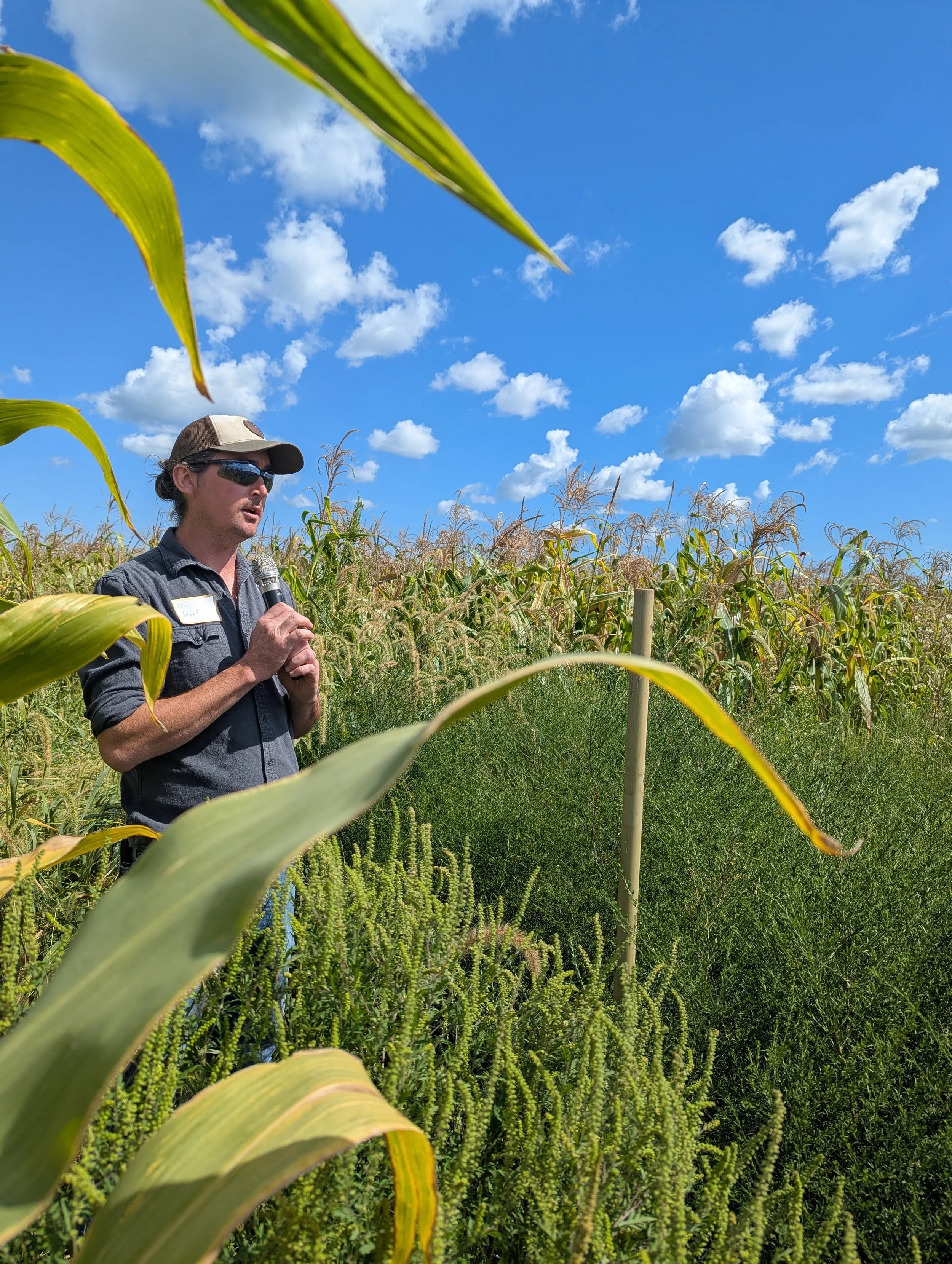
Photo: Will leading a farm visit at Cow Creek Organics.
After the conference in March 2018, I visited Will’s farm that fall and brought along some other friends that owned a family farm in the Driftless and were interested in organic farming. Will later helped them transition 230 acres to organic in partnership with local farmers. This is just one example of Will sharing his expertise with others to enable more organic regenerative farming.
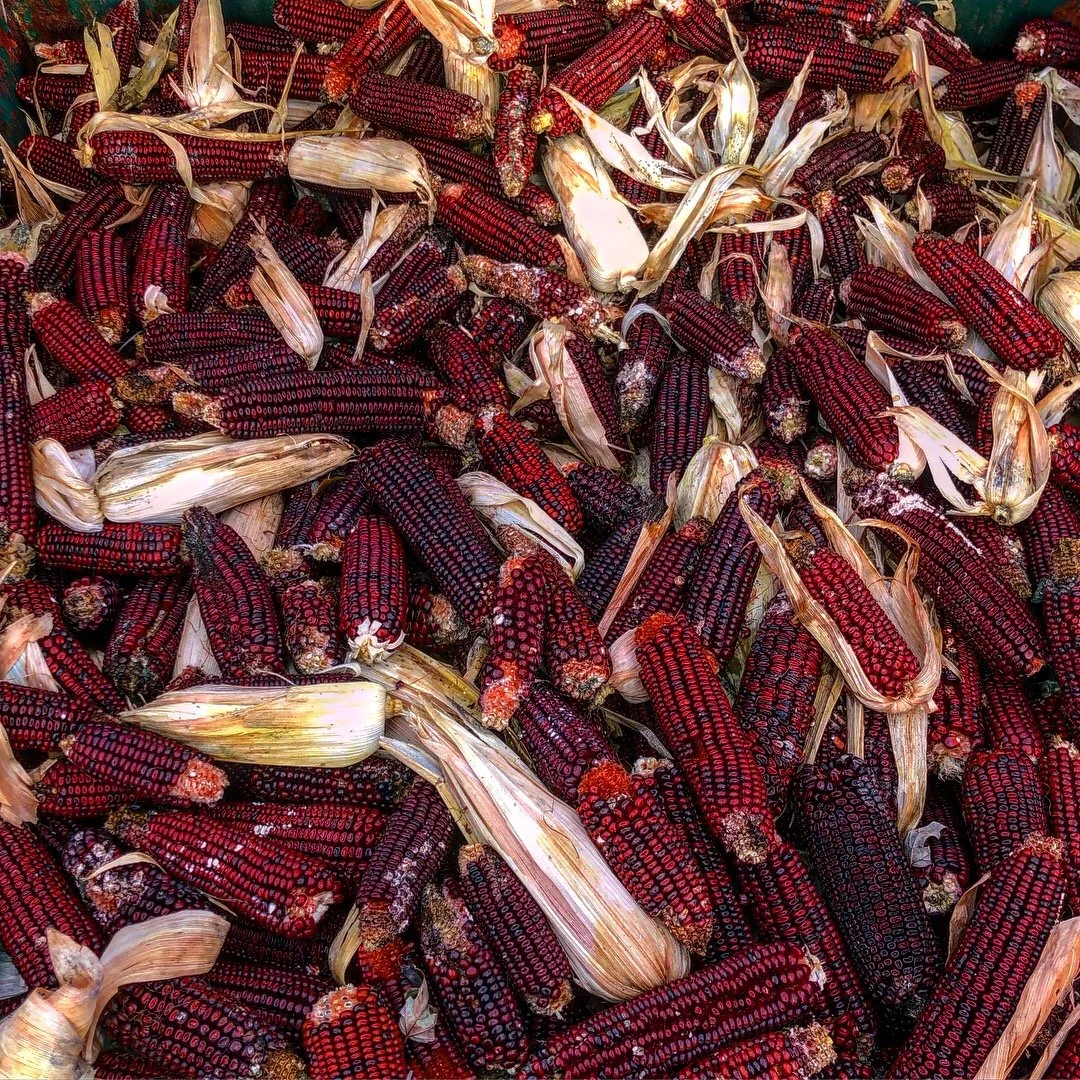
Photo: a bin of the 2018 Bloody Butcher corn harvest during our farm visit.
Will gets his best ideas while he’s driving his tractor. He is constantly looking for new ways to build more diversity and resilience into his operation. But he is not looking to “scale”, in terms of acres farmed or even the distillery. He does not want to become the largest distributor of organic regenerative whiskey and vodka, or to add another 2000 acres to his farming. He does have an interest in teaching other farmers, however, so that his methods can be replicated. To borrow a saying from Will Harris of White Oak Pastures in Bluffton, Georgia, “it’s not scalable like industrial farming, but it’s highly replicable.” As we think about all that is wrong with our current system, the relentless focus on scale and growth for growth’s sake is part of the problem. Scale and growth inevitably require capital, which requires investors, which requires meeting investor expectation, which can result in perverse incentives to take actions for short-term benefit but less resiliency long-term. The focus on scale takes us away from regional foodsheds in a relentless pursuit of growth. There is a point at which the operation becomes too big for one person to manage alone, requiring employees and ultimately would require Will to spend his days differently. That isn’t for everyone. Will has been strategic in growing his business in a way that still lets him do the work he loves—growing corn.
If this can work, why isn’t there more of it?
I like to call Will every time I have an investment idea about farming or environmental restoration in partnership with farmers. He is usually adept at nicely pointing out the holes in my strategy, or how I should think differently about the idea to consider a nuance that only an actual farmer would understand. He understands my obsession –if regenerative farming is so much better for soil health and biodiversity, and we know how to do it—why aren’t we doing more of it? What are the barriers to scaling this approach and how do we solve for them? The truth is that there are many barriers, and they are complex.
Lately we have been discussing what Will would do with $5M. If like-minded investment capital was available, how would Will put it to use? He has many ideas, ranging from alternative uses for distilling byproducts and buying a local organic mill to close a gap in the regional grain supply chain. In Will’s opinion, it’s the regional distribution and infrastructure that is lacking, particularly for organic farmers. The supply side is not the problem—we are more than capable of growing plenty of food and even growing it without chemicals. It’s getting it to the market in a way that still results in sufficient margin for the farmer. When organic farms are sparsely distributed across rural landscapes, it’s harder to aggregate inputs and offtake (for example, getting regional grain processing for organic grain is expensive and the mills are few and far between).
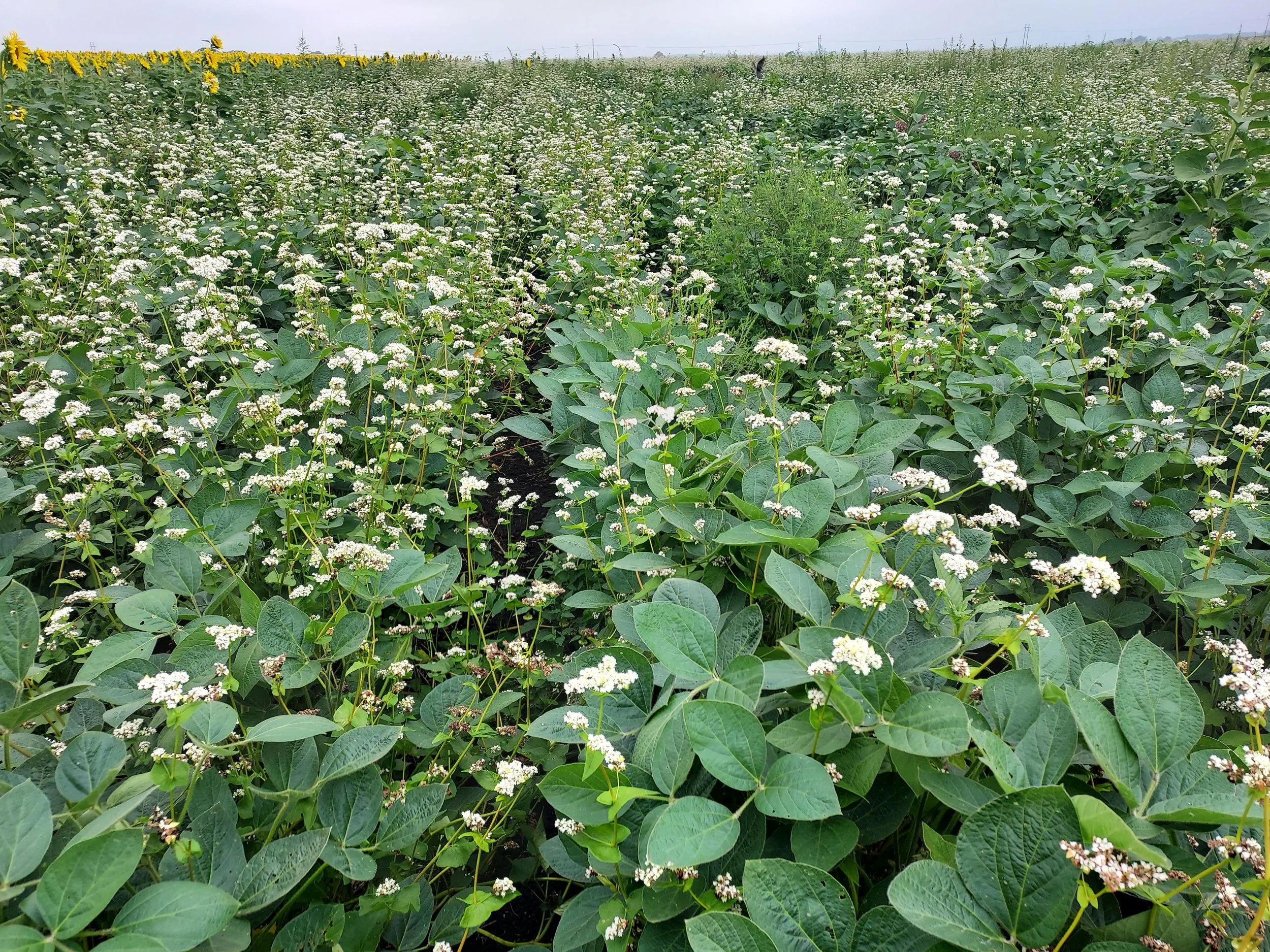
The Possibility of Scaling Regenerative Organic Farming
Part of why I love learning about farmers who are growing food in harmony with nature—instead of working against it, is learning about their “why”. Will’s “why” does not disappoint. He likes finding ways to add and build to the family business, but doing it in a way that does not require “killing stuff”, like insects and plants. He enjoys growing food that people eat. He knows where most of his crops end up and takes immense pride in that. He is also driven by the fact that his farm does not negatively impact anyone downstream—from chemical, fertilizers, or anything else. It’s “clean production.” For me, it’s all of the other parts of Will’s strategy too—the fact that Will’s farm has higher insect diversity, greater bird species abundance and diversity, small check dams that slow down water and create seasonal habitat, and stream protection from overgrazing. Will’s farm shows that it is possible to grow food, be profitable, and steward the environment. We can help direct investment to enable more farms to follow this model.
In comparing our memories about our initial meeting, Will and I realized that the only time either one of us has attended the Good Food Expo was in 2018. A chance encounter that resulted in a partnership for 230 new acres of organic farmland in Illinois and ten years of friendship and brainstorming investment ideas that can further the growth of regenerative agriculture and better land stewardship. A little inspiration to continue to push ourselves outside of our comfort zones to further the outcomes we believe in deeply.
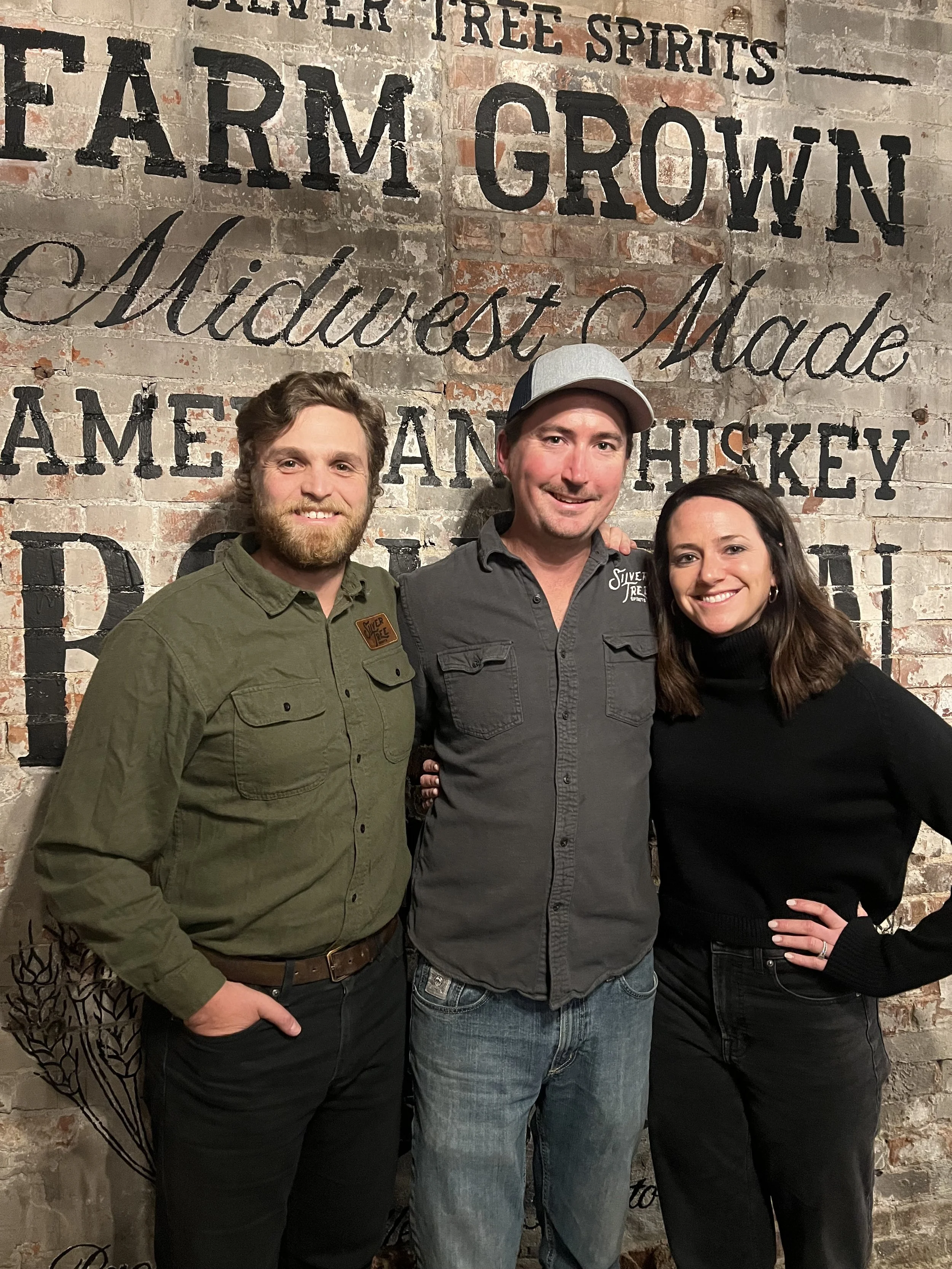
Photo: Nat (friend of the farm!), Will, and me at the 2025 Land Connection Dinner in Paxton, IL at Silver Tree Beer & Spirits.