
When people ask me what Land Steward Partners is trying to accomplish, they want a simple answer about what one of our projects looks like.
But the reality is that Land Steward Partners is trying to solve a problem.
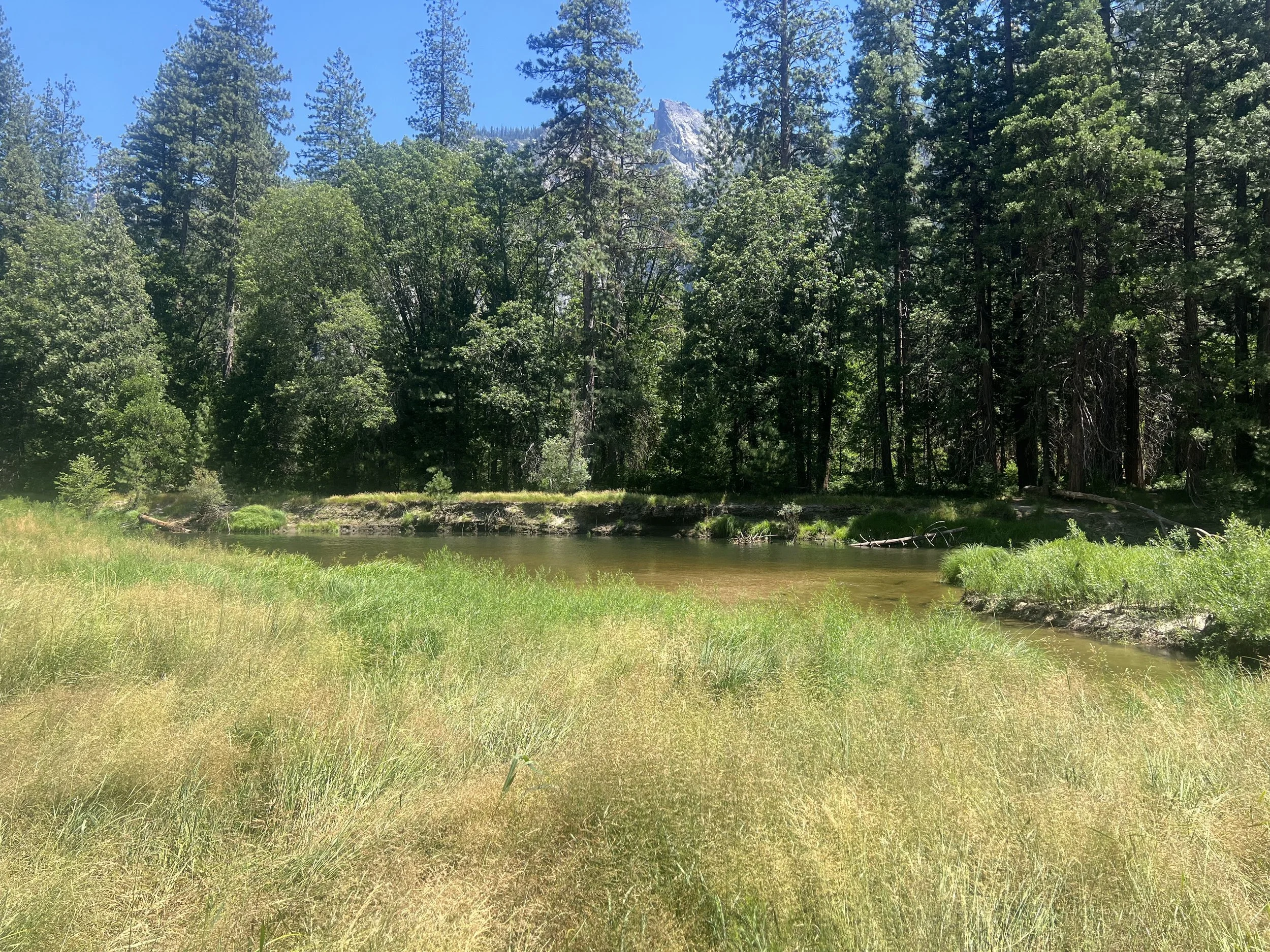
Yosemite National Park on a family trip in 2024.
We exist to bring more capital into nature.
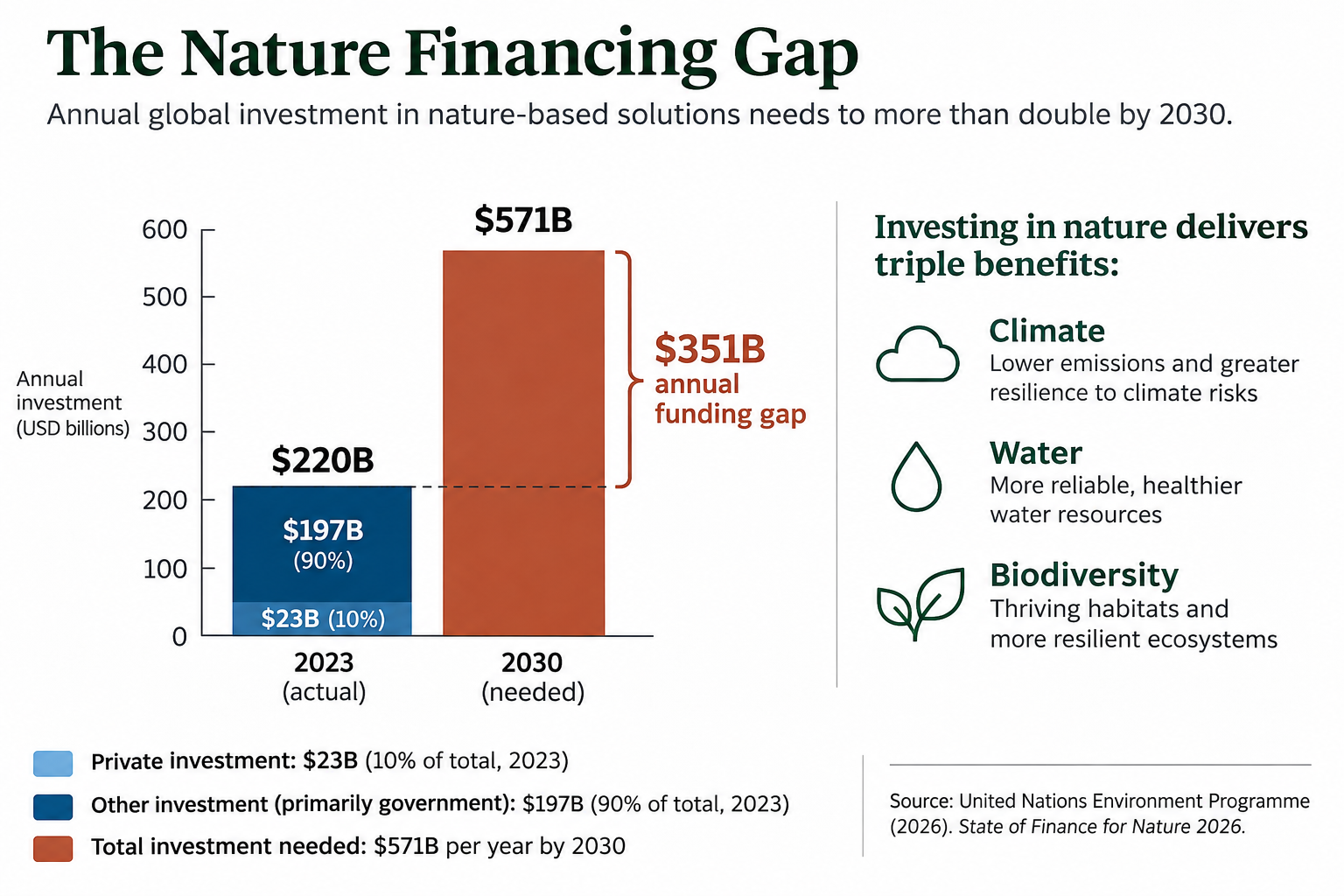
There is an enormous gap in financing nature to solve the challenges we're facing today: climate change, water imbalance, and biodiversity loss. According to the United Nations Environment Programme, annual investment in nature-based solutions needs to more than double, reaching $571 billion annually by 2030. That's an additional $351 billion per year compared with 2023 investment levels.
Those are the three core challenges that we're trying to address. We won't solve them alone. But in our own “backyard”, we're trying to demonstrate how we can invest more capital into nature.
And the thesis of Land Steward Partners is that we need investable strategies if we want to restore nature at scale. There must be ways for private companies to make money doing this for it to scale at the necessary speed of change. Of course, the other part of the story is that governments have to participate. And that's the part that I think is hardest for me to accept, because I want there to be understood value in nature, and for that to be enough.
The reality is despite how much value nature provides, it won't be enough to drive scaled change, because that's not how our capitalistic society works. We need governments to participate to help us value what we're not good at valuing ourselves as self-motivated individuals in a capitalist society.
Agriculture Is at the Center
For our part, we're working to build partnerships specifically between the agriculture and nature sectors.
Do you know what we use more than one-third of the world's land for?
Agriculture. Production of food, fiber, and fuel.
According to the Food and Agriculture Organization of the United Nations, agricultural land occupies approximately 4.6 billion hectares globally, including cropland and permanent pasture.
What use accounts for approximately 72% of freshwater withdrawals globally? And what industry has most heavily modified our natural water features?
Again, it’s agriculture.
If we want to restore nature on the fringes, ignore agriculture. But if we want to restore nature at scale, agriculture has to be at the center. It’s not just the land.
This is not to blame farmers and ranchers. We all eat. We all participate in the system that creates this reality. Plus, the agricultural system we have today is the product of decades of decisions that aren't attributable to any single individual. But we do have problems that were created by agriculture, and now we need to work on solving them.
Farmers and ranchers should be our partners in this effort rather than the enemy. So let's put that behind us. Let's look for solutions.
And let's acknowledge what we do need: funders.
We need investors to care about this land-centric problem. We need them to roll up their sleeves and understand how better agriculture is funded, what the economics are, and where there are opportunities to inject capital into the system to change outcomes at scale.
Some of that is happening on the row crop side, with funding flowing from regenerative agriculture initiatives in the supply chains of large consumer packaged goods (CPG) companies. Corporations are investing in on-farm practices because they recognize that water scarcity and other environmental risks pose significant threats to their CPG supply chains. Those investments are typically focused on the regions where they source their products.
That makes a ton of sense. We should see more of that, and I expect we will as those threats accelerate.
But it's not enough yet—from the private sector or the government.
There's more pipeline and demand for regenerative agriculture projects than there is investor capital flowing to enable those outcomes. And there's certainly not enough private capital coming into nature restoration for the sake of nature itself and the resilience it provides.
According to UNEP, private investment represented just over 10% of all financing for nature-based solutions in 2023. Of the approximately $220 billion invested globally, only $23 billion came from private finance. The rest was overwhelmingly government-led.
Part of the problem is that we haven't designed the market architecture to support private investment in nature and resilience at scale.
And this is where government has two critical roles.
First, governments need to establish regulations that ensure companies pay the appropriate price for the natural resources they use. There will always be companies extracting value from a region without reinvesting in its long-term resilience. Without regulatory requirements, companies with flexible supply chains can simply say, "If this region dries out or runs out of water, we'll just go somewhere else." They can move on to extract and export water from the next region.
We need government protection of those resources so that extracting value comes with a responsibility to maintain them. Governments need to force us to value what we will not value ourselves unless we're required to do so.
Second, governments need to help finance restoration where there aren't enough private buyers or where the economics aren't aligned for individual landowners to make the investment. That means aggregating funds from stakeholders across a watershed and investing on their behalf in the natural infrastructure that benefits everyone.
And that needs to be happening in every single watershed.
Private investment is essential to scaling nature restoration. But it won't happen at the scale we need without governments creating the rules, incentives, and funding mechanisms that make nature investable.
Nature Is My Boss
Something I say to myself as a guiding principle is that "nature is my boss."
Not a person, or a specific type of investor, or a government, or a client.
The core mission is to design new financial structures that restore natural systems. To fund nature. To restore nature. To steward nature. All of LSP’s work is toward that goal.
When this feels exceptionally challenging, I remind myself why I do this.
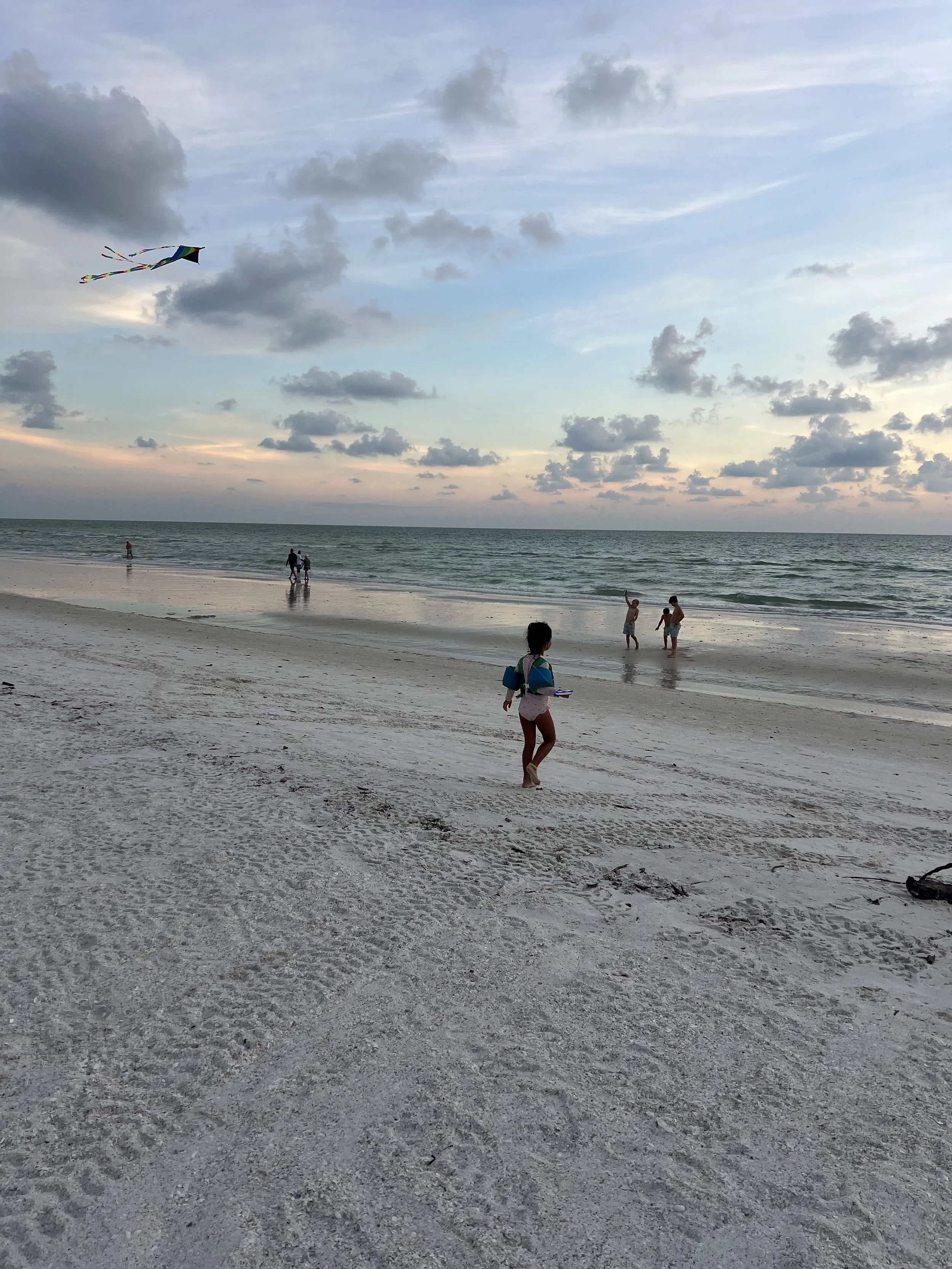
Because the problem is not solved. Because I have children who will inherit whatever dumpster fire we leave for them. Because children everywhere will inherit that.
Because I read the science reports, and I know we are heading in the very wrong direction unless we find solutions and execute on those solutions.
My Instinct Is to Take Action
My personality type is fixer, much to the annoyance of family and friends. When people tell me their challenges, it's my natural instinct to find a solution and help them implement it. Sometimes they just want to vent, but I struggle with just listening passively.
My bias is toward finding solutions and taking action. And so it is here, but hopefully to more productive outcomes. We can resort to venting, but we shouldn't expect that anything will change if we do so.
We can complain about the increasing severity of storms, and vent about how sad avalanches and floods are, and see that the last rhino is going extinct, and think to ourselves, "That's so sad, but that has nothing to do with me."
But it's likely that these circumstances will only get worse.
Or we can do something.
We can speak up, find like-minded people who care about these same issues, legislate, invest, and work to solve these problems with partners who come from entirely different backgrounds than us. And we can give ourselves a chance.
This is probably where someone thinks: “But what about AI?” We’ll tackle that in another article.
We Have to Invest Like It Matters
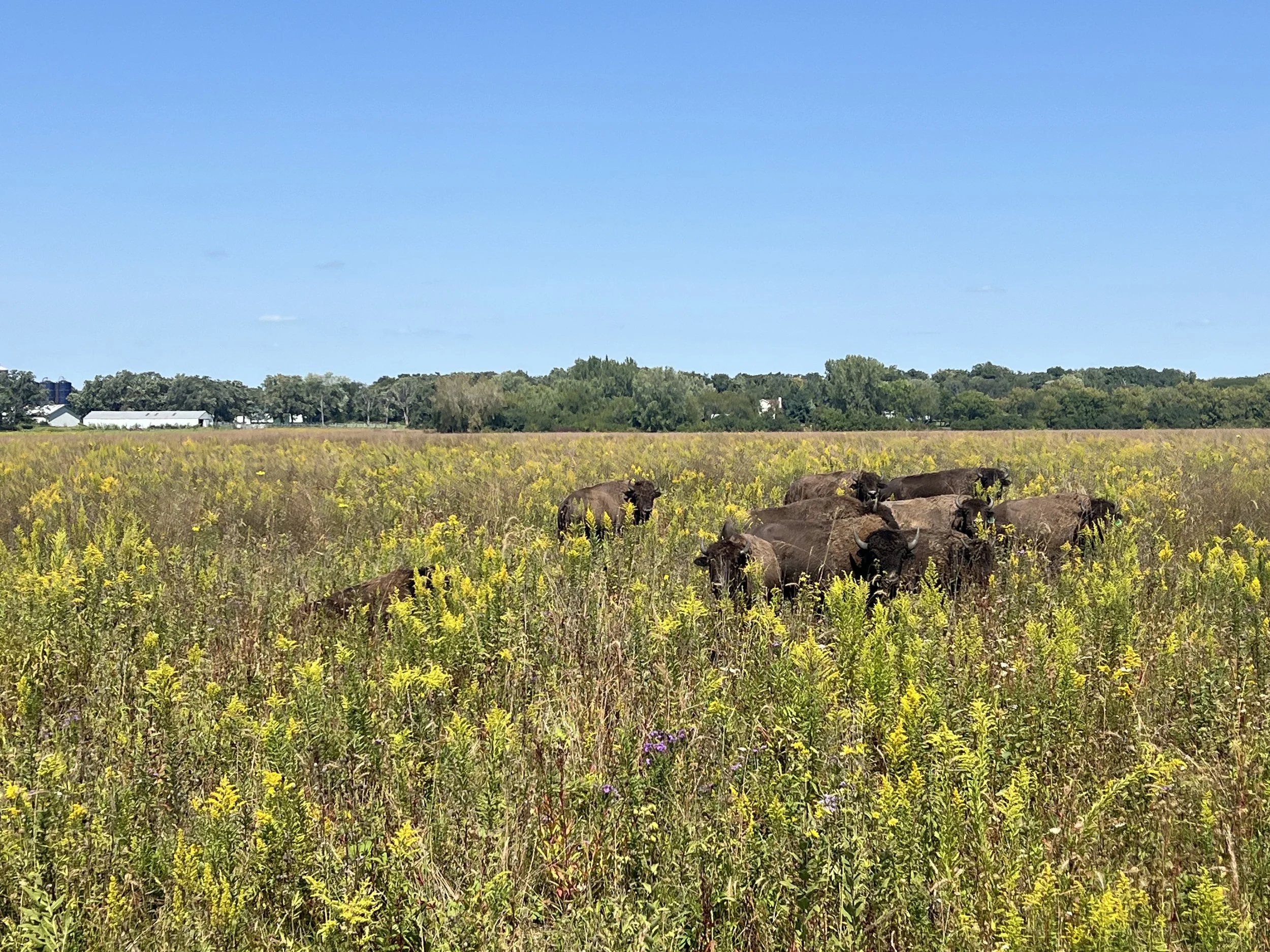
Bison roam a restored tallgrass prairie at Pleasant Valley Nature Preserve in McHenry County, IL. Commercial bison production is one of the investable strategies LSP is exploring to restore nature.
This feels a little preachy, and I'm totally aware of that, because I get it.
People don't want to be told to stop living their lives. They don't want to be told what to eat, what to buy, or how to raise their kids. And frankly, that's not what I'm asking.
I'm not asking everyone to become an environmentalist or to make nature conservation their personal mission. But I am asking for everyone to recognize that our lives depend on natural resources, and we can’t continue to assume they will be there no matter what.
We all want to keep living our lives without disruption. And we really don't want to hear another doomsday proclamation that we're headed down a bad path on climate, water, or biodiversity loss.
This narrative runs through my head sometimes, too: “How much does that really affect me? Is that going to affect me in my lifetime? There's nothing I can do to solve it.”
I get it. It's not always fun to talk about.
But I'm not asking people to give up the things they enjoy. I'm asking investors, companies, and governments to recognize that protecting and restoring nature is an investment in the long-term resilience of our economy and our communities.
And increasingly, the economic consequences of failing to make those investments are becoming harder to ignore.
You can see that reality reflected in insurance markets, home prices, and wildfire damages. According to Swiss Re Institute, natural catastrophes caused approximately $220 billion in economic losses globally in 2025 alone, of which $107 billion was insured. Not all of those losses are attributable to climate change or environmental degradation, but they demonstrate the enormous economic exposure we face from natural hazards.
We can keep sticking our heads in the sand and pretending that nothing that bad can happen. Or we can start investing in the solutions.
Because ultimately, we all want the same things.
We want our kids to have clean water. We want the places we visit, and the animals we see and read about in books, to exist for the next generation. Not just our kids, but their kids.
And that's not going to happen just by chance.
We have to actually put in the effort. We have to put in the capital.
We have to invest like it matters, or it won't happen.
So that’s what LSP is doing—designing new financial models for the restoration of nature, trying them out, evaluating the obstacles and opportunities, and investing in those that can scale. If this resonates with you, we want to talk. Whether you are bringing capital or brain power or relationships, we need all of it to make this happen.
After all, we work for nature.
"Unless someone like you cares a whole awful lot, nothing is going to get better. It's not."
— Dr. Seuss, The Lorax
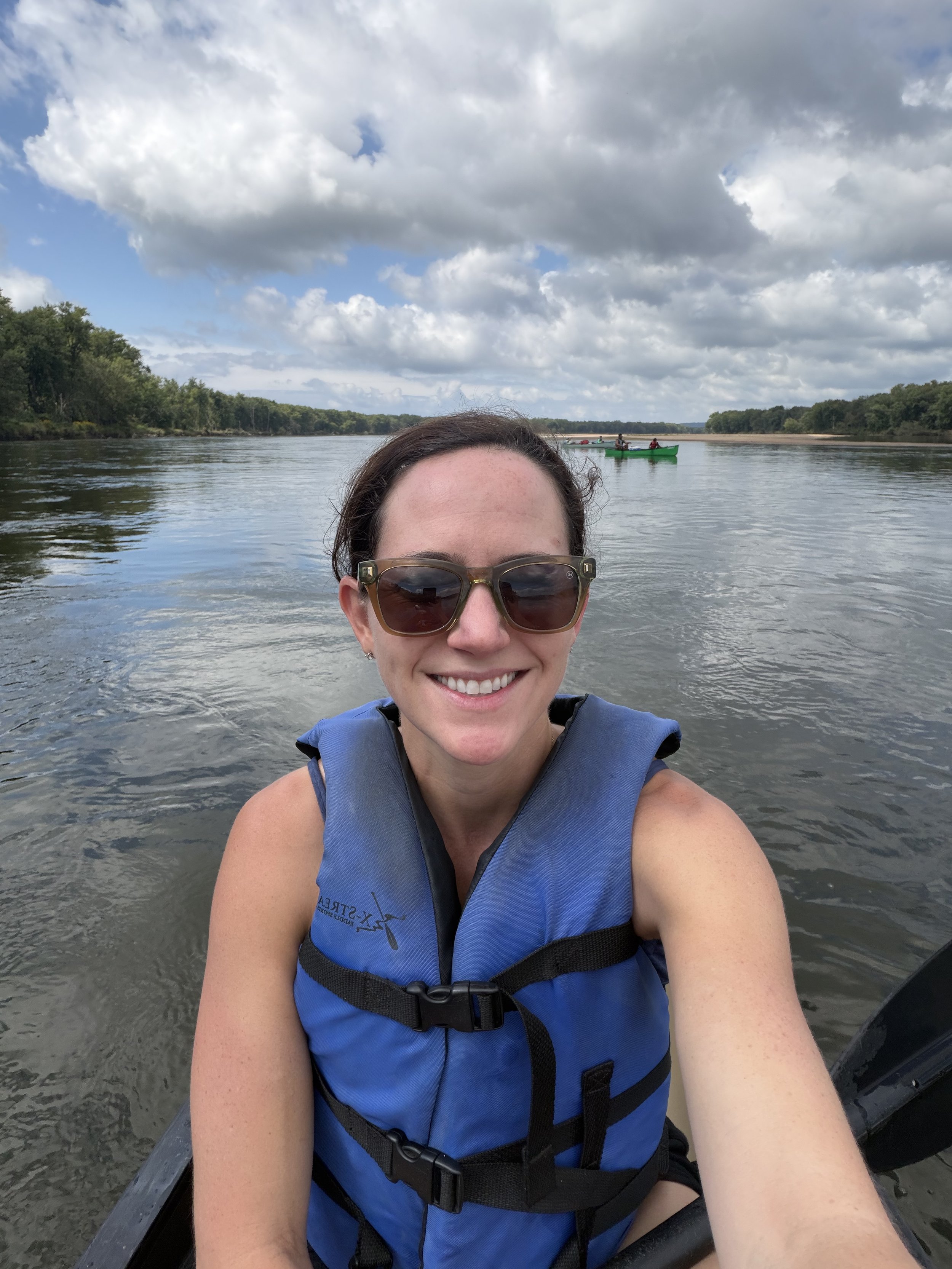
Floating on the Wisconsin River this summer.
References
United Nations Environment Programme (2026). State of Finance for Nature 2026: Nature in the Red: Powering the Trillion Dollar Nature Transition Economy. https://www.unep.org/en/publications/report/state-finance-nature-2026
Food and Agriculture Organization of the United Nations (2026). Land Statistics 2001–2024: Global, Regional and Country Trends. https://www.fao.org/statistics/highlights-archive/highlights-detail/land-statistics-2001-2024.-global--regional-and-country-trends/en
Food and Agriculture Organization of the United Nations (2025). AQUASTAT Water Data Snapshot. UN-Water summary (2026). https://www.unwater.org/news/fao-2025-aquastat-water-data
Swiss Re Institute (2026). Natural Catastrophes in 2025: The Persistent Rise of Wildfire and Storm Risk. https://www.swissre.com/institute/research/sigma-research/sigma-2026-01-natcat-2025-wildfire-storm-risk.html