
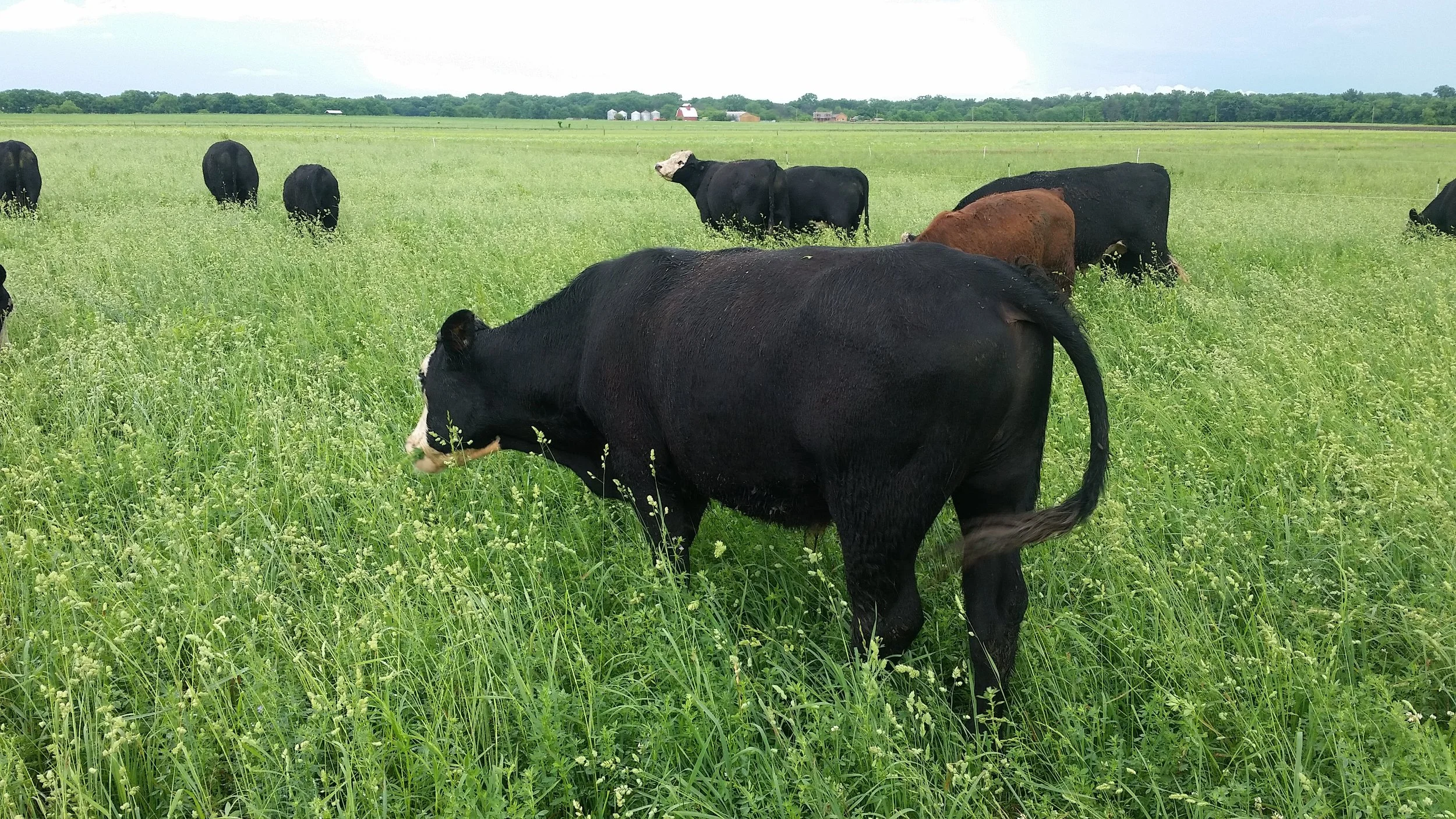
Cows graze at Cow Creek Organics.
What if the secret to a profitable family farm isn't growing more acres or producing higher yields, but finding more ways to create value from the land you already have?
That's one of the questions I explore in this week's episode of The Nature Stack with my friend Will Glazik, a fifth-generation organic farmer in Paxton, Illinois.
Will has graciously entertained countless questions from me over the years about organic farming, soil health, and the economics of agriculture. I've written about his work before, but I wanted to bring him onto the podcast because his family's story illustrates something I've been thinking about a lot lately: what does it actually take to build a profitable farm that can survive for generations?
We hear plenty of stories about first-generation farmers who are passionate about regenerative agriculture. They're committed to growing food differently, rebuilding soil health, reducing chemical inputs, and creating more diversified farming systems.
But Will's story is different.
His family has been farming organically for generations. They're not new to this. They've demonstrated that organic farming can work over the long term.
And yet, they've still had to innovate. In fact, I think their willingness to continually adapt, diversify, and find new ways to create value from their land is a big part of why they've been successful.
Their story offers an important lesson about the future of agriculture—and about the larger opportunity to invest in nature.
A Farm Doesn't Have to Get Bigger to Become More Profitable
One of the most interesting parts of my conversation with Will was his perspective on farm profitability. In conventional agriculture, the prevailing strategy for improving profitability often involves expanding acreage, increasing yields, and spreading fixed costs across a larger operation. But bigger doesn't necessarily mean more profitable.
Will talks about how his parents supported their family on a relatively modest acreage while maintaining very little debt. Their success wasn't dependent on farming thousands of acres or maximizing production at any cost. Instead, they focused on the economics of the entire operation.
That's an important distinction. Yield is not the same thing as profitability.
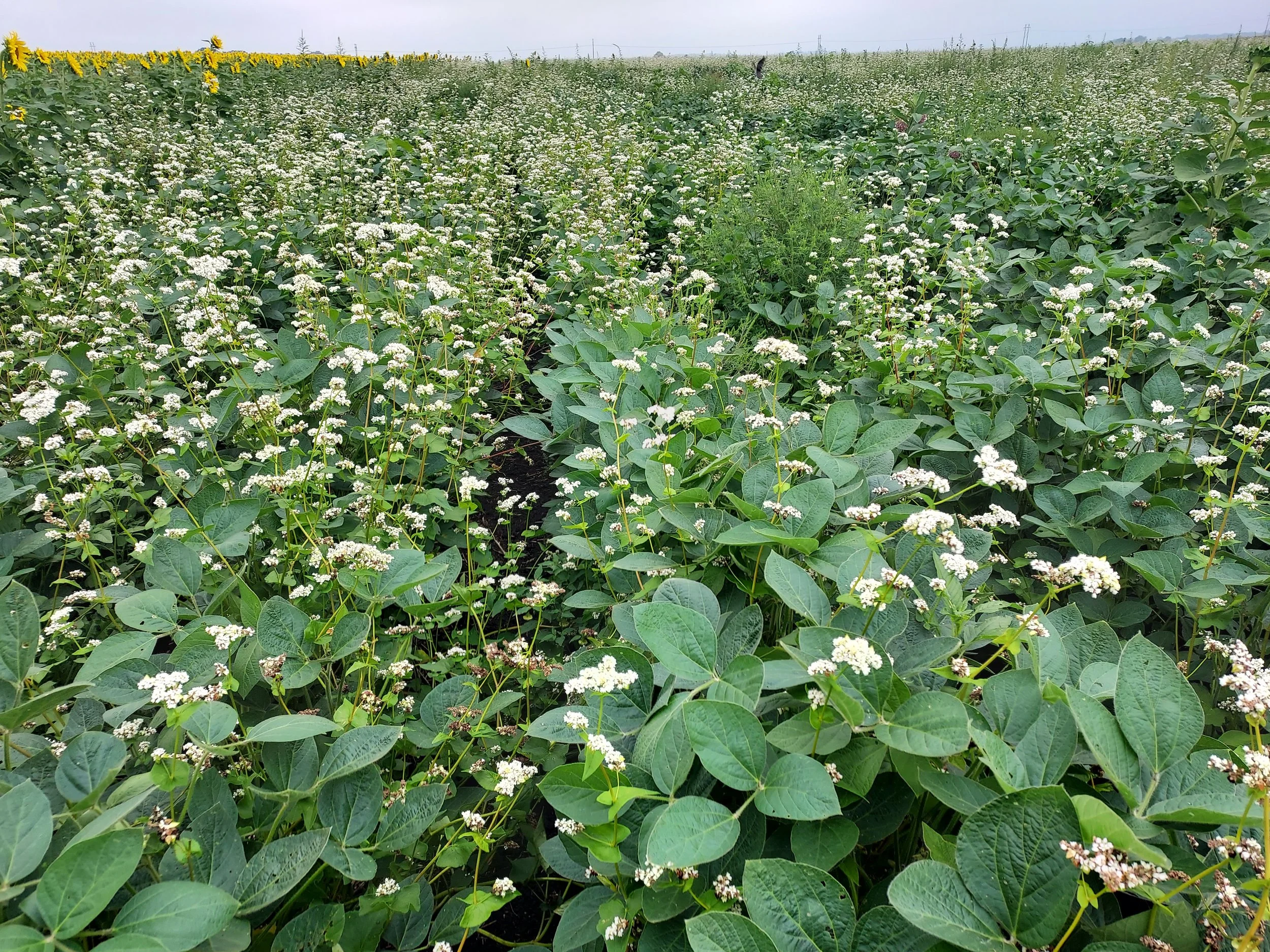
Cover crop on Will’s farm.
A farmer can produce an impressive amount of grain and still struggle financially if the cost of land, equipment, fertilizer, chemicals, and financing consumes most of the revenue. Organic farming offers a different economic proposition. It can command higher prices for crops while reducing reliance on certain purchased inputs. But it also requires more management, more labor, and a different approach to production.
The question isn't simply whether organic farming can match conventional yields. It's whether the entire farming system can generate a better financial outcome. Will's family is a compelling example of how it can.
Diversification Doesn't Mean Every Farmer Has to Do Everything
Another part of Will's story that I particularly love is how his family works with neighboring farmers. Their operation integrates crops, livestock, and pasture, but that doesn't mean one farmer has to become an expert in every enterprise. A neighboring farmer brings cattle onto the Glaziks' land to graze cover crops. Meanwhile, Will's brother grows diverse annual crops on the neighbor's property, integrating crop production with pasture and soil-building practices.
Each producer specializes in what they do best. But the land benefits from a more diversified management system. I think this is an incredibly important model for regenerative agriculture.
We often talk about the benefits of integrating livestock into cropping systems, but the practical challenge is that most crop farmers don't want to become livestock producers, and most livestock producers don't want to become row-crop farmers.
They shouldn't have to. What if we created more opportunities for specialized farmers to collaborate across the same landscape?
The crop farmer could focus on growing crops. The livestock producer could focus on raising animals. Together, they could create a more resilient, productive, and ecologically diverse farming system than either could manage independently.
The land can be diversified without requiring every farmer to be experts in everything.
That's a concept I think we should be applying much more broadly.
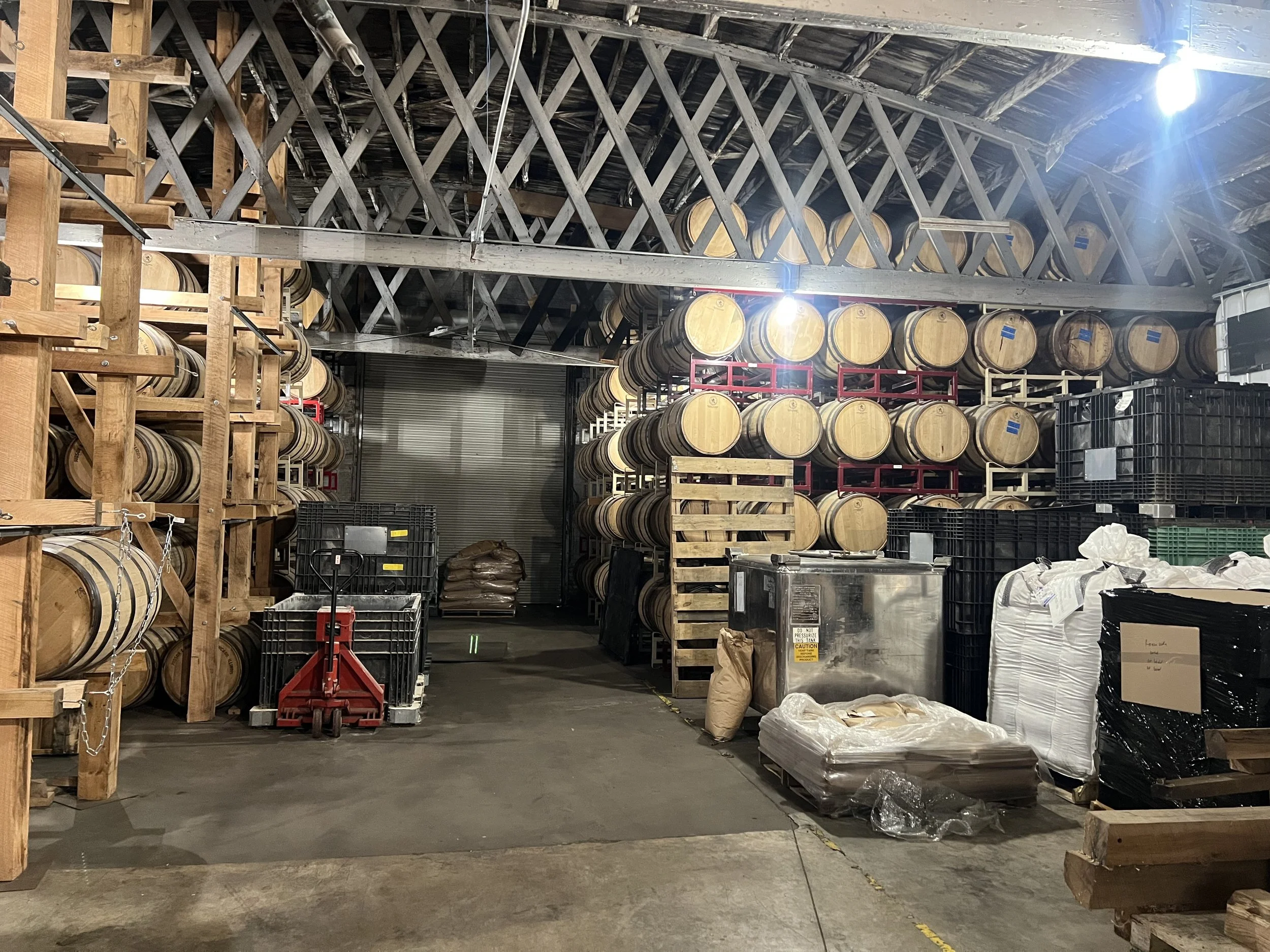
Silver Tree Beer & Spirits creates more value from the organic grains grown at Cow Creek Organics.
Capturing More Value from the Same Acre
Will's family has taken diversification another step further. In addition to growing organic grain, they've built a distillery that transforms some of their agricultural production into spirits. Instead of simply selling corn as a commodity, they can capture more of the value created as that corn moves through the supply chain. They've also found ways to connect different parts of the business, including using distillery byproducts in livestock production.
And the distillery creates something else: a reason for people to visit rural Paxton, Illinois. Through events, experiences, and direct relationships with customers, the business creates opportunities for agritourism and additional revenue that wouldn't exist if the family simply sold its crops at harvest to the grain elevator.
This is the same principle I've been exploring through The Nature Stack. How do we create more value from the same acre of land?
Sometimes that means producing multiple agricultural products. Sometimes it means integrating livestock and crops. Sometimes it means processing those products into something consumers are willing to pay more for. And sometimes it means creating experiences that connect people to the places where their food and agricultural products originate.
These are different ways of stacking value within a single farming enterprise. The larger lesson is that we can't assume a family farm will remain financially viable simply because its owners are excellent farmers. Farming well is essential. But in a commodity-driven agricultural economy, it may not be enough. Finding additional sources of value can make the difference between a farm that survives and one that thrives across generations.
The Missing Layer: Paying Farmers for the Nature They Produce
But there's another dimension to this conversation that I think is even more important. When I talk about The Nature Stack, I'm not just talking about producing more agricultural products or capturing more value through processing.
I'm talking about recognizing land as infrastructure. A well-managed organic or regenerative farm doesn't just produce food. It can also support pollinator habitat, build soil organic matter, improve water infiltration, reduce erosion, and provide habitat for wildlife.
These benefits extend beyond the property boundaries. Healthy soils can help retain water during heavy rainfall. Reduced reliance on synthetic pesticides can lower certain risks of chemical exposure and runoff. More diverse landscapes can provide ecological functions that benefit surrounding communities.
Yet we have very few reliable mechanisms to compensate farmers for providing these services.
Think about Will's family's farm. Their land produces organic crops, supports livestock, and supplies a value-added business. But it may also be creating significant value through water retention, water quality protection, soil health, and biodiversity.
Who pays them for that? In most cases, nobody.
There are emerging carbon programs that may compensate farmers for certain management practices or measured outcomes. But carbon markets aren't necessarily a good fit for every annual cropping operation, and carbon is only one piece of the ecological value a farm can create.
Where are the markets for water storage? For reduced nutrient and pesticide runoff? For pollinator habitat? For healthier rural landscapes? Some programs and funding mechanisms exist, but they are fragmented, difficult to access, and often insufficient to support long-term changes in land management.
We have developed sophisticated markets for agricultural commodities, but we still lack functioning markets for many of the ecological services that agriculture provides.
That's one of the gaps I want The Nature Stack to bring attention to. And it also means the concept isn't complete. We haven't figured out how to monetize every benefit that healthy land provides. We can't simply tell farmers to enroll their acres in a collection of programs and expect the economics to work.
Some of those programs don't exist yet. We have to build them.
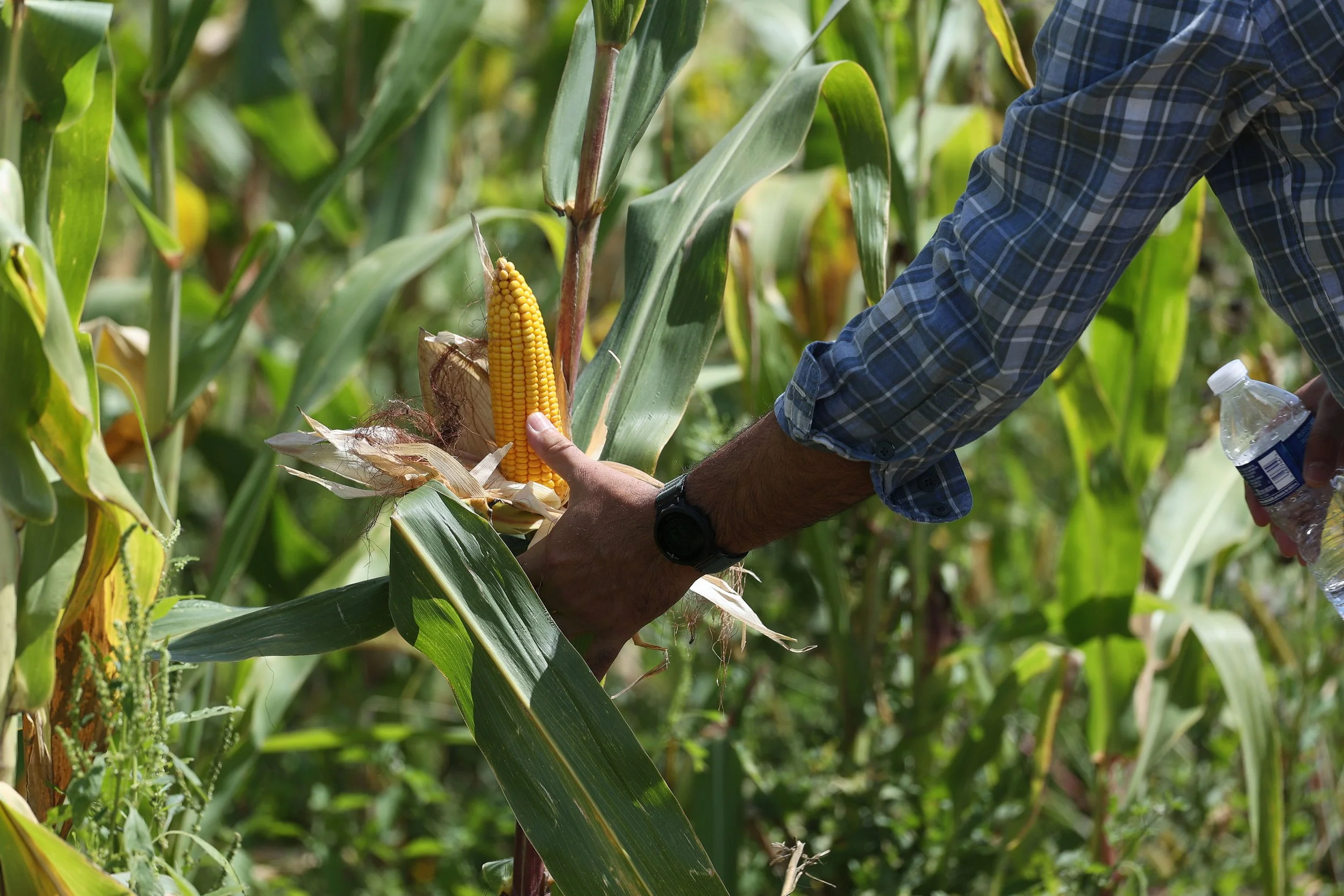
Organic corn grown on Will’s farm goes into food that ends up on the grocery store shelf.
Healthy Farms, Healthy Food, Healthy Families
There's one more part of my conversation with Will that I want to highlight. It's the relationship between how we farm, what we eat, and the environments in which our children grow up.
We often separate these conversations. We talk about nutrition and the quality of food served in schools. We talk about soil health and agricultural chemicals. We talk about drinking water, biodiversity, and the health of rural communities. But these issues are connected.
The decisions we make about how land is managed affect the food we produce and can affect the water, soil, and air around us.
That doesn't mean every agricultural input presents the same risk or that organic farming eliminates every environmental or health concern. But it does mean we should take those trade-offs seriously rather than treating agricultural yield as the only outcome that matters.
Will raises an important question about how much we really understand our cumulative exposure to agricultural chemicals and how readily we accept those exposures as a necessary part of producing food.
I think that's a question worth asking. Especially when we have examples of farms like his family's that have demonstrated a different approach. For generations, the Glaziks have shown that it's possible to farm organically and remain economically viable.
They may not always achieve the same yields as a comparable conventional operation. But they also have lower costs, can access premium markets, and generate higher revenue opportunities.
And ultimately, what matters to the family's financial future isn't how many bushels they produce. It's whether the business is profitable enough to support the next generation.
That's the conversation we should be having more often.
Organic Farming Isn't an Unproven Experiment
One of the arguments I hear repeatedly is that organic and regenerative farming are too complicated, too risky, or too difficult to scale. And there are legitimate challenges.
Organic systems require different management skills. Weed control can be more complicated. Labor needs can be higher. Transitioning land can create financial risk, particularly before a farm becomes eligible for organic premiums. But we also have decades of evidence that organic agriculture can be productive and profitable.
The Rodale Institute's Farming Systems Trial, which began in 1981, has compared organic and conventional grain production systems over the long term. Its findings demonstrate that organic systems can achieve competitive yields over time, with important differences in profitability, soil health, and performance under certain environmental conditions.
Those results don't mean organic farming will outperform conventional agriculture on every farm or in every year. They do mean that we should stop treating organic agriculture as an untested alternative. And we should spend more time learning from the farmers who have already made it work. Farmers like Will and his family.
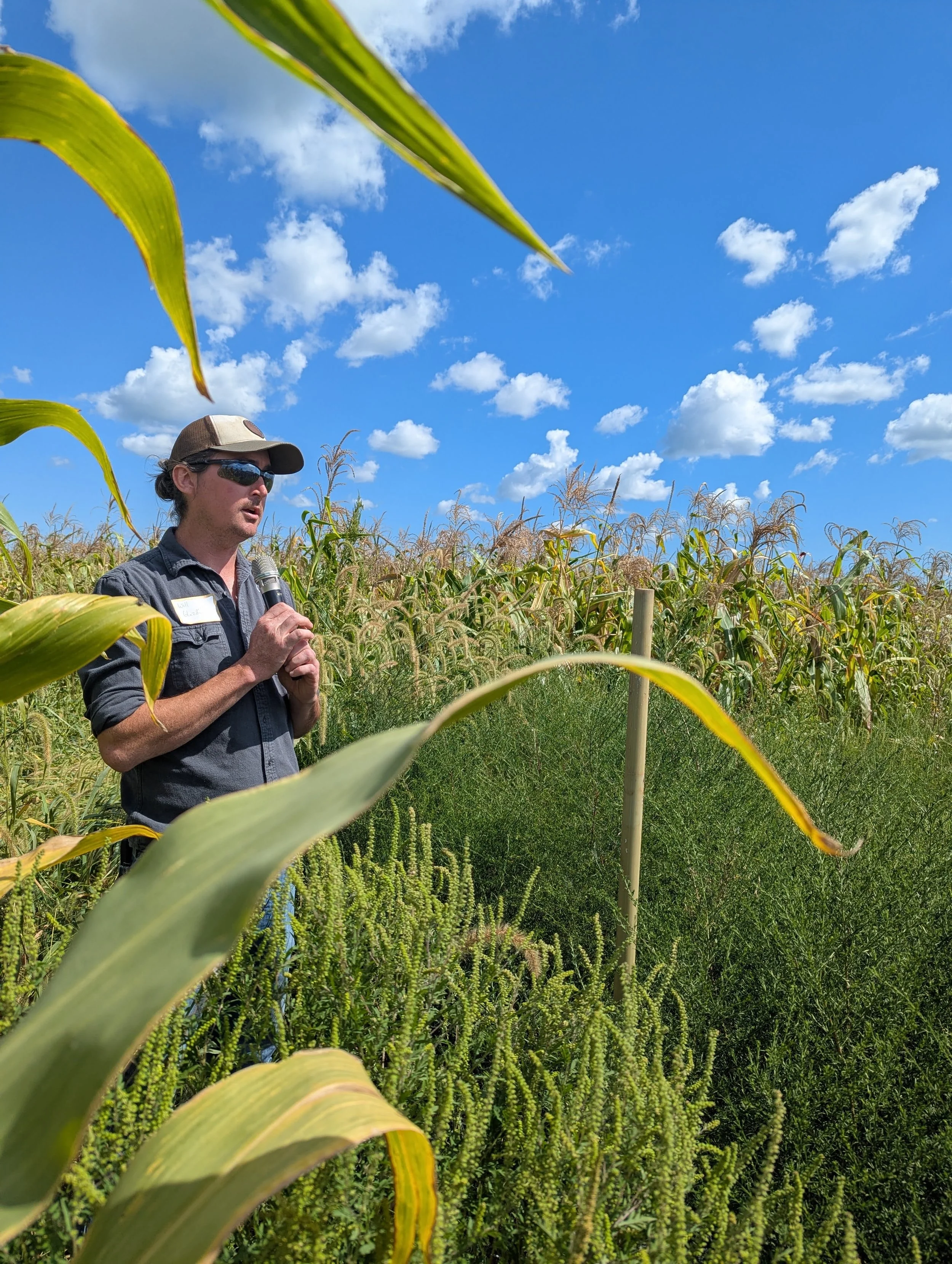
Will gives tours to neighbors, customers, and other farmers to share what he has learned.
Building Farms That Last
I keep coming back to the idea that we aren’t going to solve our challenges by squeezing more yield from the farmland or more dollars from the consumer. We need to create farming systems that are economically viable, ecologically healthy, and capable of supporting families across generations.
That requires us to think differently about where value comes from. It can come from the crops we grow. It can come from livestock, processing, and agritourism. It can come from partnerships between farmers who bring different skills to the same landscape. And increasingly, I believe it should come from the ecological services that healthy land provides to the rest of society.
Consumers have a role to play, too. When we buy organic food, purchase products from farms that steward their land responsibly, or visit rural businesses that create new markets for agricultural products, we're helping support the economics of those farming systems.
But consumer spending alone won't close the gap.
We also need new business models and new markets that recognize the full value of what well-managed farmland produces. We need government participation in valuing nature as infrastructure.
Will's story is a reminder that while some of these ideas may sound new, the farmers who have been building diversified, resilient businesses for generations have a lot to teach us.
The future of farming may depend less on how much more we can produce—and more on how much of the value we already create we're able to recognize and capture.
Listen to Episode 2 tomorrow to hear Will’s perspective firsthand.
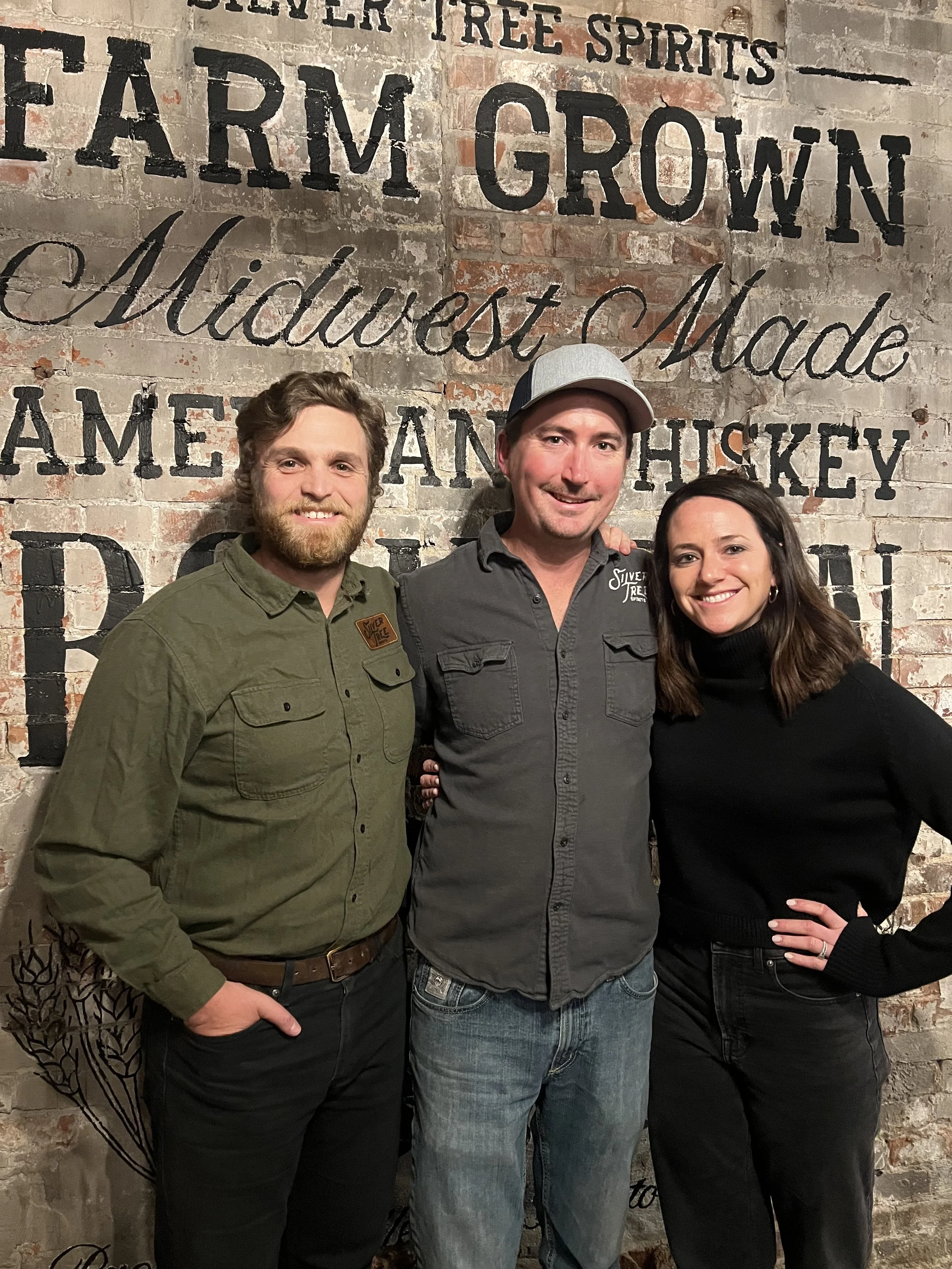
Nat Drucker, Will Glazik and I at the 2025 Land Connection Dinner.