
Good Things Are Worth Waiting (and Working) For
If I want to convert conventional row crop ground to native prairie as simple as planting the perennial species and bringing in the animals? As regenerative producers have found, it’s not an overnight process.
Yesterday I visited a regenerative farm in Illinois that is strategically making the transition from row crops to perennial pasture and grass-fed livestock because the farmer finds it to be at least 2-3 times more profitable than row crops. Nearly every section of ground is covered with some kind of vegetation, whether it’s cover crop, stubble from last year’s crop, or perennial grasses.
In the course of a 30-minute tour around the farm, we saw a pheasant, a coyote, tons of birds, and four species of livestock (sheep, cattle, pigs, and layer hens). In contrast, I drove past hundreds of empty fields on my way there. Bare ground, eroding topsoil, and almost no animals—farmed or wild.
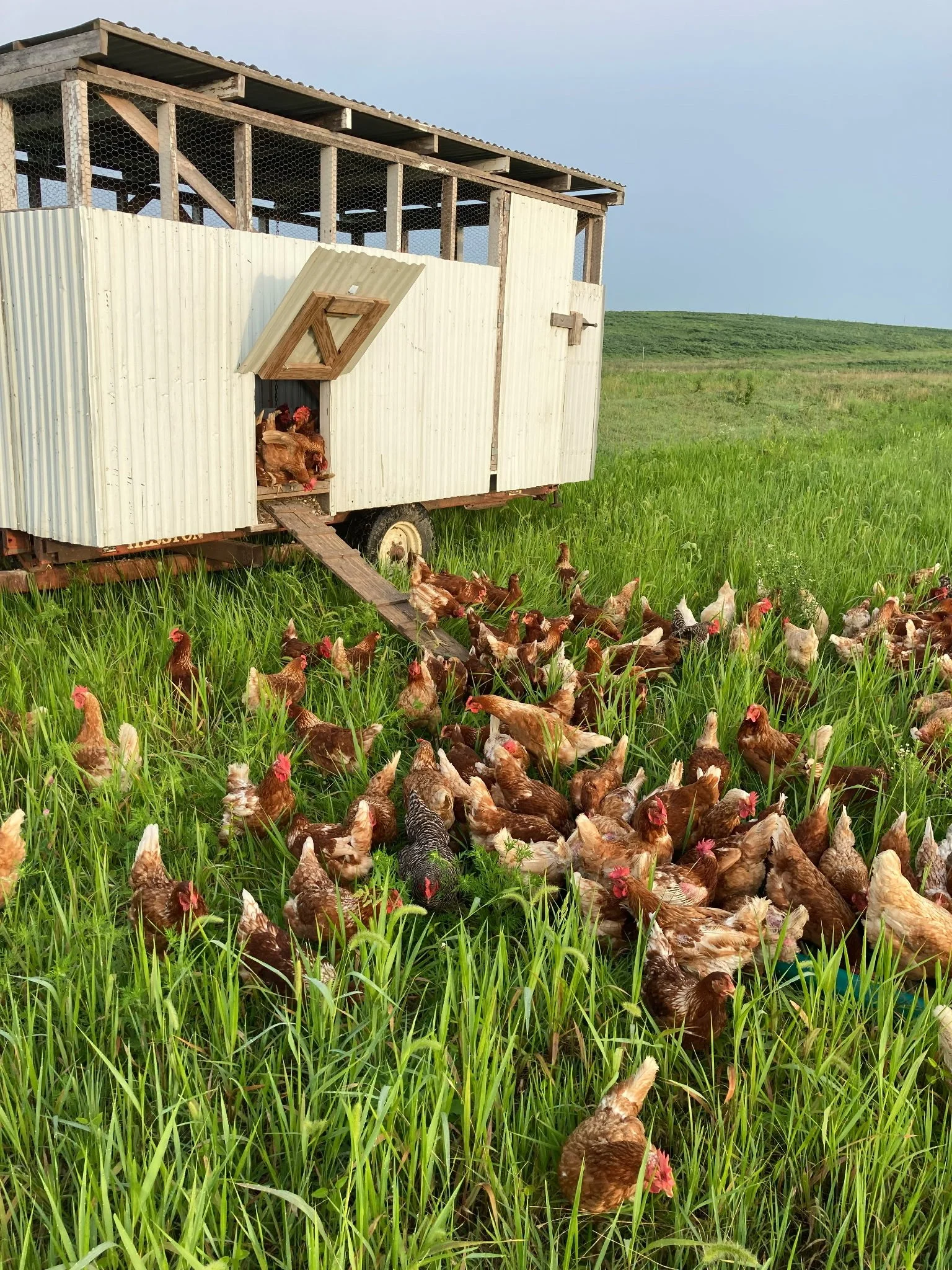
One of Living Light’s mobile chicken coops last summer.
I recently finished Gabe Brown’s book Dirt to Soil, the story of one family’s transition to regenerative agriculture, although Gabe tells the story of many other farms going through similar transitions around the world, demonstrating that regenerative agriculture can work in almost any environment. One interesting lesson that resonated with me from Gabe’s book—after decades of conventional corn-soy-corn rotations and synthetic fertilizer and pesticide application, he found it to be challenging to just plant perennial native grasses once and expect the biology to thrive. He tried that once and found the perennial stand was low quality. He realized—the soil ecosystem has been degraded for years and years. To “wake it up” and bring that life back, he needed at least a few years of investment to kickstart the change. This meant planting a diverse mix of cover crop species one year and a mix of perennials and annuals the next year, and so on.
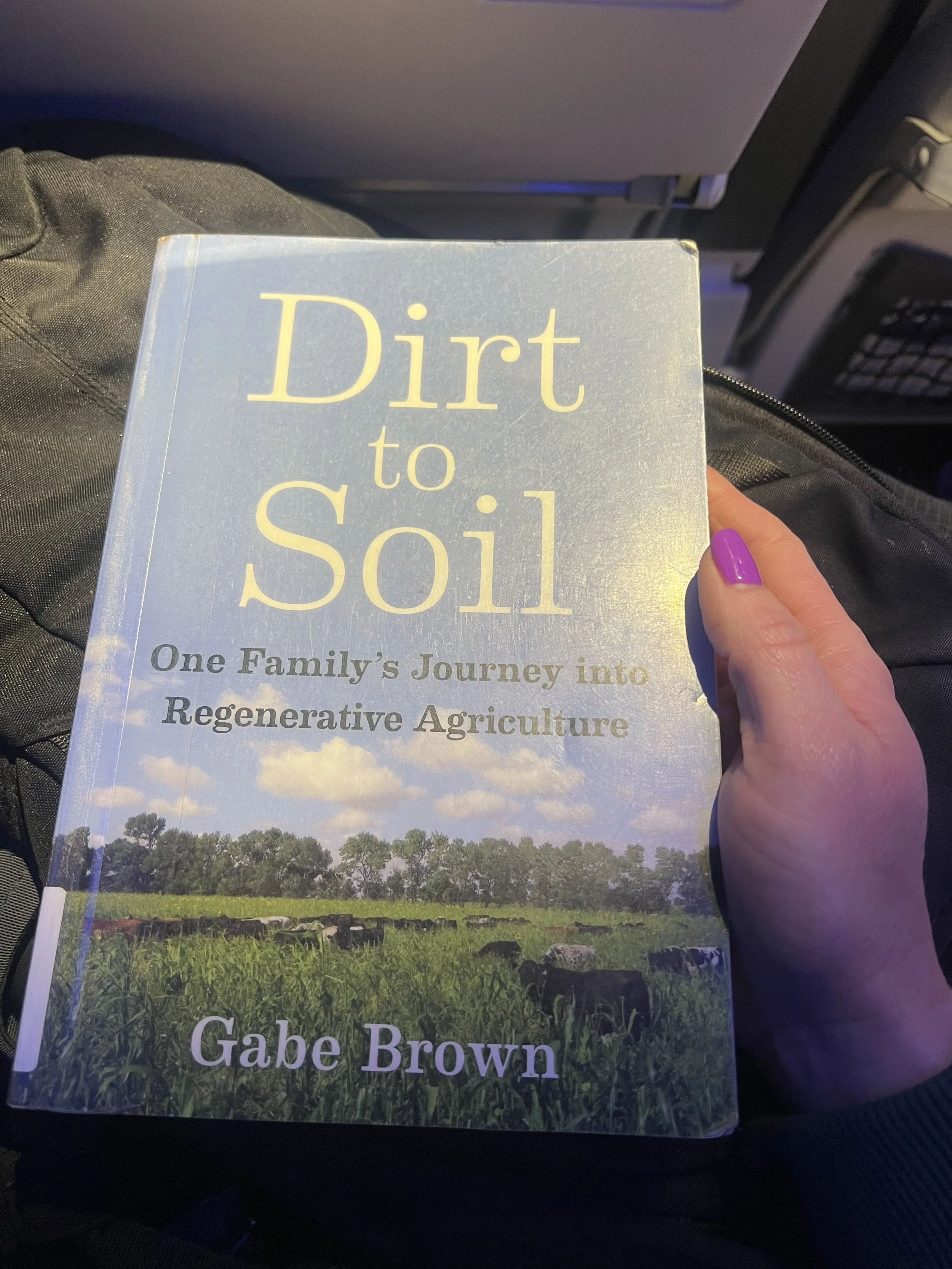
Catching up on my soil health reading on a recent family trip.
It may take 3 years to get a good stand of perennial grasses and forbs established. But during that period of rebuilding soil health, you can graze animals through that cover crop stand. This adds natural fertility and disturbance that plants need to grow stronger roots. And it creates happy, fat animals for meat production.
The Illinois farmer shared a similar story yesterday. He also tried to go straight from conventional crops to perennial pasture in one year but met with limited success. He mused with a smile that he had read Gabe Brown’s book one year too late.
Now, a few years later, multiple pastures are on their second or third year of annual cover crops, which he grazes and then replants with something new during the growing season to continue to build soil health. Instead of adding more synthetic fertilizer, he adds more plants. Over time, he starts integrating perennials, and by year 3, if he sees enough perennials return, he can lighten up on the annual seeding effort. When you start hearing the same thing over and over from different practical experts, it starts to stand out in your brain.
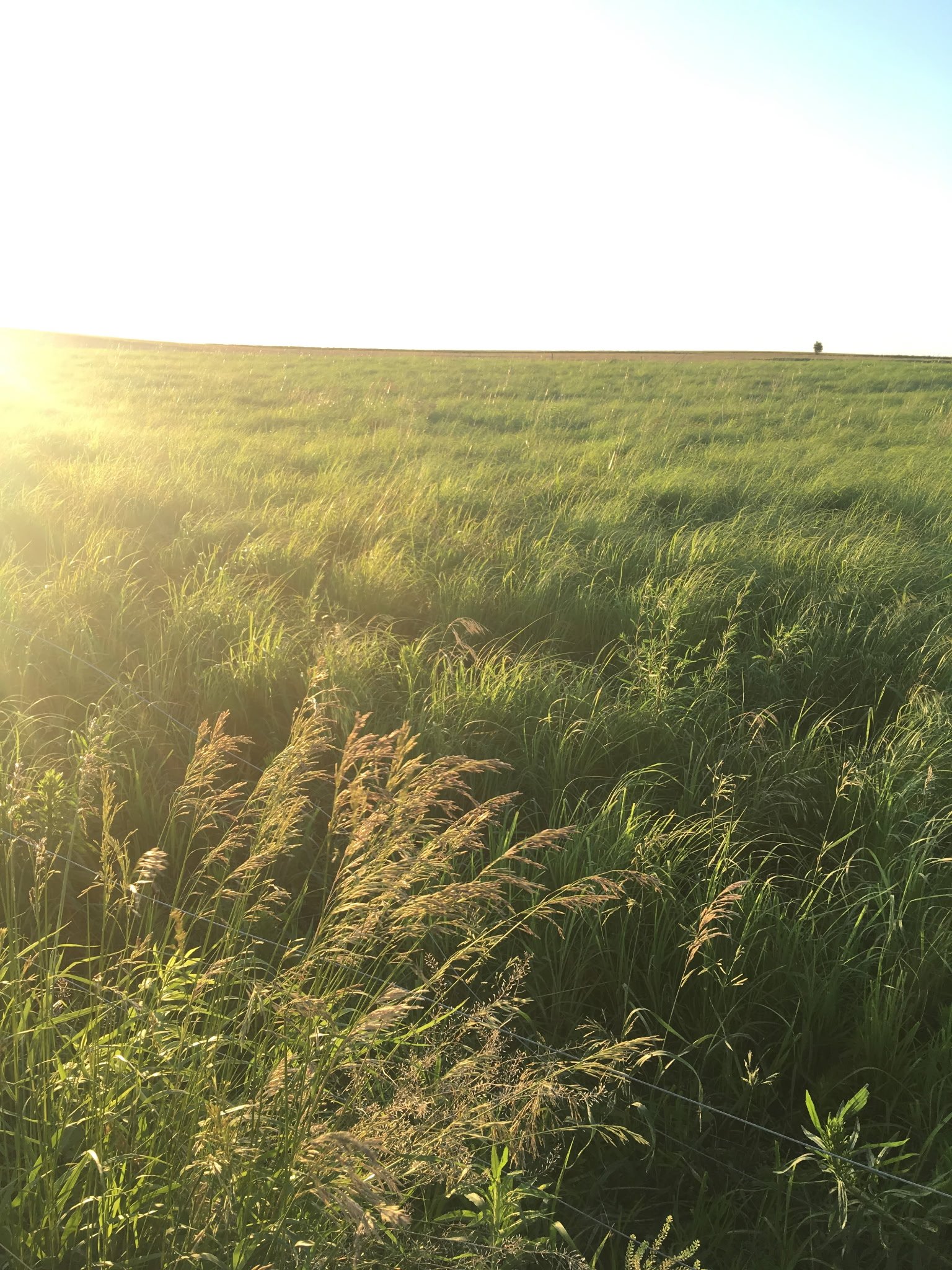
Prairie in transition at Living Light Farm
The journey to restoring nature at scale will start where we grow our food. Millions of acres with the potential to be reawakened, starting at the bottom of the food chain—the soil. But it’s not as simple as taking it out of conventional production—we have to continue to work with the biology and ecology to give nature a running headstart. We have to remove synthetic inputs and add life.
It takes time to see results, so we need aligned capital. We need animal impact—for natural fertility and for periodic disturbance. We need producers that are invested in understanding their land, rebuilding the ecology, and creating profitable, diverse, enduring farm enterprises. And of course, we need the consumers—including city dwellers like me, who care where their food comes from, how it was produced, and whether it made the environment better or worse during the course of production. When we put these conditions together, we can truly make magic happen—the return of bird song. The return of dark aggregated topsoil that holds water. The return of farm profitability. And market rate returns for investors.
If you are interested in supporting regeneratively grown meat in the central Illinois region, check out Living Light Farms.
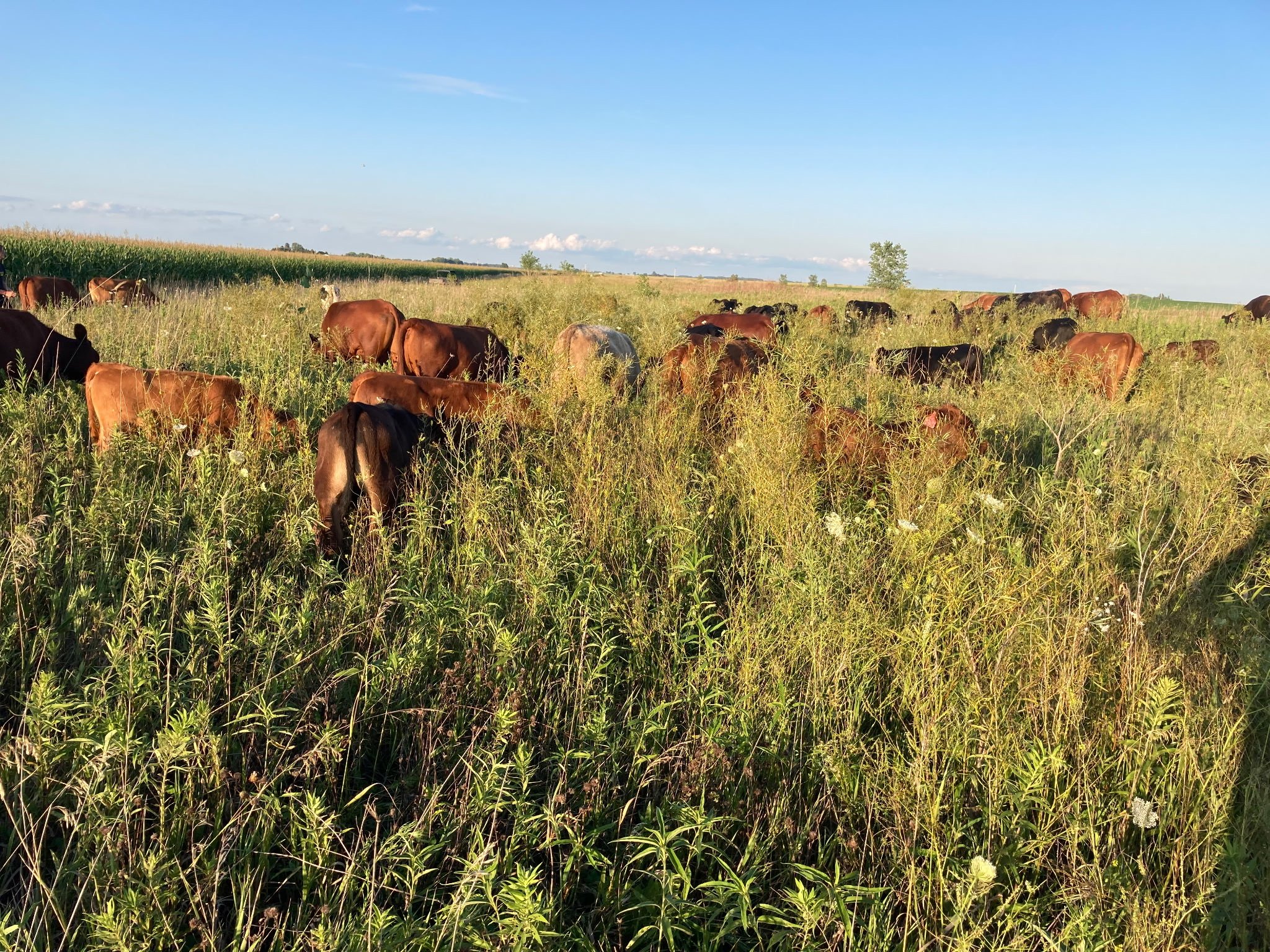
Cows on pasture at Living Light Farm