
Bringing Nature Back to the Farm
August 12, 2026
Nature and agriculture are not enemies. In fact, agriculture works best in partnership with nature.
At first glance, restoring nature and producing food can seem like competing goals. Agriculture changes landscapes. It replaces diverse ecosystems with fields, fences, roads, and infrastructure. Conservation, meanwhile, is often imagined as something that happens somewhere else—in a state park, a national wildlife refuge, or another protected area.
But that framing misses the scale of the opportunity.
According to the USDA’s most recent comprehensive land-use inventory, cropland occupies 17% of the United States, while grassland pasture and rangeland account for another 29%. By comparison, “special uses”—a category that includes parks and wildlife areas—cover 14%. Whatever boundaries we draw around the word agriculture, working lands make up an enormous share of the American landscape.
Picture the country as a quilt. Parks, refuges, wetlands, and other relatively wild places make up tiny patches on the quilt (less than 1/5 of the patches). Farms and ranches fill much of the space around and between them—almost half of the quilt. If nature has no place on those working lands, the tiny patches of “wild spaces” have no connection to each other.
That connectivity matters.
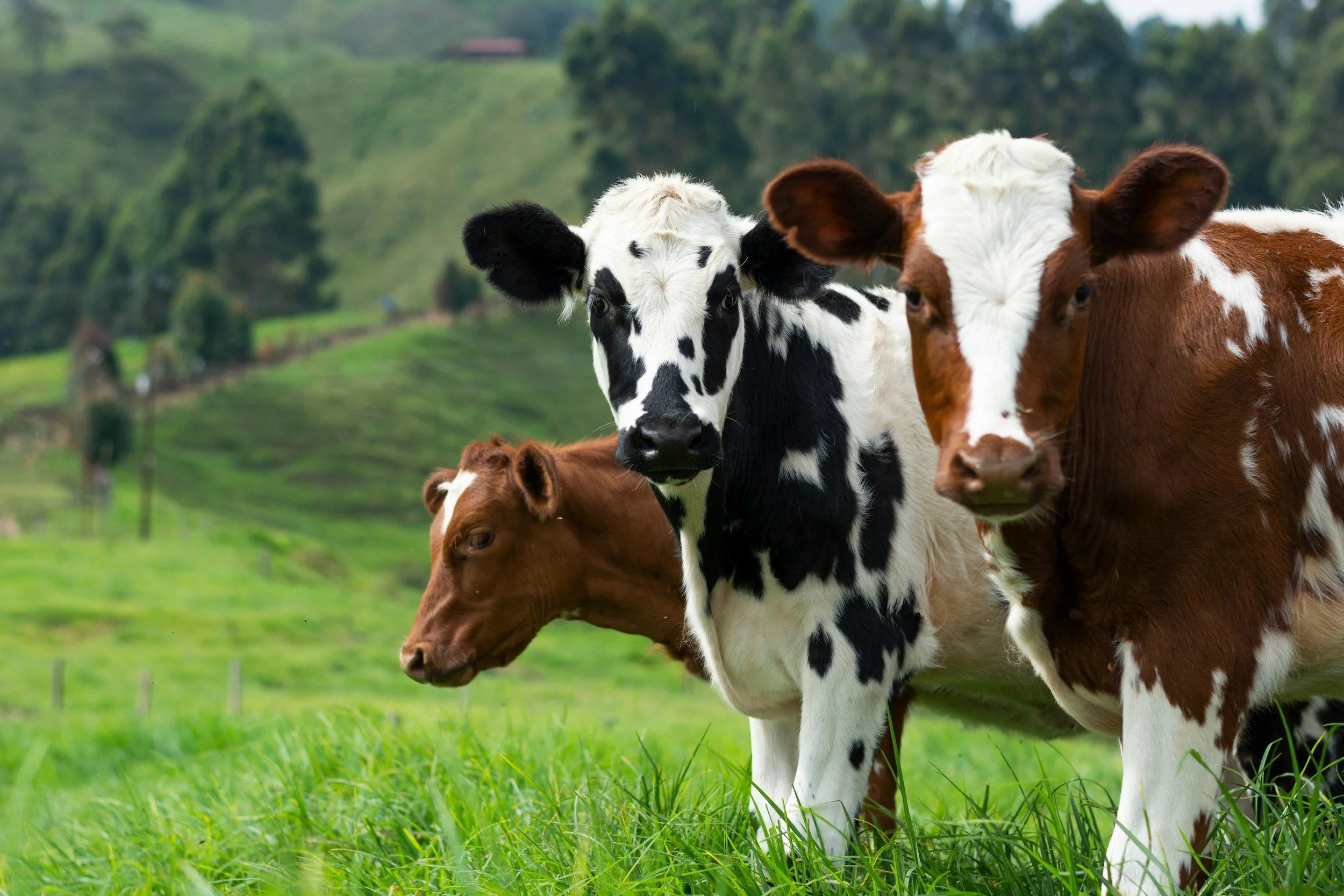
Cows on grass play a similar role to wild herds of bison that evolved with North American grasslands.
Wildlife needs room to move
Healthy wildlife populations need habitat, movement corridors, and genetic diversity. Historically, animals could move across much larger, more connected landscapes in response to drought, flooding, seasonal food supplies, and breeding needs.
Bison offer a dramatic example. An estimated 30–60 million once roamed the Great Plains, within a broader historic range stretching from Mexico to southern New England. That freedom of movement helped large herds adapt to changing conditions. Birds, turtles, frogs, small mammals, and pollinators also depended—and still depend—on connected habitat.
Today, many of those pathways are interrupted by fences, pavement, development, and simplified crop systems. Protected areas remain essential, but isolated islands of habitat cannot do all the work. If we want biodiversity to thrive at scale, farms and ranches must be part of the solution.
Farmers are already rebuilding natural processes
The good news is that this is not a theoretical idea. Farmers and ranchers are already integrating natural processes into food production.
The result does not always look like a historic prairie filled with wild bison—and it does not have to. A farmer may use cattle or sheep to replicate some of the effects of grazing herds. Chickens may move through pasture in a managed rotation and provide organic fertilizer and pest control in place of established wild bird populations. A crop farmer may reduce pesticide use, plant cover crops, establish prairie strips, or add habitat for pollinators and beneficial insects.
These are agricultural tools used with ecological intent. They can produce food and income while also creating space for the species we do not harvest: grassland birds, butterflies, bees, frogs, and small mammals.
USDA conservation standards recognize this overlap. Permanent vegetative cover can reduce erosion and nutrient loss, improve soil organic matter and soil structure, and provide habitat for wildlife and pollinators.
This is what makes regenerative agriculture so compelling. It can improve the millions of acres already in production rather than treating conservation as something confined to land outside the farm gate. The Audubon Conservation Ranching program highlights how ranchers and farmers can do both—raise animals and improve habitats for wild critters, particularly focused on grassland birds.
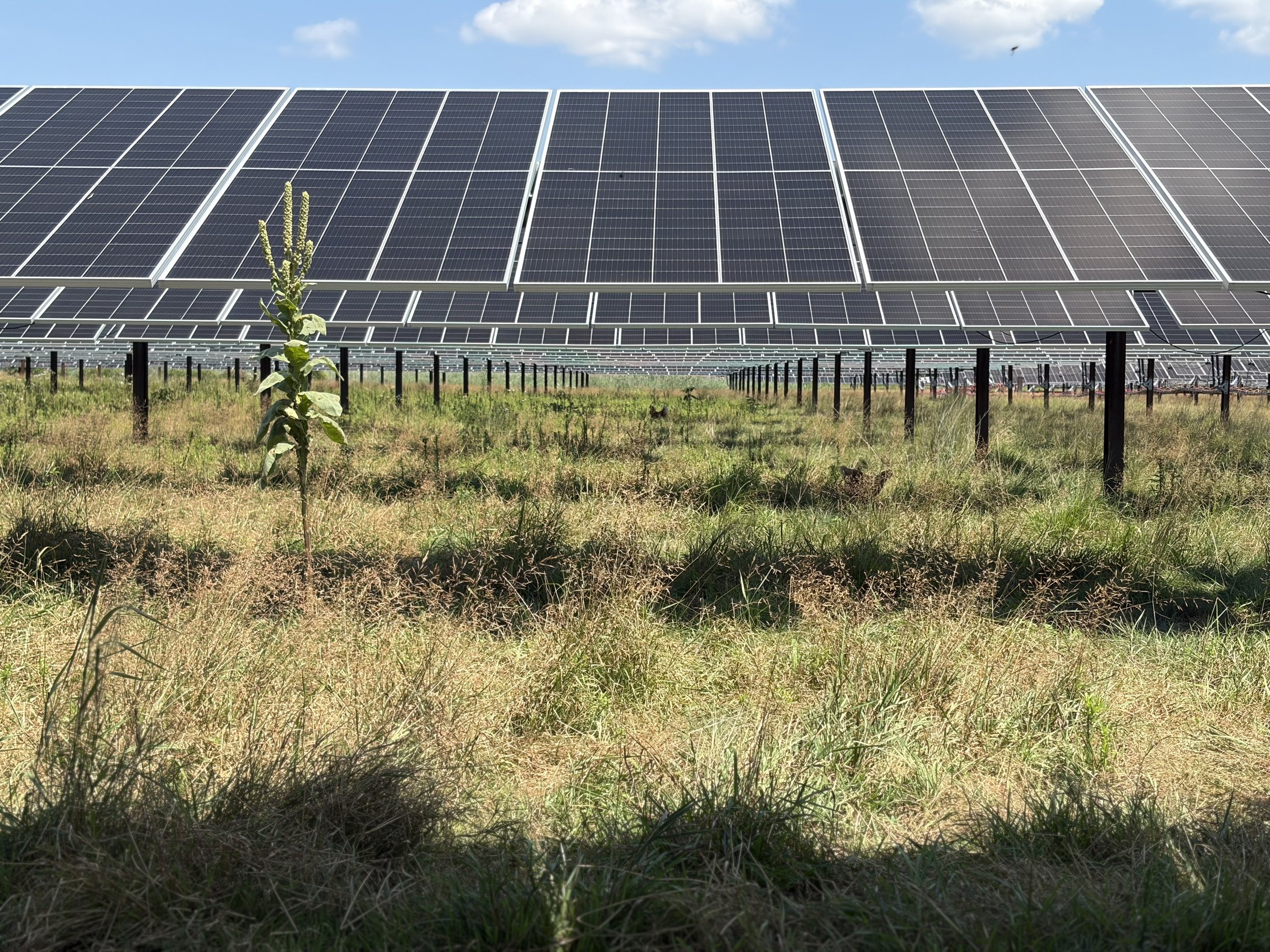
Pastured laying hens forage and graze under solar panels in northwest Indiana.
The special promise of perennial systems
We can take that idea further by increasing the amount of farmland in perennial vegetation.
Annual plants complete their life cycle in one growing season and generally must be replanted each year. Perennials live for multiple years or regenerate naturally. Their long-lived root systems keep living cover in the landscape for more of the year, add organic material to the soil, support soil organisms, and help stabilize soil structure.
Perennial agriculture is not synonymous with taking land out of production. Perennial systems can support grazing cattle and sheep, pasture-raised poultry and pigs, honey production, fruit and nut trees, and other crops. They can also be integrated into annual fields as prairie strips, buffers, or strategically placed blocks on less-productive acres.
The goal is not to eliminate row crops. We need grains, corn, soybeans, and other annual crops that support food systems and supply chains. The opportunity is to restore balance: to identify places where perennial production can generate competitive value while also rebuilding habitat and ecological function.
Imagine what it could mean if a meaningful share of Midwestern farmland shifted into profitable perennial systems—not everywhere and not all at once, but at a scale large enough to reconnect habitat and reshape watersheds. Could that shift reestablish the connectivity for nature and humans to thrive?
Water reveals the full value of perennial agriculture
Across the United States, communities face three recurring water problems: too much water, too little water, and polluted water.
Agriculture is not the source of every water-quality or water supply problem. But nutrients applied to farms can become pollutants when crops do not use them. Excess nitrogen and phosphorus can wash into surface water or leach into groundwater, contributing to algal blooms, oxygen-depleted “dead zones,” and harm to aquatic life. And many of the modifications to agricultural landscapes (e.g., drain tiles) were intended to remove water off agricultural fields as fast as possible and ship it downstream. This leads to a water imbalance—landscapes that used to have significant water holding capacity in the form of wetlands, swamps, and rich organic soil now have significantly less water storage capacity. Fast forward to conditions today where water cannot infiltrate farm fields fast enough during heavy rainstorms, leading to flooding, or other places that are receiving no water at all and have seen massive drops in the underground water table.
Perennial vegetation can help in several ways. Year-round cover reduces the periods when bare soil is vulnerable to erosion. Deep and persistent roots build soil structure and help water enter the ground. Prairie strips and vegetated buffers can slow runoff and capture sediment and nutrients before they reach streams.
This is not a claim that one downstream field can magically purify everything flowing off an upstream farm. The effectiveness of a buffer depends on its placement, width, soils, slope, water flow, and management. Subsurface tile drainage can also bypass surface vegetation, which is why practices such as saturated buffers, controlled drainage, and wetland restoration may be needed alongside perennial cover.
Still, the underlying principle is important: water moving through a landscape with more roots, living cover, and strategically placed vegetation has more opportunities to slow down, soak in, and shed pollutants.
That can mean cleaner streams and ponds, better habitat for fish, frogs, turtles, and aquatic macroinvertebrates, and greater resilience during both heavy rain and dry periods. On the land, the same perennial cover can offer nesting habitat for birds and food and refuge for pollinators. It also can provide high quality forage for grazing animals, nutrient dense food in high demand by consumers, and income for farmers.
One landscape intervention can create many forms of value at once.
A scalable investment in nature
This is the vision behind Land Steward Partners: invest in farmland that can be restored to perennial production, then partner with farmers and ranchers who can manage it profitably, in pursuit of coexistence with nature.
The financial return comes from food and farm products—grass-fed livestock, diverse crops, honey, fruit, nuts, and other perennial enterprises. The return that is harder to monetize comes through the infrastructure value that land provides: cleaner water, improved water storage, reduced runoff, healthier soil, connected habitat, and greater resilience for rural communities.
To make that vision real, we also need to change how farmland is valued. A perennial farm should not be treated as less productive simply because it does not maximize annual row-crop acreage. Its value also lies in the durable income it can generate and the risks and costs it may reduce over time.
Nature restoration does not have to stop where agriculture begins. With the right farmers, management systems, and investment models, agriculture can become one of the most powerful tools we have for restoring nature at scale.
The farm is not the gap between the wild places. It can be what connects them.
References
USDA Economic Research Service. Major Uses of Land in the United States, 2017. Published September 11, 2024.
Supports the U.S. land-use figures: 17% cropland, 29% grassland pasture and rangeland, and 14% special uses—including parks and wildlife areas.National Park Service. “Bison / Buffalo.” Theodore Roosevelt National Park.
Supports the estimate that 30–60 million bison once roamed the Great Plains and describes their broader historical range.USDA Natural Resources Conservation Service. Conservation Practice Standard: Conservation Cover (Code 327). May 2024.
Supports claims about permanent vegetation reducing erosion and nutrient losses, improving soil organic matter and structure, storing carbon, and providing wildlife and pollinator habitat.U.S. Environmental Protection Agency. “Sources and Solutions: Agriculture.” Updated February 26, 2026.
Supports claims about agricultural nitrogen and phosphorus losses, nutrient pollution, perennial cover, field buffers, tile drainage, and conservation drainage practices.U.S. Environmental Protection Agency. “Nutrient Pollution.” Updated June 18, 2026.
Provides additional background on algal blooms, aquatic harm, and other effects of excess nitrogen and phosphorus.U.S. Geological Survey. Variability of Discharge, Nutrients, and Escherichia coli from Tile Drains in a Small Agricultural Stream. July 20, 2026.
Provides recent evidence that tile drainage can carry substantial nitrogen and phosphorus loads into receiving streams.