
A Golf Course Offers a New Model for Investing in Nature
How golf's vast footprint could become part of America's restoration infrastructure
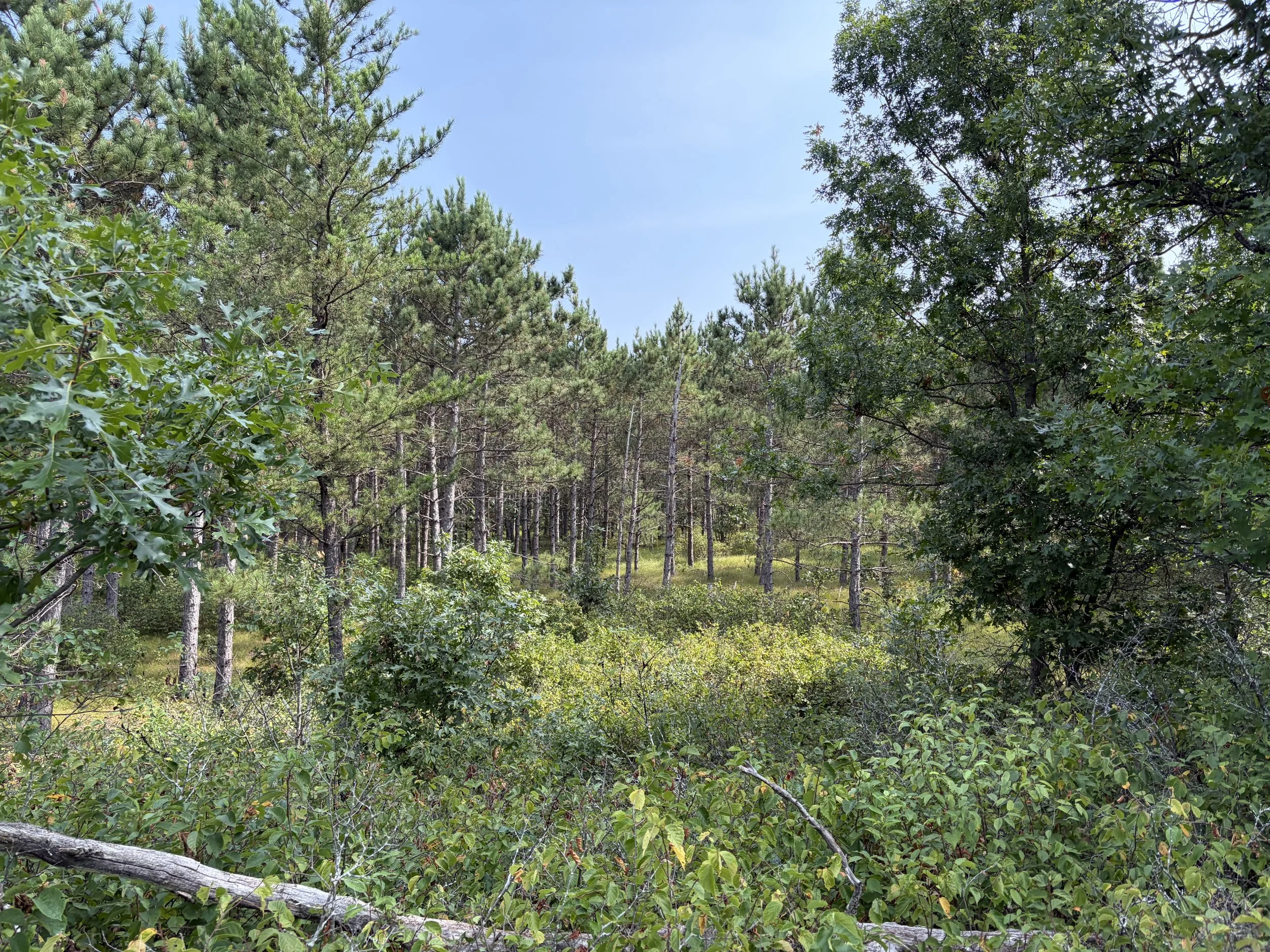
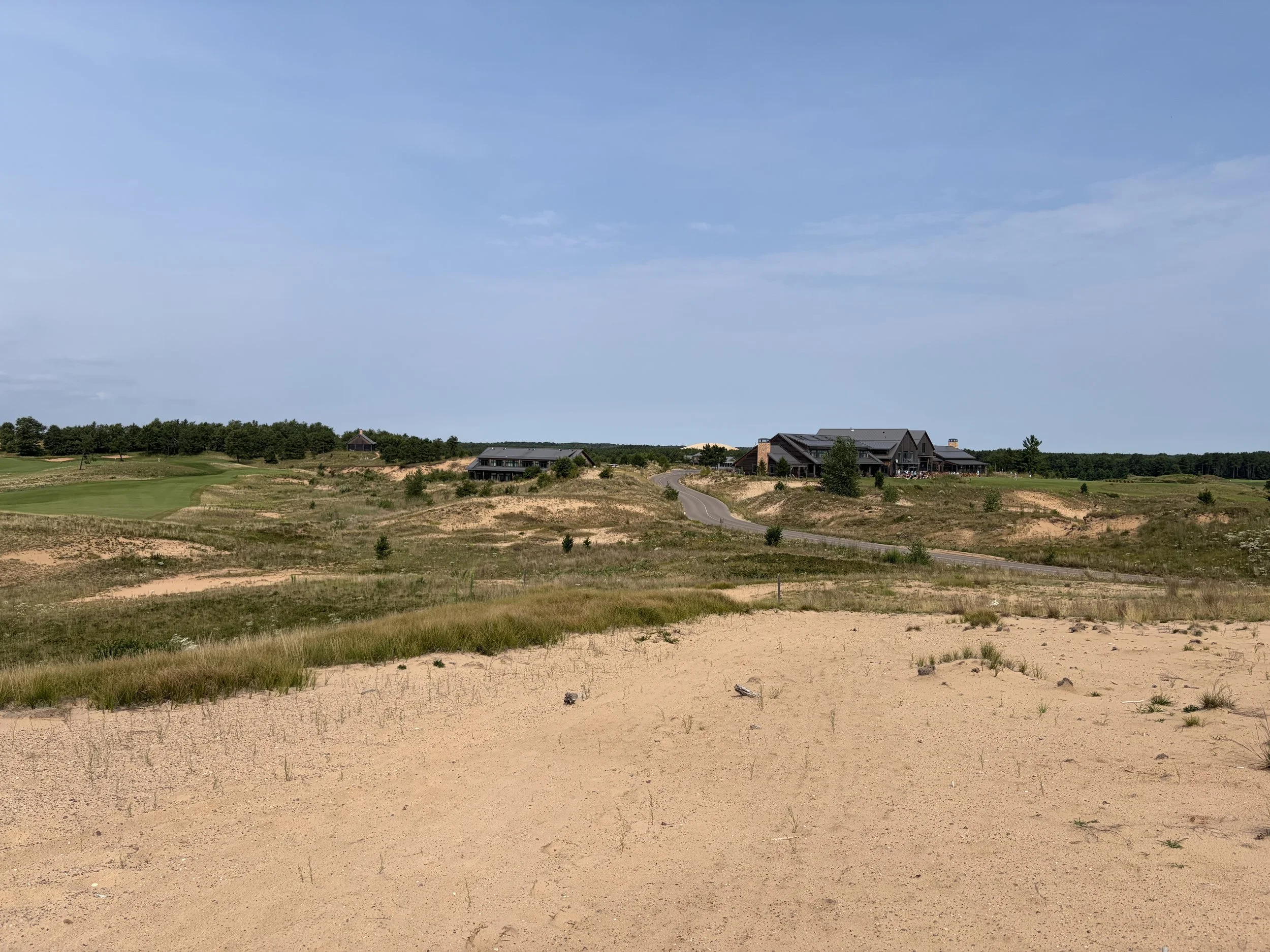
A fat tire bike trail winds throughout the Sand Valley property, taking guests through pine forests, oak savannas and massive sand dunes.
I never thought I would be someone touting the environmental benefits of a golf course.
Golf courses typically have legitimate environmental costs. Maintaining large expanses of manicured turf requires water, fertilizer, pesticides, fuel, and constant mowing. Even the golf industry's own environmental research acknowledges that these inputs create potential environmental risks. In 2020, U.S. golf facilities applied approximately 1.68 million acre-feet of water - about 550 billion gallons - although that represented a 29 percent reduction from 2005. Nearly 1.04 million acres of golf-course land were still being irrigated.
But after spending 24 hours at Sand Valley in Nekoosa, Wisconsin, my perspective has been broadened to see a different possibility.
As we explore new ways to invest in nature and fund ecological restoration, we can’t think only about protecting pristine wilderness. We also need to ask how nature can be woven back into the landscapes we already use - for agriculture, housing, recreation, and business.
People are never going to stop golfing, nor should they. But that’s a powerful reality that can be harnessed for nature, which the Sand Valley course developers seem to have realized. With more mindfully designed courses—golfers can keep their hobby and be a part of restoring nature, too. It’s not just Sand Valley. Other courses around the world are starting to consider care for the environment a critical piece of the future of golf.
“‘We abuse land because we see it as a commodity belonging to us. When we see land as a community to which we belong, we may begin to use it with love and respect.’”
The Scale of the Opportunity
Golf courses occupy far more land than most people realize. In 2021, U.S. golf facilities covered an estimated 2.13 million acres, including approximately 1.32 million acres of maintained turfgrass. A typical 18-hole facility encompassed 146 acres, 95 of which were maintained turf. Only about 23 acres were categorized as natural, native, or unmowed areas. For comparison, 146 acres is equivalent to about 110 football fields.
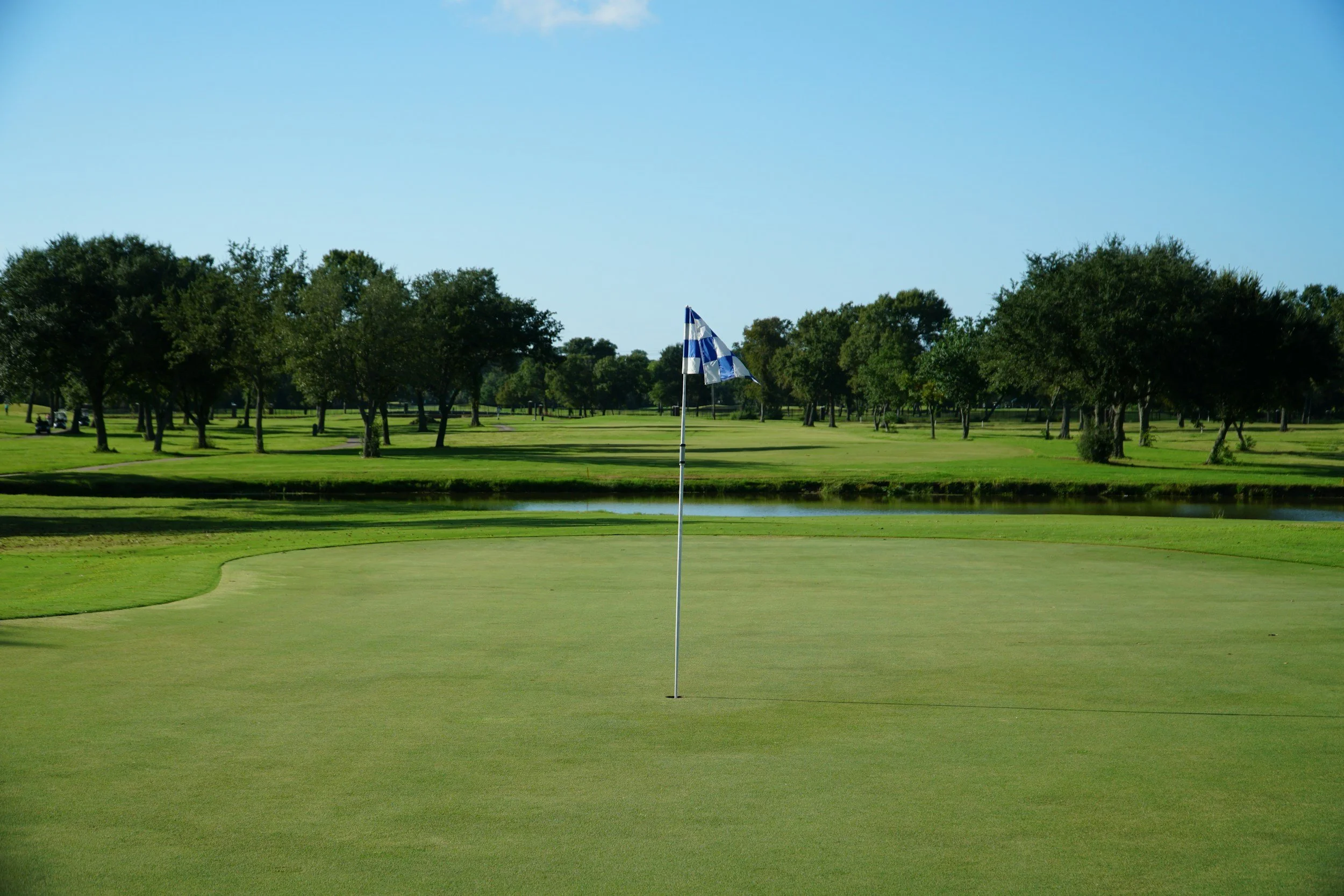
Almost all golf courses have trees and grass—but the species planted, and what has to be done to maintain those—make all the difference.
No one is suggesting that every fairway or putting green be converted into prairie. Golf still requires turf. But even modest changes to the portions of courses that are outside normal play could add up across thousands of facilities.
What if more of those acres were planted with regionally appropriate grasses, wildflowers, shrubs, and trees? What if courses replaced ornamental landscaping and little-used irrigated rough with native habitat? What if ponds, streams, woodlands, and grasslands were managed not merely as visual backdrops, but as connected ecological systems?
Native plants are adapted to local climates and soils and generally require less water, fertilizer, and pesticide use once established. They also provide food and habitat for birds, butterflies, bees, and other wildlife.
Across a national network of more than two million acres, those changes could create valuable patches and corridors of habitat - especially in agricultural, suburban, and urban landscapes where natural areas have become fragmented. Research suggests that golf courses can support biodiversity and ecosystem services, although their ecological value depends heavily on how they are managed and how they connect to the surrounding landscape.
There is a business case, too. According to the USGA, successfully replacing unnecessary irrigated turf with functional, naturalized landscapes can reduce water use, mowing, and applications of fertilizer, insecticide, and fungicide. That can lower ongoing maintenance requirements, although the organization cautions that poorly planned conversions may create new labor and weed-control costs.
In other words, this is not simply about making golf courses look more natural. It is about redesigning them to consume fewer resources, provide more habitat, and potentially cost less to operate.
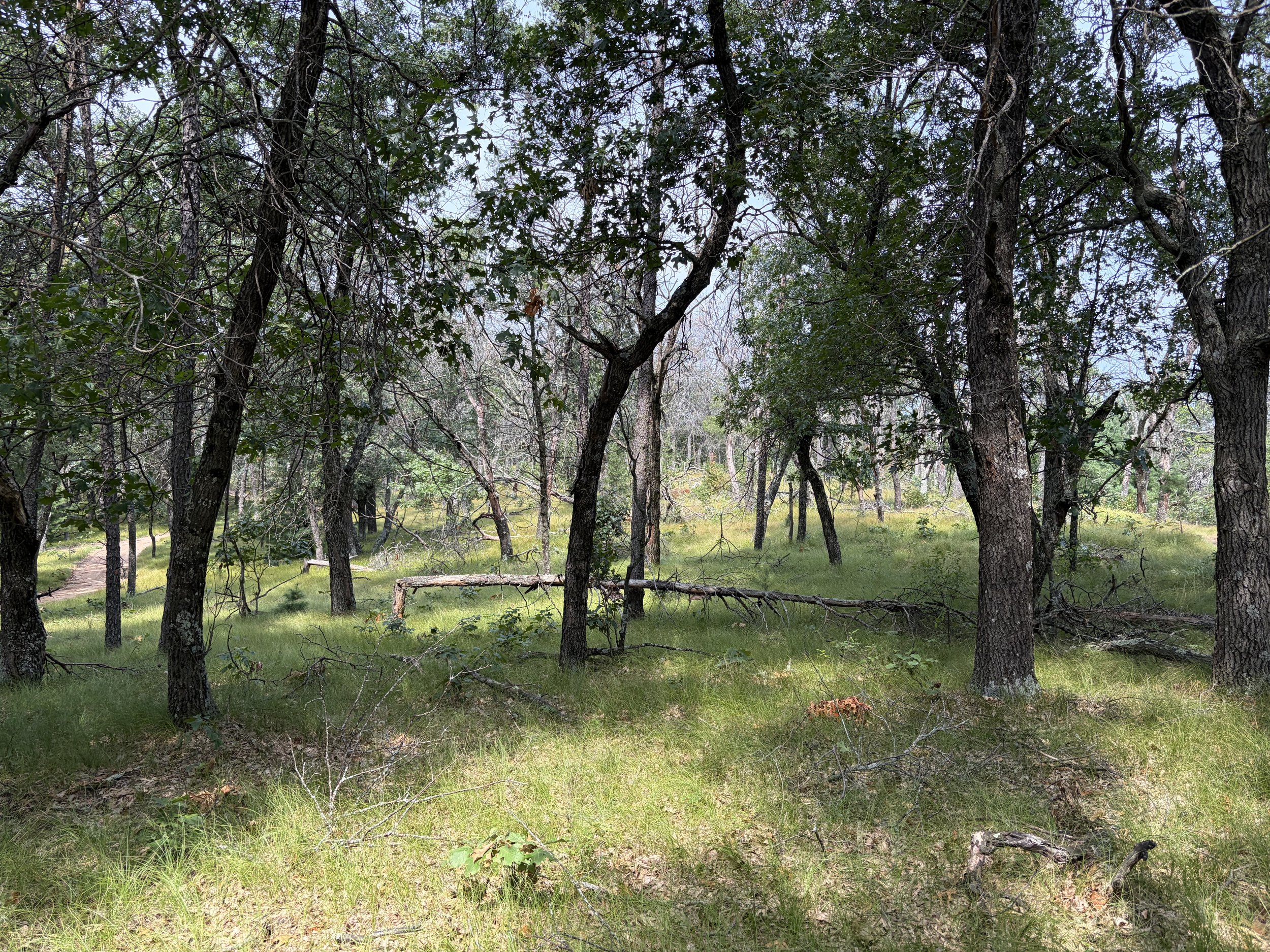
A view along the Ridge Trail.
From Plantation to Savanna
Before Sand Valley became a golf destination, much of the property was a pine plantation. The forest provided some habitat, but it lacked the diversity of the ecosystem it had replaced. It had been designed primarily to produce one thing: timber for harvest.
Today, the property is restoring thousands of acres of sand barrens, black oak savannas and sand prairies, and working in partnership with a local ecology group, Jensen Ecology, to achieve these goals. Check out Jensen Ecology’s website for even more beautiful photos of the native plants and habitat restorations at Sand Valley.
Some of the land is, of course, occupied by golf courses and homes. But nature has been deliberately woven throughout the property. Native plants - including milkweed (key species for Monarch butterflies) - dot the landscape. The courses use drought tolerant fescue turf that require significantly less water than conventional golf-course turf, along with fewer chemical inputs.
The restoration was designed with ecological expertise, including assessments of native plant communities and ongoing work to reestablish them. The property includes at least 7,000 acres of conservation area which will be restored over time to provide habitat for rare and endangered species like the Kirtland’s Warbler and Karner Blue Butterfly. Some of these special species are even making their way into the iconic logos for the courses: the Kirtland Warbler is the logo for the newest course, the Commons.
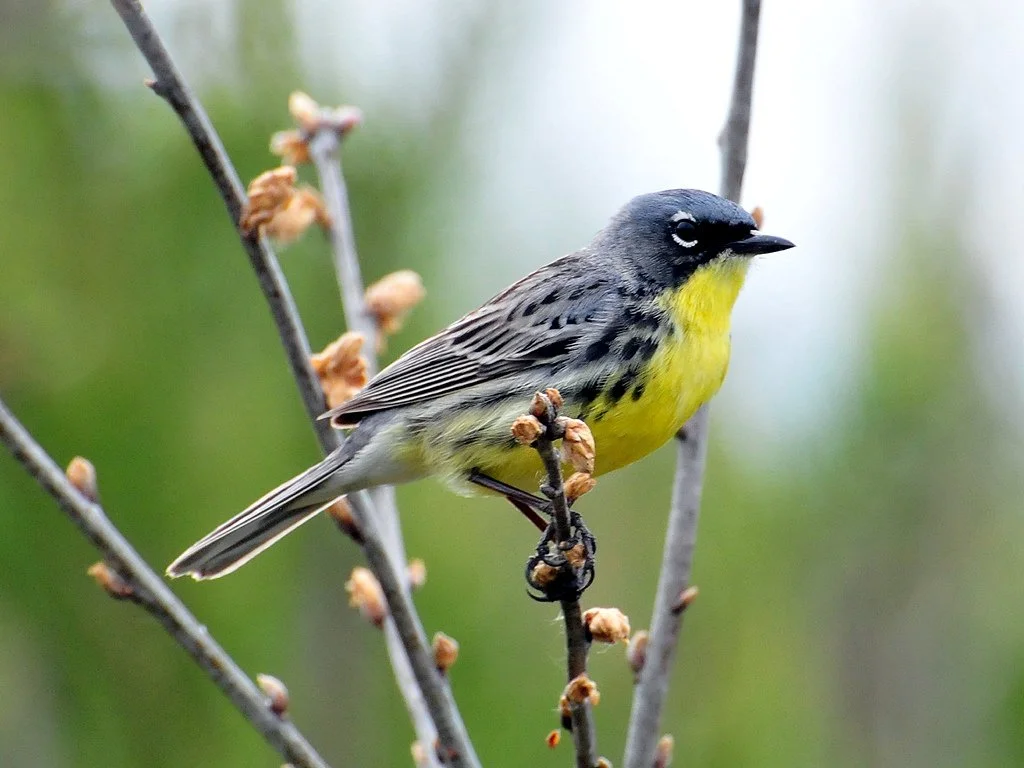
Source: Wikipedia
The results extend well beyond the vegetation. Wolves are present in the wider region - an encouraging sign of a functioning habitat - and the property supports species such as the endangered Karner blue butterfly and the monarch butterfly.
Just as farmland is rarely considered prime wildlife habitat, most people would not imagine a golf course providing meaningful ecological value. Too often, courses have been built by draining wetlands or replacing diverse habitats with monocultures.
Sand Valley demonstrates another possibility: we can restore habitat while creating places for recreation. Just as importantly, golf provides an economic engine for restoration work that might otherwise depend entirely on grants or philanthropy.
Sand Valley shows another version of ecotourism is possible through golf, local farm-to-table food, and beautiful natural cabins built to blend into the landscape.
Golf Is the Entry Point. Nature Is the Beneficiary.
In addition to bringing nature back into the landscape, Sand Valley brings people into nature - people who might never otherwise have known this unique habitat even existed in Wisconsin.
We can care only for what we know, and we can know only what we experience - whether in person, through a book, or on a screen. Every year, thousands of golfers travel from around the world to the Central Sands of Wisconsin. In doing so, they experience the region's landscape and become, perhaps without intending to, invested in its future.
By meeting the average golfer where they are - on a tee box - Sand Valley gives them a reason to value the Wisconsin wilderness. Not to mention, they might eat at Aldo’s Farm & Table and might ask “Who is Aldo?”
Aldo Leopold, the restaurant’s namesake, was a scientist and conservationist that lived in the Central Sands region of Wisconsin. He is often known as the father of the “land ethic” theory, which suggests that the health and success of environments depend on the community of plants, animals, and habitats and how they interact as parts of a whole—not individuals. He and his family worked to restore habitat long the Wisconsin River and this experience inspired him to write A Sand County Almanac.
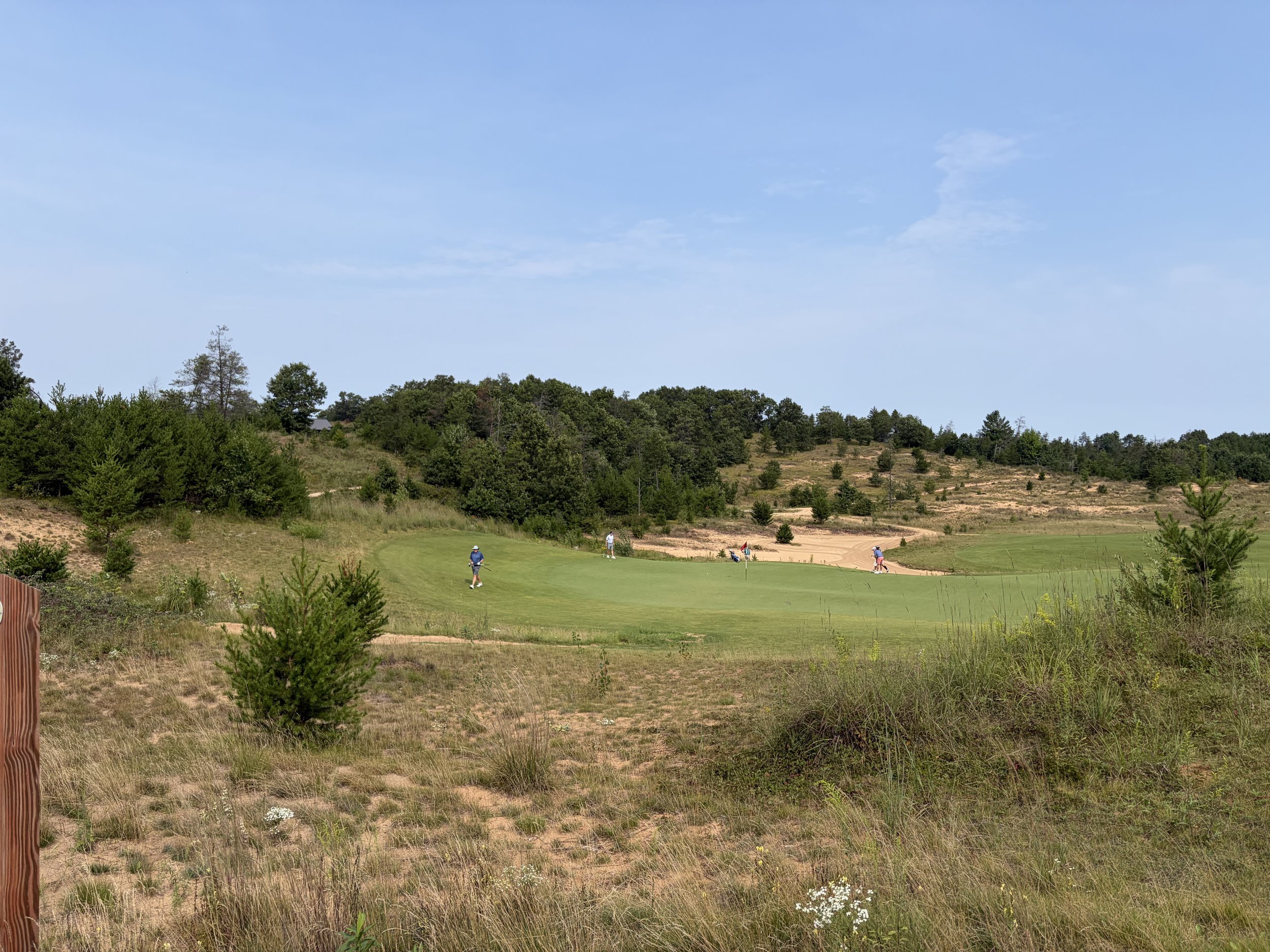
A view of the course along the bike trail.
Will that experience translate into a donation, a family trip back to the region, or a vote for a politician who will protect its natural resources? Who can say? The effect will be different for everyone.
But Sand Valley is unwittingly making the tent bigger. It is creating new stakeholders for nature - people who might never otherwise have considered joining the conservation conversation.
Not everyone will be changed by the place, but many will. Some may pay closer attention when a data center or mine is proposed nearby - and perhaps even make a phone call. Some will return with their children to hike, bike, kayak, or go ice fishing. Some may pick up a copy of Aldo Leopold's A Sand County Almanac and begin thinking differently about conservation in their own communities.
The ripple effects can extend far beyond the property line.
“‘A thing is right when it tends to preserve the integrity, stability, and beauty of the biotic community. It is wrong when it tends otherwise.’”
More than just Golf
Golf is not the only way to experience the natural habitats at Sand Valley. The hiking, birding, and biking trails are open to the public. As an infrequent golfer, I am often out of my element on a golf course. Spending time on the biking and hiking trails that wind throughout the property and the golf course was a nice alternative. We also jumped in one of the manmade lakes on the property for a quick swim after a hike.
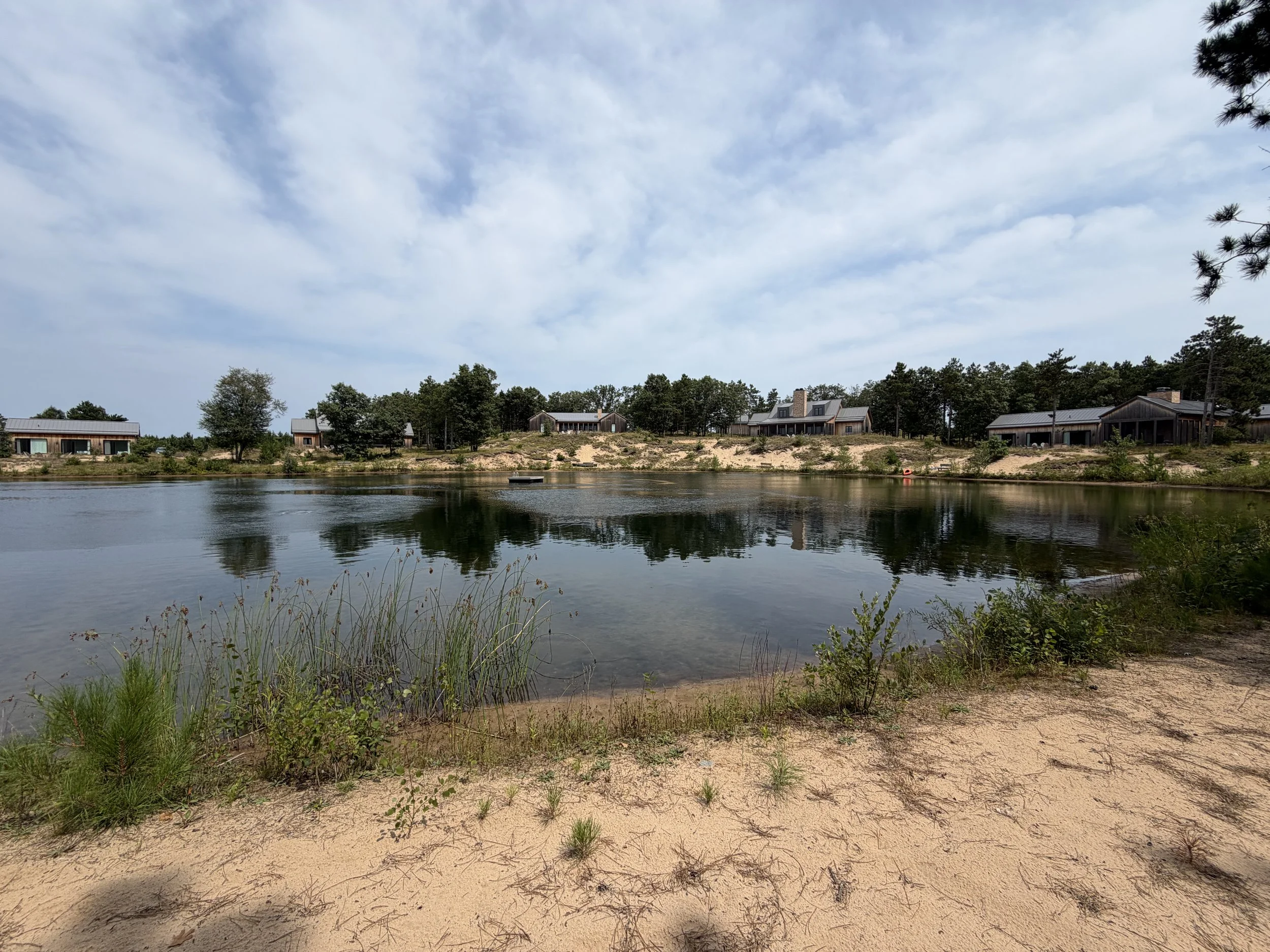
A view of Glacial Lake just before we jumped in for a quick swim after a long hike.
The resort employs local residents throughout the year and brings guests to nearby hotels, rentals, restaurants, and other businesses throughout the summer.
All of these little features matter in a big way. If restoration is going to endure, it must become part of a functioning local economy - not something imposed on a community from the outside. The locals have to become invested in the success of the project too.
Sand Valley is not a perfect model, and no commercial development is without tradeoffs. Sand Valley itself had to obtain multiple incidental take reviews for the state-endangered slender glass lizard for the construction of facilities, roads, and homes. The DNR found that this was allowable because the project would not imperil populations or habitat statewide, and onsite restoration of suitable habitat was included in the plan. But there is an undeniable tension with that reality—the project is financing substantial habitat restoration while also having a true ecological impact from the commercial development aspects.
I still think this project offers a compelling example of what becomes possible when ecological restoration is treated not as an obligation at the margins, but as part of the value a business creates. Not every golf resort or golf course can support 7,000 acres of ecosystem restoration, but every golf course has the potential to provide habitat for native species and reduce water use. In many cases, it may save money in operational management. And in some circumstances, it can fuel new investments in the landscape scale restoration of nature.
Imagine what change is possible when we think more creatively, design more intentionally, and give nature a seat in the boardroom.
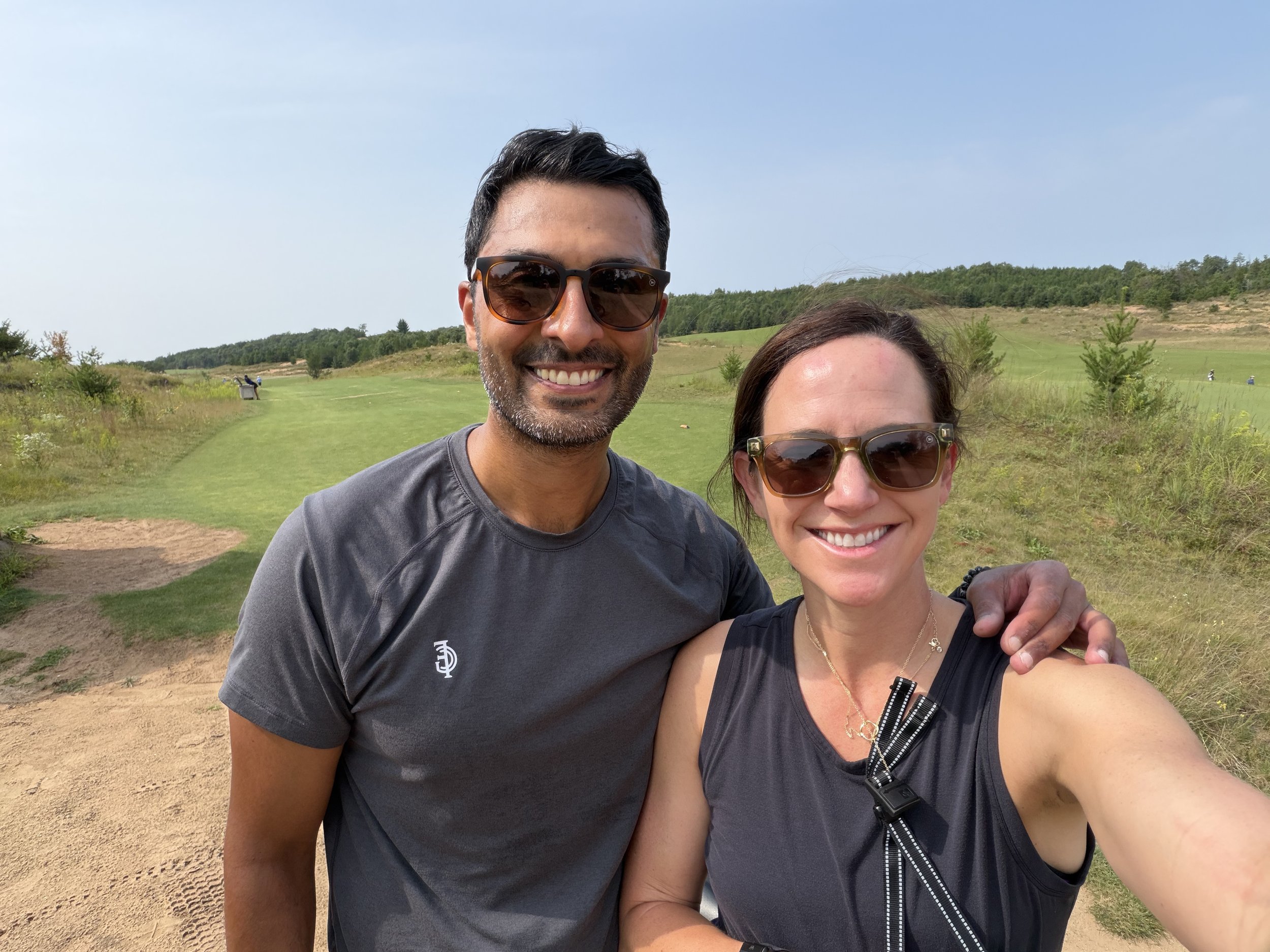
Enjoying a 4-mile bike ride through the sand dunes at Sand Valley.
Sources
Weyandt, J. (2018, October 22). On a mutually beneficial course. Badger Institute. https://www.badgerinstitute.org/diggings/on-a-mutually-beneficial-course/
GCSAA: Water Use and Management Practices on U.S. Golf Courses
GCSAA: Land-Use and Energy Practices on U.S. Golf Facilities
University of Minnesota Extension: Native Plants Support Wildlife and Sustainability
Landscape Ecology: Can a Golf Course Support Biodiversity and Ecosystem Services?
USGA Green Section: The Secrets of a Successful Turf Reduction Program