
Grassland Restoration is Investable.
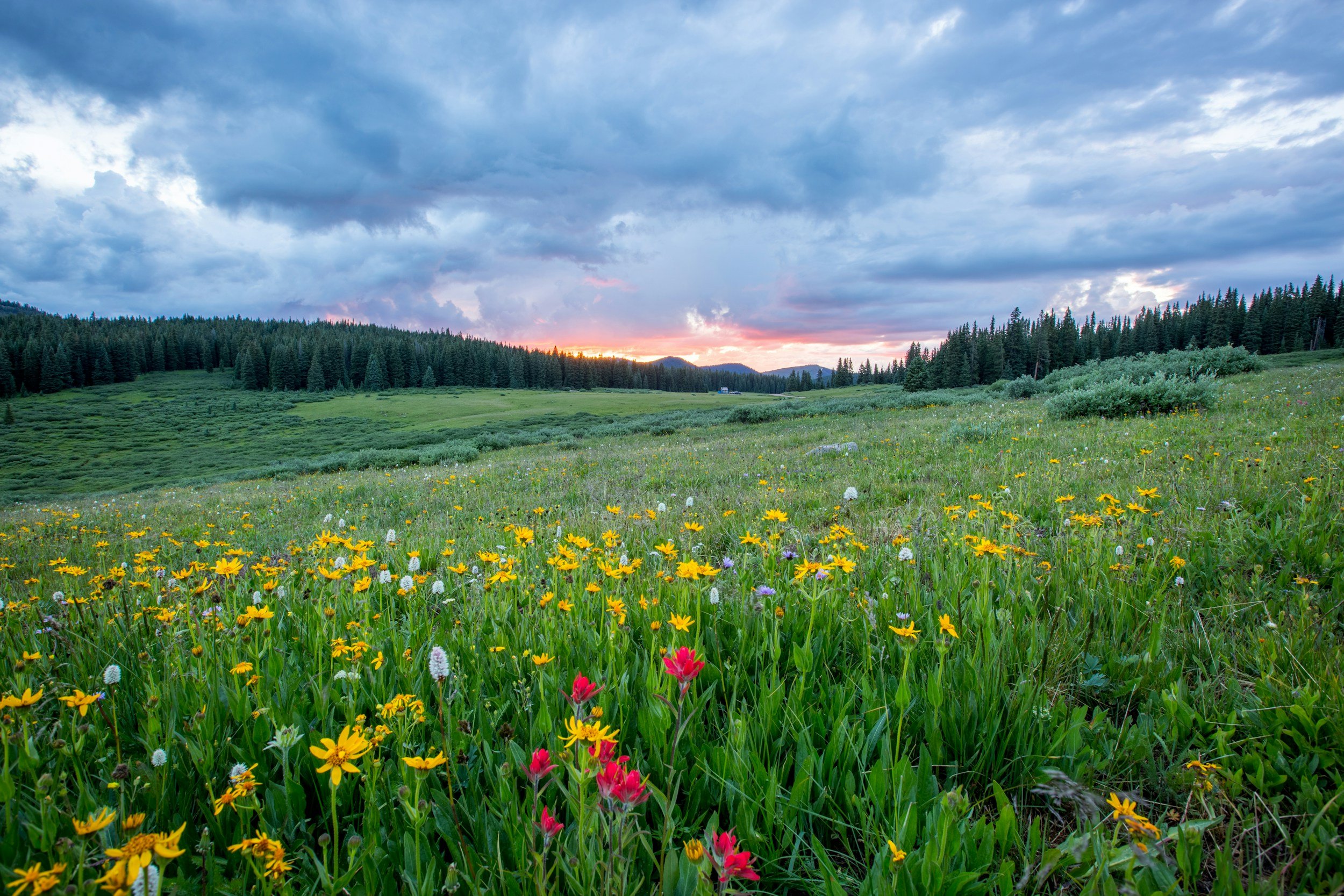
Biodiversity and agricultural production can co-exist on healthy grasslands.
If we want to restore grasslands in North America at meaningful scale, and we should—for all of the ecosystem benefits grasslands provide—we need to answer a basic question: How do we pay for it?
Money already flows into grassland conservation in several ways today. Governments pay farmers to take land out of crop production through the Conservation Reserve Program (CRP). Philanthropies fund conservation. Landowners voluntarily spend money restoring habitat. Ranchers invest in fencing and water infrastructure to improve their pastures. A brand-new legislative proposal, the RANCH Act, proposes that the federal government will pay for the conversion of 20 million acres of marginal cropland to perennial grasses to enable greater production of beef cattle.
All of these approaches matter. But most of these programs are not themselves investable.
By investable, I mean something specific: an investor can provide capital today with a reasonable expectation of receiving that capital back, plus a market-rate financial return appropriate for the risk they are taking. That distinction matters because if grassland restoration depends entirely on philanthropy and public funding, there is an inherent ceiling on how far and how fast it can scale.
But the good news is that grassland conservation and restoration is already investable. We just need to put capital to work with that strategy.
Start With an Asset That Is Already Investable
There is one source of return that is easy to overlook: the land itself.
Suppose an investor buys degraded pasture, partners with a strong rancher or farmer to lease the land, and the parties co-invest in fencing and water to enable adaptive grazing. Changing how grazing lands are managed can simultaneously improve production and ecological function. Over time, the land will likely improve its stocking capacity, build soil organic matter, and eventually be sold as a healthier, more productive ranch.
A very small component of the investment return may come from annual cash yield in rental income. But most of the investment return comes from appreciation in the underlying asset, just like traditional farmland investing.
That is fundamentally different from asking a farmer to voluntarily restore habitat. The land is the asset backing the investment.
While there is absolutely value in ranchers and farmers owning the land they manage, acquiring more land is not always the best use of capital for producers looking to grow. It often makes much more sense for them to rent, especially if they can secure long-term leases. Further, USDA reported in 2026 that 348 million acres of U.S. farmland are rented, worth more than $1.6 trillion, and 79% of those rented acres are owned by non-farming landlords.
The separation of ownership and operation in farmland is already a standard structure. The opportunity is to build alignment between the interests of passive landowners and regenerative farmers and ranchers to prioritize grassland-based systems, rebuild soil health, and provide durable land access for strong land stewards.
At LSP, our mission is to develop investable strategies for restoring nature. Like other environmentally beneficial industries that have successfully scaled (e.g., renewable energy), the deployment of capital has to generate a market rate of return on investment.
Not simply ecosystem ROI. Not emotional ROI. Actual financial ROI.
Why insist on that distinction? Because we believe investability is one of the keys to scale.
Philanthropy and government conservation programs are essential, and they can fund outcomes markets will never adequately value. But there is only so much philanthropic and public capital available.
Investment capital operates on an entirely different scale. If restoring nature can improve the economics of a productive asset, capital markets can become part of the restoration engine rather than something conservationists have to work against.
Two Ways to Invest in Grassland Restoration
There are at least two viable versions of this strategy.
Buy Cropland and Convert It Back to Grass
Farmland investors love Midwestern row crop investments. But this land management strategy often carries a high environmental cost (e.g., pesticides, insecticides, synthetic fertilizer, annual tillage, and groundwater pumping and irrigation) and the farmers themselves aren’t necessarily yielding much profit to show for their efforts. But there is another strategy that can build the resilience of the land and the economic wellbeing of the operating farmers.
Farmland currently used for commodity row crops can be converted to perennial pasture. The grass produces forage, eventually with no inputs. A livestock operator turns that forage into a saleable product: grass-fed meat. The investor does not necessarily need to become the livestock producer—the land can be leased to a regenerative farmer or rancher who already has the expertise and desire to manage animals. As evidenced by the need for the RANCH Act, there are many ranchers looking for more grass for livestock production.
The investor can own the land and fund the transition or leverage incentives like the proposed RANCH Act to cover perennial vegetation establishment. The right farmer or rancher can operate the grassland during the transition and pay rent.
That creates a model where the ecological restoration is embedded inside a productive real asset. This is probably the part where skeptics ask “how does livestock production on pasture equate to conservation benefits?”
When appropriately managed, grazing can maintain productive agricultural use while improving grassland ecosystem functions—including vegetation diversity, water infiltration and soil carbon—relative to degraded or continuously grazed pasture. Diverse perennial grasslands can also provide a broader suite of ecosystem services than intensively managed agricultural systems. Not to mention, a perennial vegetation system can eliminate the need for toxic pesticides and insecticides, as well as reduce excess nutrient runoff into waterways. Perennial systems also store carbon and support greater soil biodiversity rather than disrupting that cycle through annual tillage.
The scale of the opportunity: Hundreds of millions of acres of the historic North American prairie landscape are now used for crop production. Across the Midwest and Great Plains, roughly 200 million acres are planted in major row crops, much of it on landscapes that were once tallgrass, mixed-grass or shortgrass prairie. With a change in management on just 5% of this acreage, we can produce food and provide significantly greater conservation outcomes on 10 million acres of new grassland.
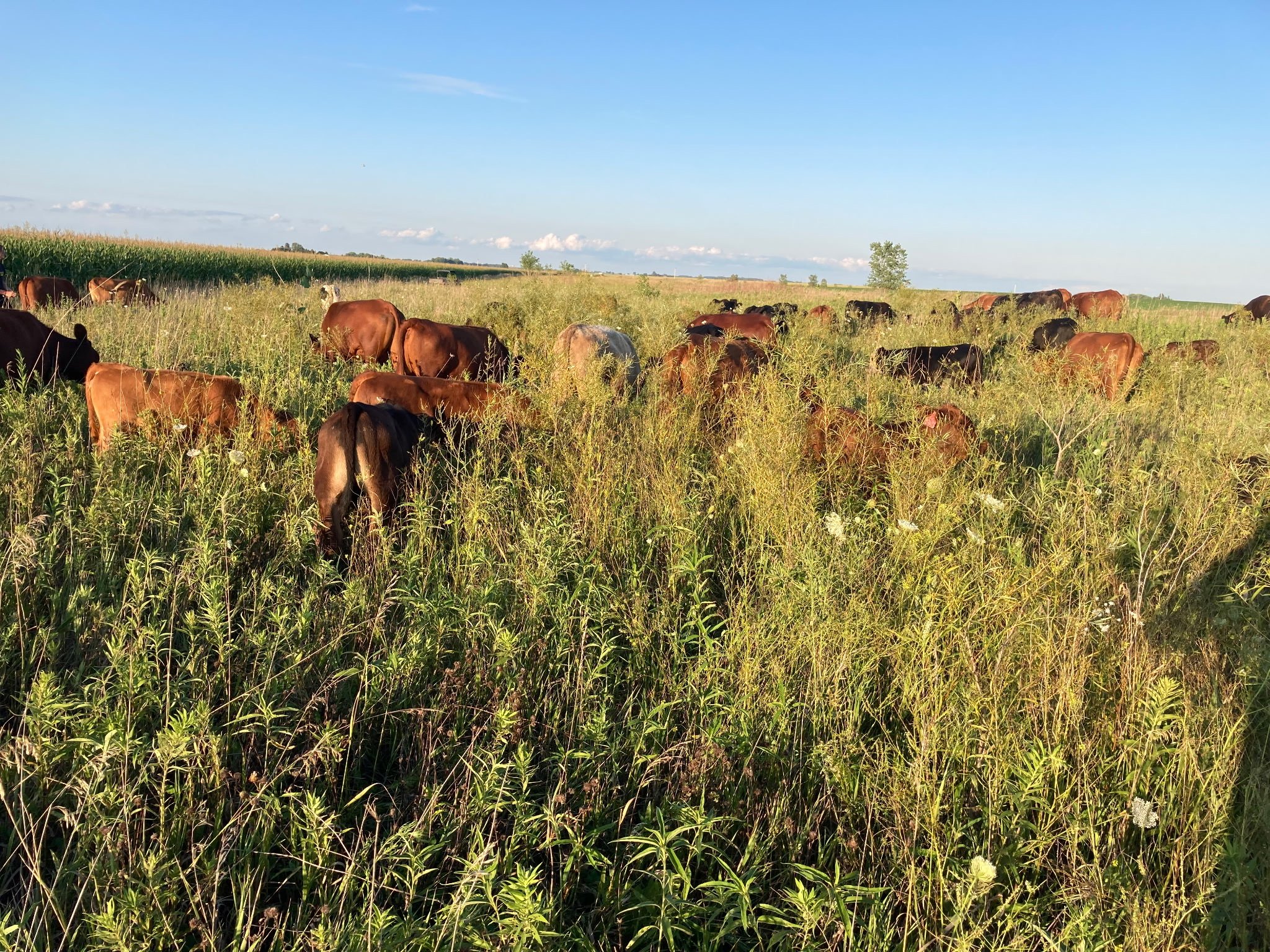
Living Light Farms in Ford County, IL is an example of a perennial grass-based farm restored from annual row crops.
Buy Existing Pasture and Improve the Quality and Diversity
There is also an opportunity that requires no land conversion at all: improving the management of pasture that already exists. Suppose a rancher wants to move from set stock, continuous grazing toward rotational or adaptive grazing. That might require additional fencing, new water infrastructure or virtual fencing technology.
Those investments cost money, but they may also increase forage production, extend grazing periods, improve drought resilience and/or increase stocking capacity.
If spending $100,000 on infrastructure in Year 1 reliably produces $20,000 of additional annual operating income, suddenly we have something that looks much more like an investment.
The farmer can finance the infrastructure with debt and repay it from increased operating income. There are already cost-share and philanthropic programs helping farmers purchase fencing, water infrastructure and virtual fencing technology. But there’s no fundamental reason every financing structure must be a grant. A landowner should be similarly interested in improving stocking capacity because it translates to higher cash rent and/or greater appreciation of the land. That creates alignment between the landowner and the operator that supports grassland restoration as a natural byproduct of better ranch management.
If the economics can be demonstrated consistently, pasture-improvement financing could become an investable restoration strategy and one that can be stacked within a lease.
There isn’t yet a platform where ranchers could take an equity investment to make these improvements, but Fractal Ag’s model offers a potential pathway, adapted for grasslands instead of row crops. However the ranch improvements are financed, the landowner benefits from the increase in value in its real estate investment.
The investment thesis is then that better grassland management can improve forage productivity, drought resilience, stocking capacity, ecosystem health and ultimately the productive and underlying value of the ranch.
The potential scale: 654 million acres of land primarily used for grassland pasture or rangeland for livestock grazing in the US, with over half considered degraded.
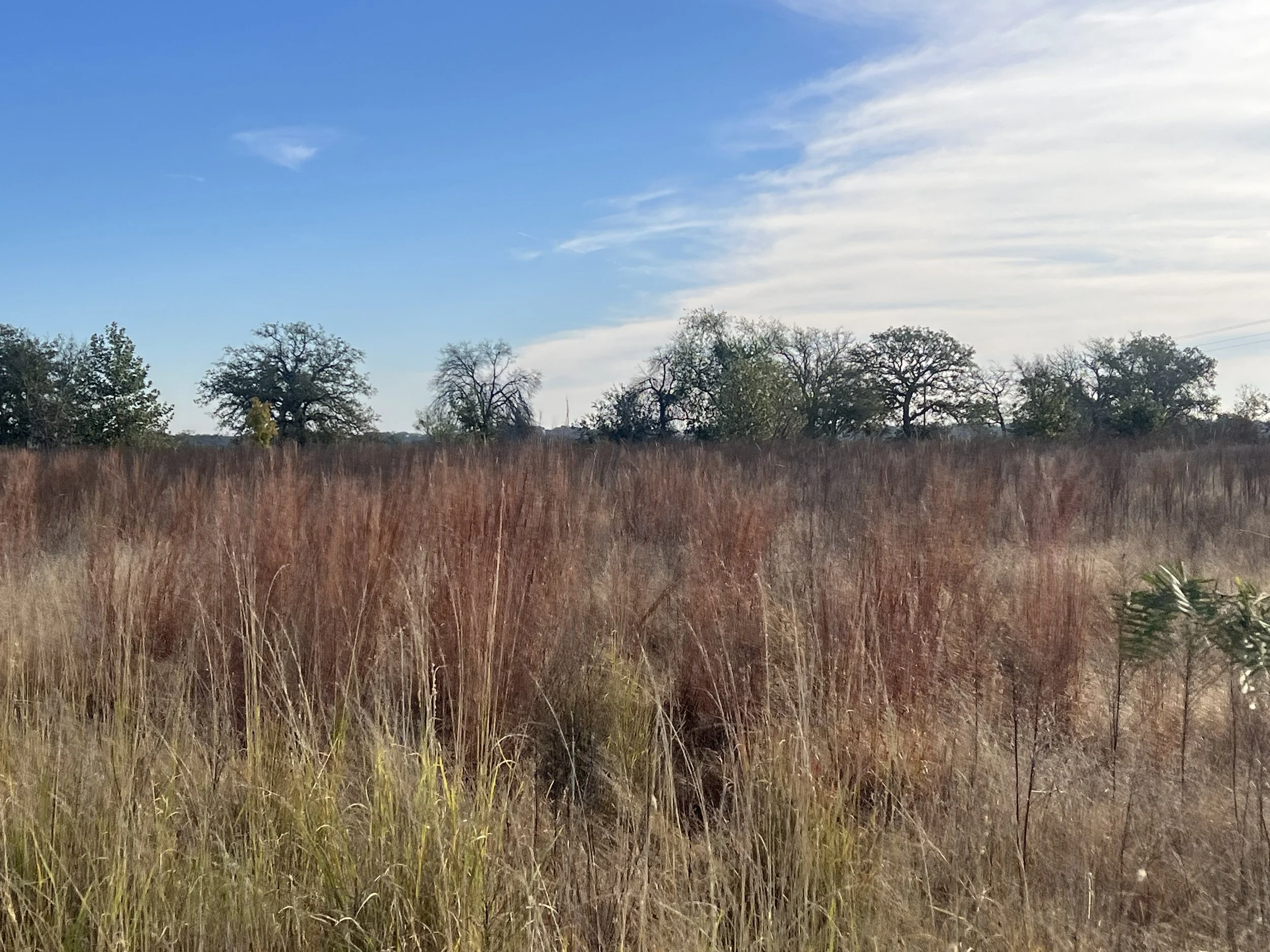
Roam Ranch in Fredricksburg, TX restored degraded pasture using rotational grazing practices and significantly increased bird species diversity as measured by the National Audubon Society.
Government Funding Can Strengthen the Investment
Government conservation programs are not investments themselves. But they can provide catalytic capital that improves the economics of the private investment.
The proposed bipartisan Rebuilding America’s National Cow Herd (RANCH) Act, for example, would create a voluntary USDA program to convert up to 20 million acres of marginal cropland back to perennial grasses and other forage for livestock grazing.
Participating landowners would enter 10- to 15-year contracts and receive annual payments reportedly equal to 75% of the county’s average dryland cash rental rate, along with cost-share assistance to establish perennial vegetation.
Unlike the Conservation Reserve Program, however, the restored acres would be intended for active grazing, allowing the land to generate agricultural income while also providing grassland habitat, reducing erosion and nutrient loss, and improving soil and water resources.
The proposal is particularly interesting because it uses public conservation funding not simply to retire farmland from production, but to help transition marginal cropland into a different, potentially self-sustaining agricultural system.
If passed, the RANCH Act should make the conversion investment look even better for a farmer, landowner or outside investor. The government payment itself does not generate a financial ROI for taxpayers. But it can reduce the amount of private capital required to convert cropland to grass. That helps improve the IRR on the investment for the landowner and the operating partner by reducing upfront costs.
Public conservation funding does not have to compete with private investment. It can help make the private investment work.
Future Investments Can Utilize Stacking
The universe of investable structures for grassland investment may continue to expand as ecosystem-service markets for water, biodiversity or resilience grow.
In addition to stacking land appreciation, cash rent, and improved stocking capacity, new or improved cash flows for biodiversity, water or even carbon could generate higher cash yield.
Not every property will have every revenue stream. And critically, some programs cannot legally or credibly be stacked if they are paying for the same environmental outcome.
But this framework changes how we think about nature restoration.
The restoration itself doesn’t need to generate a standalone market rate return. It becomes an intentional component of the economic strategy to improve and derisk asset management so that the total investment generates an attractive risk-adjusted return.
Carbon
Restored grasslands can potentially increase soil carbon, generating carbon credits or insetting value within agricultural supply chains. There are multiple existing grassland carbon platforms that can be stacked as strategic upside with the proposed land investment with minimal upfront risk. Carbon is not currently generating enough income to power the entire investment alone. But as a secondary revenue stream, carbon income can be material. Particularly in the Midwest and historic Tallgrass Prairie, known for its dark black organic soils, full of carbon. The carbon sequestration potential is significant.
Biodiversity and Habitat Credits
Emerging biodiversity markets could eventually allow companies to pay directly—and voluntarily—for measurable improvements in habitat.
Today, however, voluntary biodiversity-credit markets remain early and relatively illiquid. This is strategic future upside rather than something that can be underwritten today.
A framework like this is conceptually attractive for grasslands because restoration can produce highly visible biodiversity outcomes—birds, pollinators, native plants and other wildlife.
Water
Grasslands also provide water-related ecosystem services. Perennial vegetation can reduce erosion and nutrient runoff, improve infiltration and protect watersheds. Wetlands are often interspersed within grasslands, and can retain higher functionality in a rotational grazed system than a monoculture row crop system. In the right geography, downstream beneficiaries—municipalities, utilities, water districts or corporations—could potentially pay landowners for those services. Buyers in the volumetric water benefit accounting market could participate in water replenishment through these projects today if geographies align.
Early-stage flood resilience bonds or resilience offtake agreements could support these investment models but are only in conceptual or pilot stages.
Nutrient trading and watershed-payment programs already provide versions of this model. The question is whether they can become sufficiently standardized with sufficient buyer demand to support investment at scale.
Hunting and Recreation
Restored grasslands can support hunting leases, ecotourism and other recreational income. On some properties these revenues may be meaningful. On others they will be marginal. But they support this important concept: grassland doesn’t need to have a single revenue stream.
Native Seed and Other Grassland Products
Restored landscapes can potentially produce native seed, hay and other products alongside livestock. These are unlikely to support restoration everywhere, but in the right markets they can add another layer of revenue.
Energy and Infrastructure
Grasslands can also coexist with other land uses. Wind-energy leases are an obvious example. In some situations, solar, transmission or other infrastructure can potentially be designed around grazing and native vegetation.
Agrivoltaics is showing how new grassland establishment can provide ecosystem services and grazing income alongside solar energy, although there are some ecosystem functions that won’t fully be established on most solar sites due to operational limitations.
But this creates an interesting possibility: infrastructure revenue effectively subsidizes the restoration and long-term stewardship of the surrounding landscape.
Insurance and the Value of Resilience
There is another potential financial return from better land management that is particularly interesting: lower insurance costs. Traditional crop insurance largely prices risk based on a farm’s historical yields. That means a farmer who invests in practices that make soil more resilient—cover crops, diverse rotations, reduced tillage and other soil-health practices—may not immediately receive financial credit for reducing the underlying risk of crop failure.
A new pilot in Michigan is attempting to change that. The Resilient Agriculture Landscape Insurance Company (RALIC) is developing an insurance model that incorporates soil-health and management data into the assessment of agricultural risk.
The premise is simple but potentially powerful: if healthier soils make farms more resilient to drought, heavy rainfall and other weather extremes, farmers managing for that resilience should eventually be cheaper to insure. If ecological restoration demonstrably reduces the volatility or downside risk of an agricultural asset, then the economic value of restoration doesn’t have to show up entirely as additional revenue.
It could show up as lower insurance premiums, fewer catastrophic losses, more stable operating income or eventually a lower cost of capital. For grasslands, imagine demonstrating that a ranch with healthier soils, greater plant diversity and better water infiltration maintains forage longer during drought than a degraded neighboring ranch.
That creates another potential pathway:
ecological improvement → greater resilience → lower financial risk → financial return
This market is still extremely early. But conceptually, it may be one of the most important mechanisms to watch because it doesn’t require creating a new environmental commodity or finding a voluntary buyer for an ecosystem service.
It will require proving that healthier land is less risky land.
Grassland Restoration as an Asset-Management Strategy
None of this means that every acre of grassland is suddenly a great investment. The economics still have to work, and the asset still has to be managed.
Land has to be purchased at the right price. Grazing revenue has to support the purchase. Conservation goals have to be integrated into the grazing plan to ensure conservation objectives are met. The right farmer or rancher needs to be identified and engaged as a long-term leaseholder. And any future ecosystem-service revenue should be treated cautiously until those markets mature. But the important point is that we don’t have to invent an entirely new asset class before private capital can participate in grassland restoration.
Farmland and ranchland are already assets. Conservation grazing can become part of how those assets are managed. As more capital is deployed into grassland restoration as an asset-management strategy, conservation can scale beyond philanthropy. And that could dramatically change how much capital flows into American grassland restoration in the very near future.
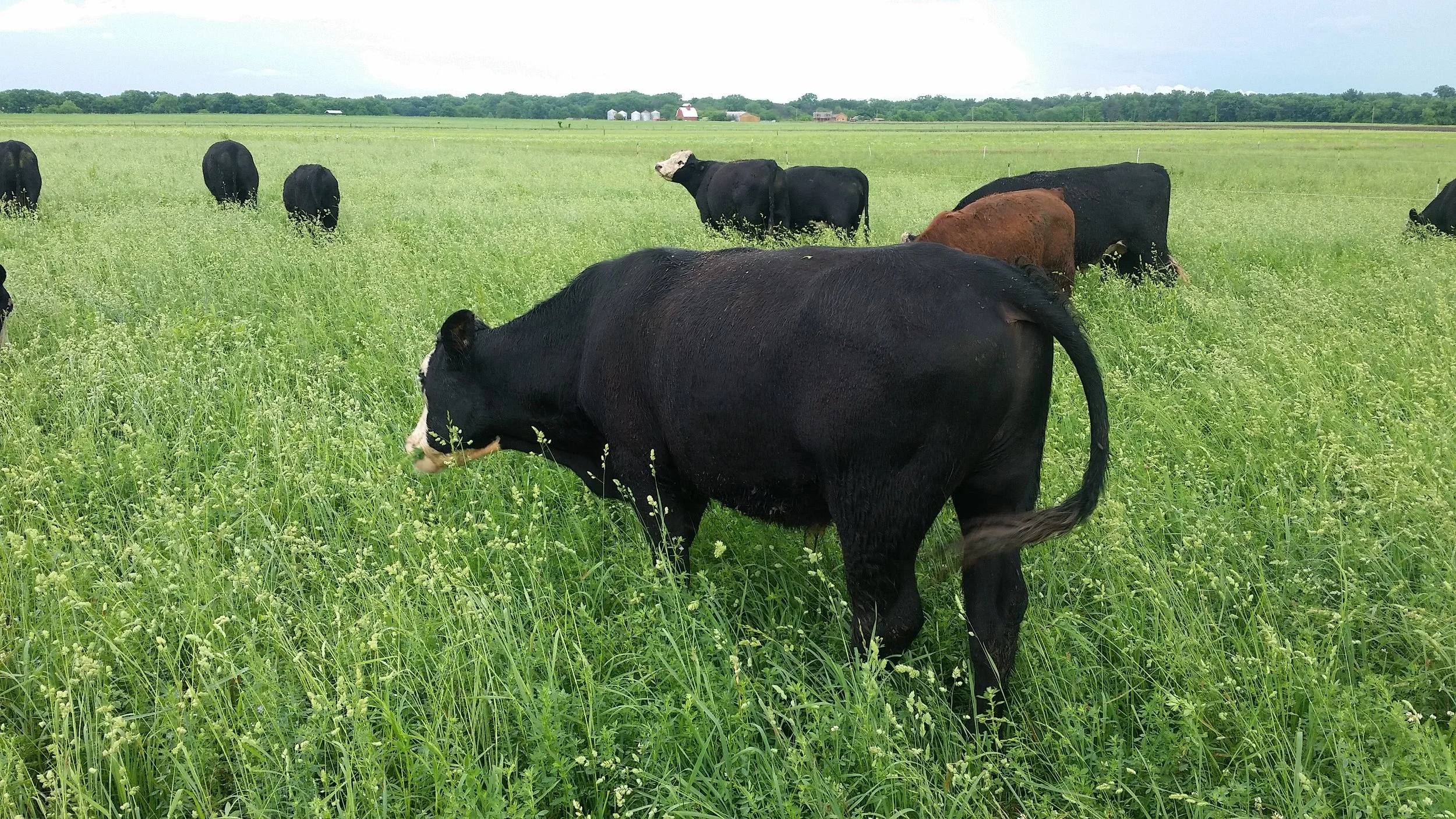
Cows can be used during the transition to perennial vegetation by grazing them through fields of cover crops to build soil organic matter and improve conditions for native plants to reestablish, as shown here at Cow Creek Organics in Illinois.
References
U.S. Department of Agriculture, Farm Service Agency. “Conservation Reserve Program (CRP).” USDA. Describes CRP annual rental payments, cost-share assistance, 10–15 year contract terms, and environmental objectives including erosion reduction, water quality improvement, and wildlife habitat.
https://www.fsa.usda.gov/resources/conservation/conservation-reserve-programU.S. Department of Agriculture, Farm Service Agency. “Grassland CRP.” USDA. Describes the Grassland Conservation Reserve Program, including rental payments and the ability to maintain grazing, forage production, and seed harvest while protecting grassland from conversion.
https://www.fsa.usda.gov/resources/conservation/crp-grasslandsRounds, Mike, and Amy Klobuchar. Rebuilding America’s National Cow Herd (RANCH) Act of 2026, S. 5277, 119th Congress. Introduced August 2026. Proposed legislation establishing a USDA program to transition eligible cropland to perennial forage and grazing land through long-term contracts, rental payments, and establishment assistance.
https://www.govinfo.gov/app/details/BILLS-119s5277isApfelbaum, Steven I., Ry Thompson, Fugui Wang, Samantha Mosier, Richard Teague, and Peter Byck. “Vegetation, Water Infiltration, and Soil Carbon Response to Adaptive Multi-Paddock and Conventional Grazing in Southeastern USA Ranches.” Journal of Environmental Management 308 (2022): 114576.
https://doi.org/10.1016/j.jenvman.2022.114576Fraser, Mariecia D., Hannah E. Vallin, and Benjamin P. Roberts. “Animal Board Invited Review: Grassland-Based Livestock Farming and Biodiversity.” Animal 16, no. 12 (2022): 100671. Review of the relationships among livestock grazing, grassland heterogeneity, biodiversity, ecosystem services, and agricultural productivity.
https://doi.org/10.1016/j.animal.2022.100671Mosier, Samantha, Steven Apfelbaum, Peter Byck, Francisco Calderon, Richard Teague, Ry Thompson, and M. Francesca Cotrufo. “Adaptive Multi-Paddock Grazing Enhances Soil Carbon and Nitrogen Stocks and Stabilization Through Mineral Association in Southeastern U.S. Grazing Lands.” Journal of Environmental Management 288 (2021): 112409.
https://doi.org/10.1016/j.jenvman.2021.112409National Council of Real Estate Investment Fiduciaries (NCREIF). NCREIF Farmland Index. The index tracks investment performance of institutionally owned U.S. farmland. At year-end 2025, the index represented approximately $16.2 billion in market value across 1,035 agricultural properties.
https://www.ncreif.org/data-products/farmland/PGIM Real Estate. 2026 Agriculture and Timber Market Update. 2026. Reports that the NCREIF Farmland Index ended 2025 with $16.2 billion in market value across 1,035 properties and provides additional information on institutional farmland investment performance.
https://www.pgim.com/content/dam/pgim/us/en/pgim-real-estate/active/documents/reports/PGIM-2026-Agriculture-and-Timber-Market-Update.pdfMichigan Department of Agriculture and Rural Development. “MDARD Invests in Next Generation Crop Insurance Pilot for Michigan Farmers.” July 21, 2026. Describes Michigan’s NextGen Crop Insurance pilot, which is testing insurance pricing intended to recognize regenerative practices and improved soil health in agricultural risk assessment.
https://content.govdelivery.com/accounts/MIDARD/bulletins/4214890