
Growing Food & Clean Energy Side-by-Side
Producing food and clean energy and restoring the local environment? Sounds good to be true, right? This project is showing that it is possible and already underway.
The last six months I’ve been working closely with Doral Renewables and several farmers in northwest Indiana to integrate farming and renewable energy production. It’s an exciting mash-up of my passions: renewables, land stewardship, and regenerative food production.
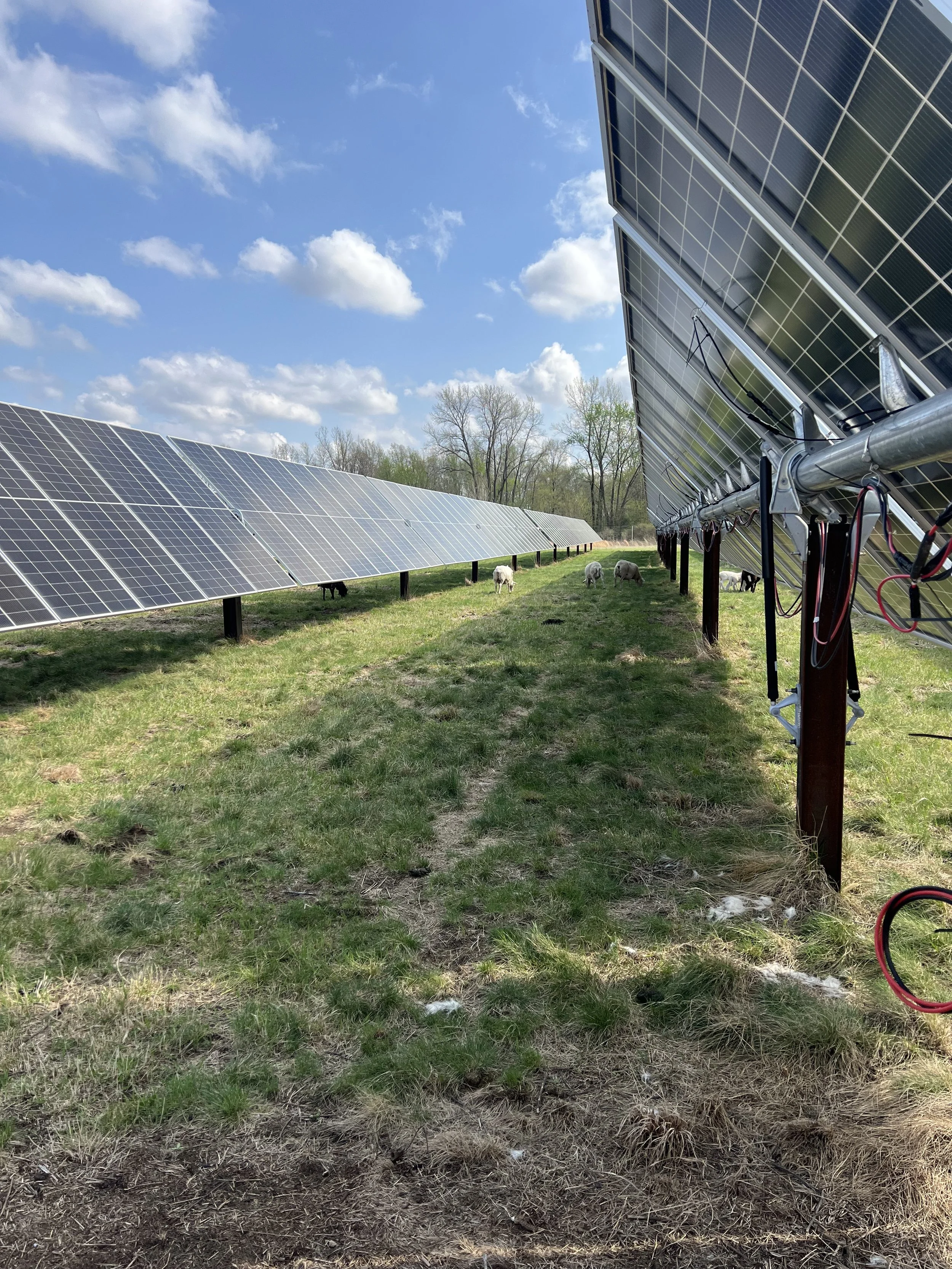
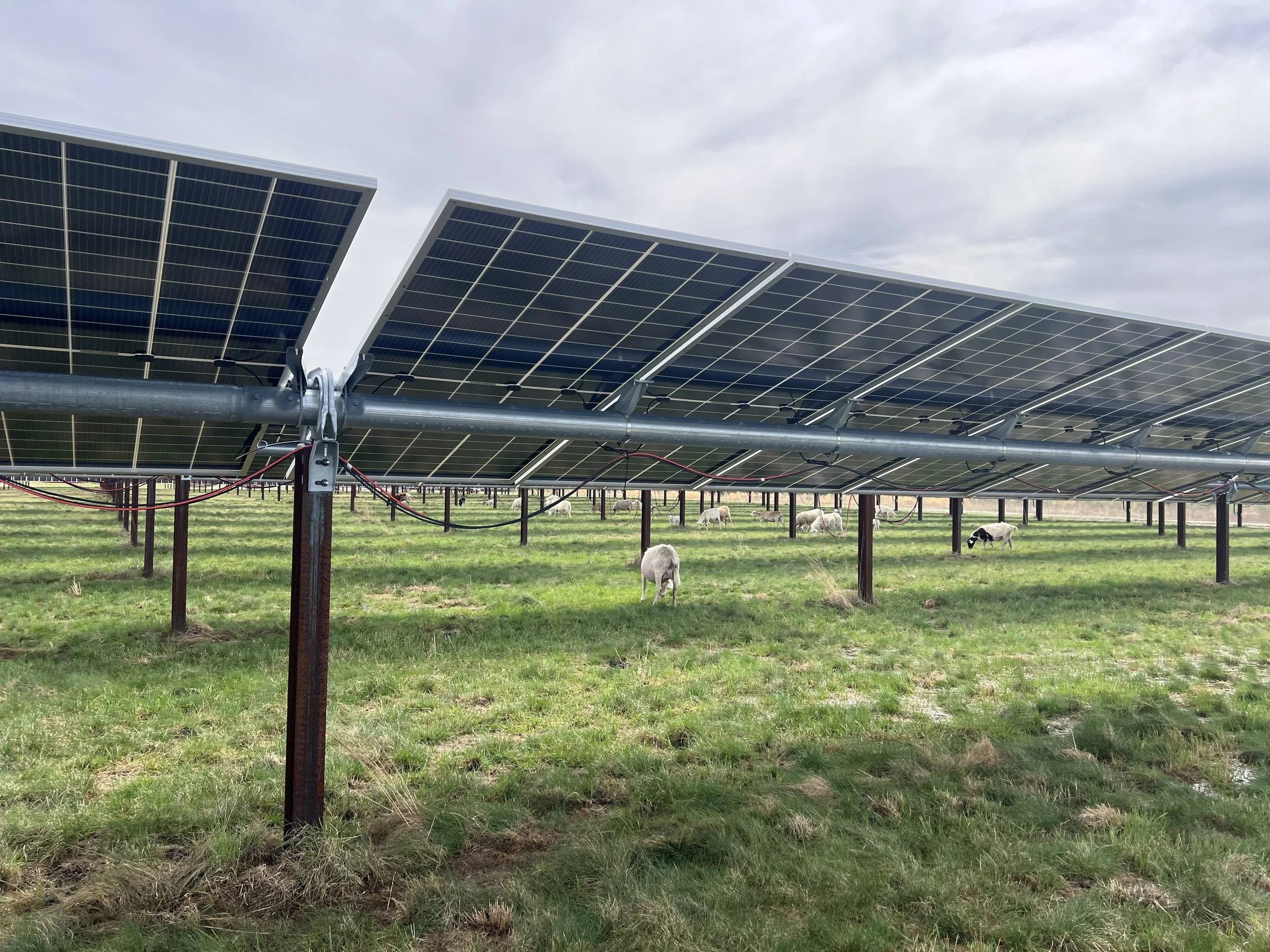
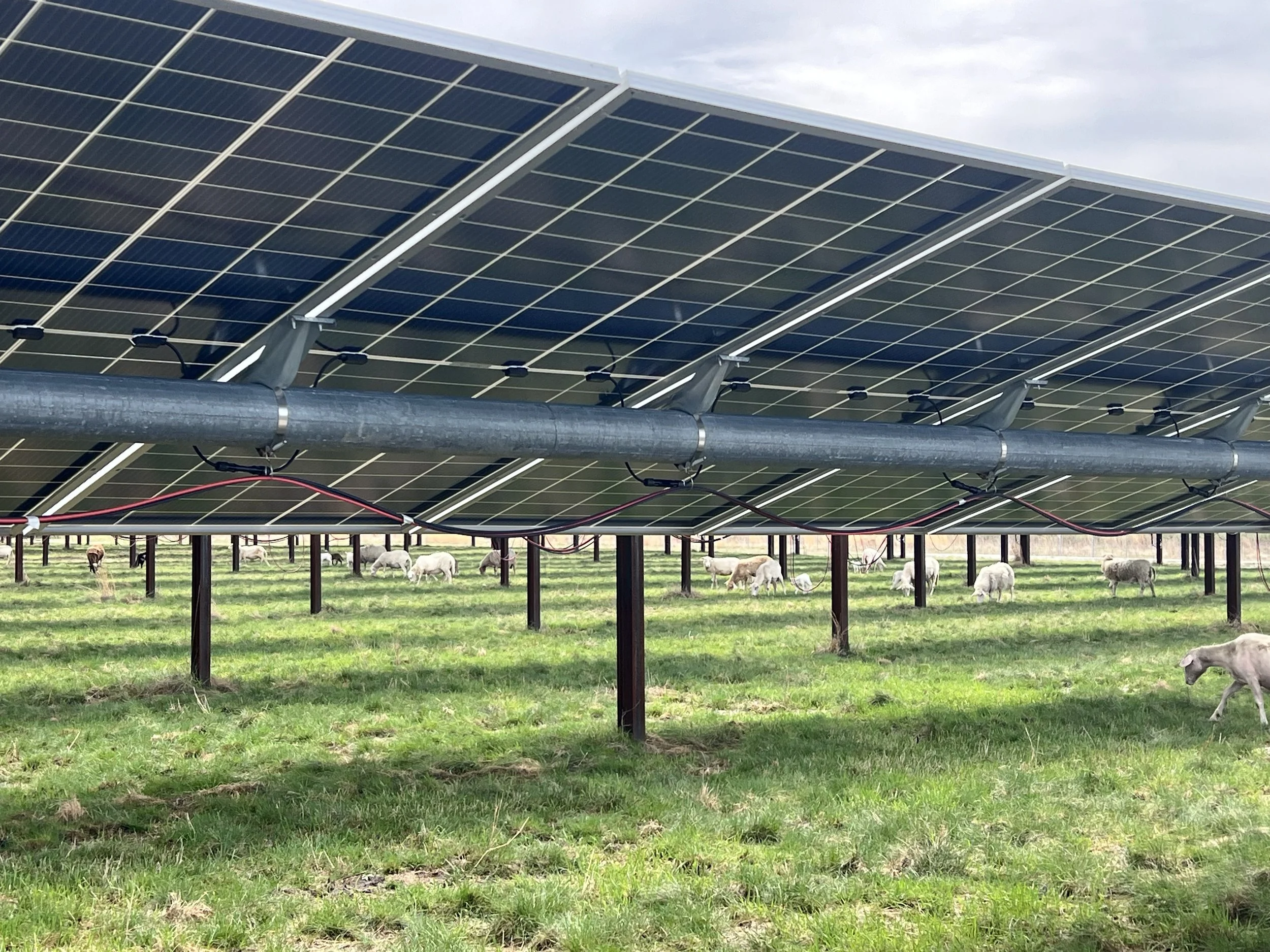
Happy sheep mowing grass under panels.
This last Friday, we co-hosted a perennial crops and agrivoltaics workshop with Doral Renewables, the Rodale Institute, and the Savanna Institute. 35 participants attended, including farmers, landowners, solar project devopers, solar grazers, and aspiring farmers from all over the region. My friend Will Glazik of Cow Creek Organics joined us to present on behalf of Rodale Institute about how organic and regenerative practices can be integrated into any farm, as well as within and outside the perimeter of solar projects. A local family-run mint distilling operation also presented about their mint production- Wappel Grain and Herb. We aren’t producing mint on solar projects, yet, but due to it’s relatively low growing stature, it could be a compatible crop for under the panels. Equipment would need to be customized and made smaller to ensure it is economically viable. A pilot is in the works for next year.
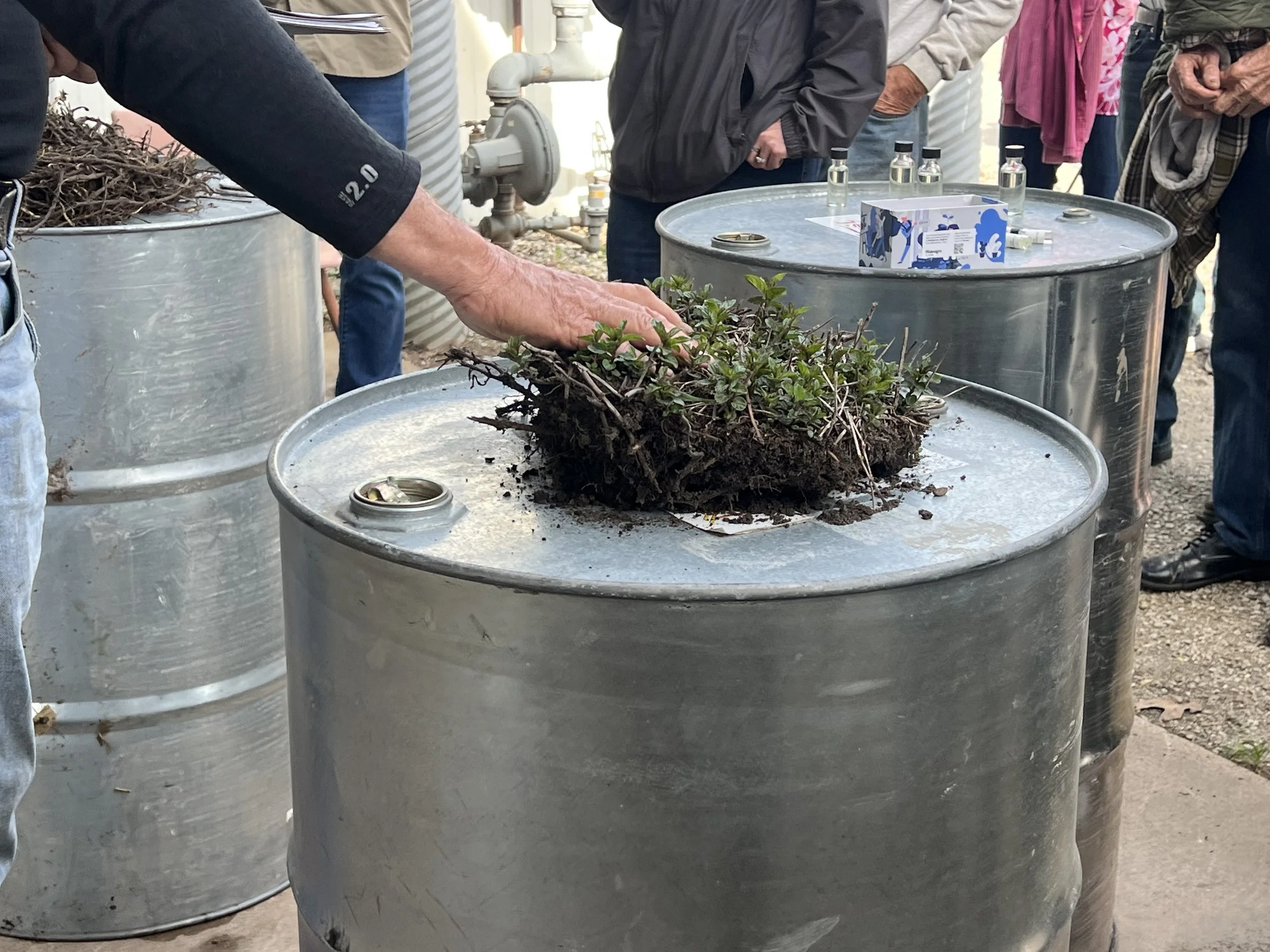
Larry Wappel, Sr. of Wappel Grain and Herb shows us a square foot of mint, cut from his field. When it’s harvest time, the mint hay will be run through a steam distillation process to create mint oil, which will be used for toothpaste, gum, and various other end products. Mint is a perennial crop, so it can produce for 5+ years before needing to be replanted.
Our landscapes are always changing. Lately, data centers, renewable energy, and desertification are challenging rural communities in new ways. Agrivoltaics is one of those innovations that helps rural communities navigate changing land use in a positive way. It highlights the “hidden” benefits of solar projects: the opportunity to diversify crop production, keep families on the farm producing food we eat, and rebuilding soil health through perennial vegetation.
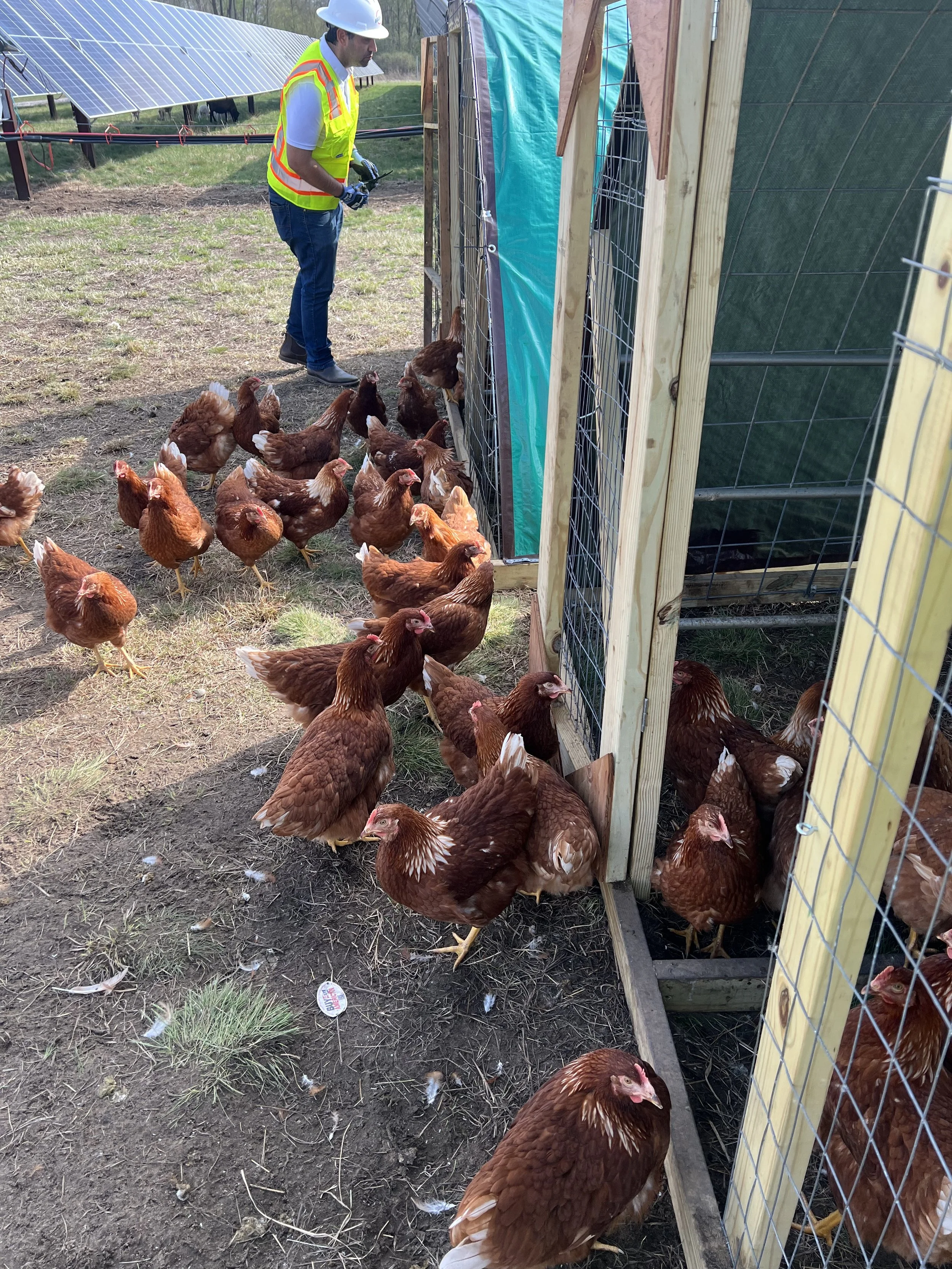
Laying hens range on pasture next to custom-built mobile chicken roosts with laying boxes. The chicken roosts will be moved everyday to ensure that they spread their nitrogen-rich fertilizer on all of the grass within the array, with a period of rest to follow.
In most cases, typical row crops like corn, soy, or wheat are no longer viable with utility-scale solar panels due to their height—challenging solar project developers and farmers to think differently from past generations about what can be grown or produced in the new constraints—often on thousands of acres. With the price of land being so expensive and disconnected from the value of the crops that can be produced on it, it also offers an opportunity to give new and beginning farmers land access on a scale they would otherwise struggle to access.
It gives us the opportunity to ask: what could we grow if we had thousands of acres of grass to work with? And how can we produce food if our primary obligation was to avoid topsoil loss or erosion? Suddenly, the incentives that have existed for so long have changed. And with that change comes opportunity. As one of our farmers has said: “The sky’s the limit.”
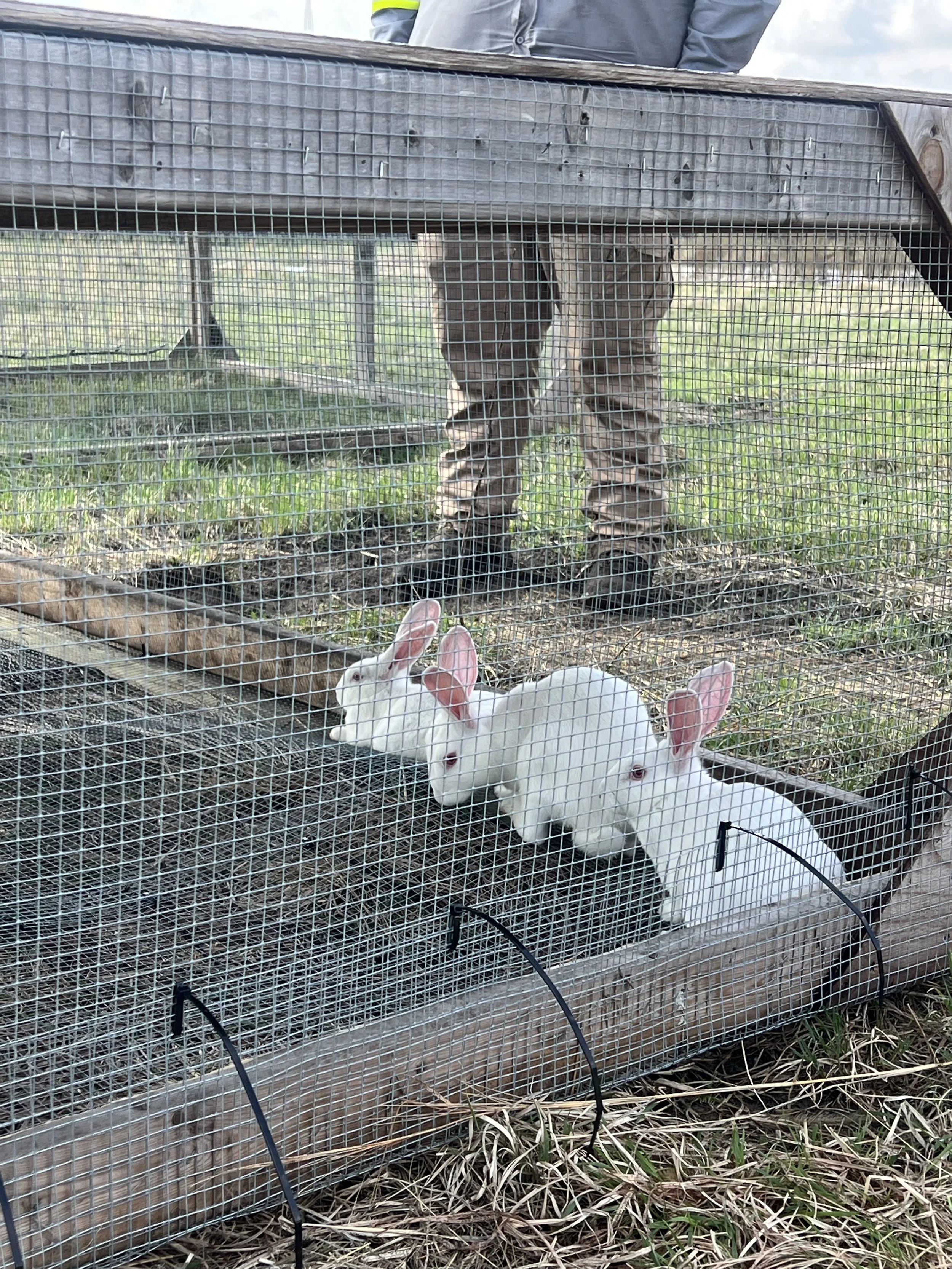
Rabbits hang out in a chicken tractor, protected from predators. The “rabbit tractor” will move everyday as well to give them fresh grass. Rabbits are particularly good at rebuilding patches of bare ground because their manure is packed with essential nutrients—nitrogen (N), phosphorus (P), and potassium (K)—that are crucial for restoring plant life.
There are complex challenges with growing a new crop after decades of growing the same thing. Farmers need to consider equipment, labor, processing, markets and risks that may be completely new to them or regionally limited. However, these projects also provide unique opportunities. For one, solar developers plant and establish new perennial vegetation under panels as part of their permit obligations. They also install a sturdy exterior fence. This makes solar projects well-suited for grass-fed livestock with much lower startup costs for farmers than if farmers were converting a corn and soy field from scratch. The new constraints also create new economic opportunity, like the need for someone to build custom-built, smaller equipment. A new small business in the community custom-fabricated the chicken roosts, rabbit tractors, and mineral/water feeders that can be easily moved by the farm crew each day.
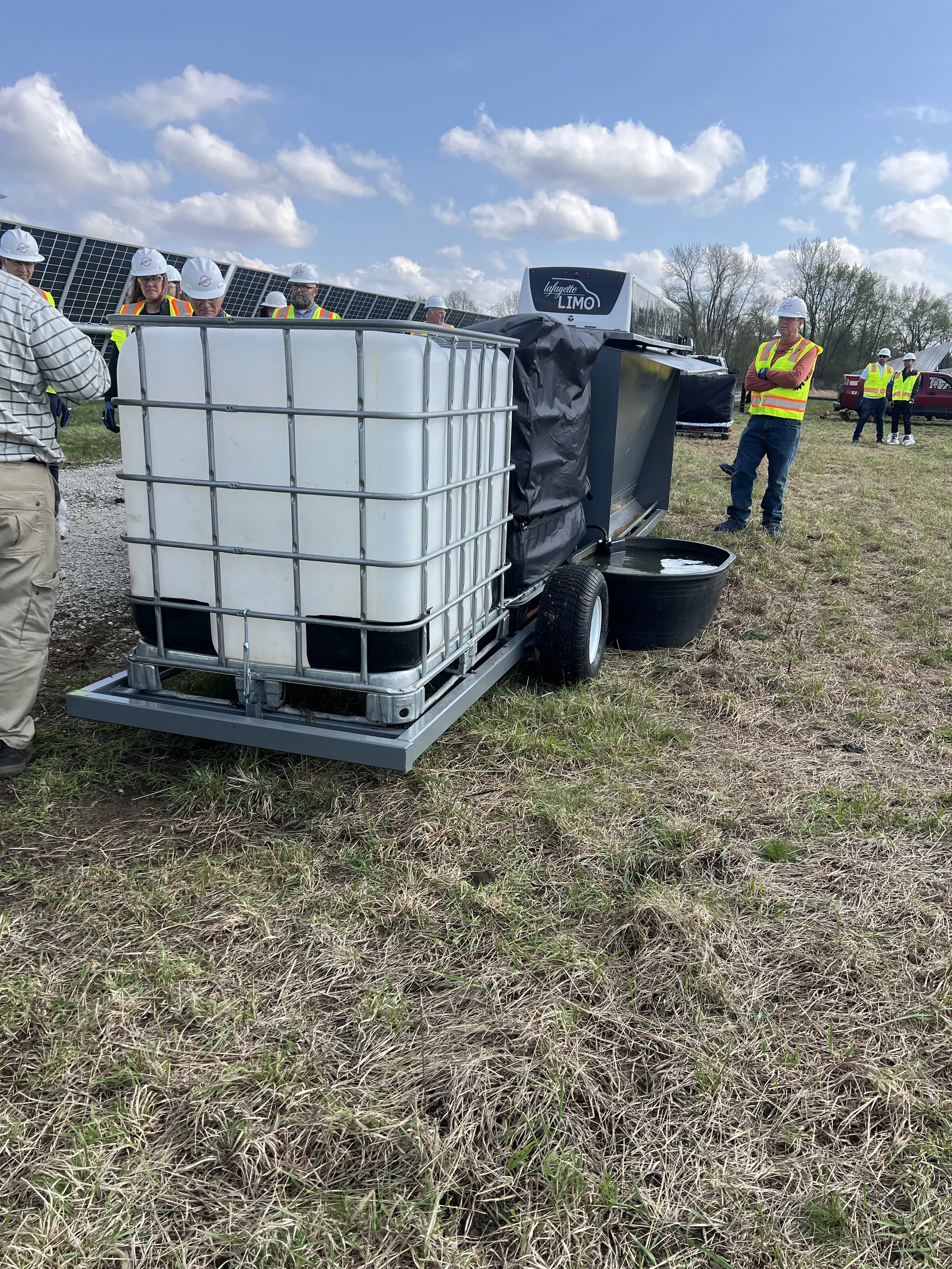
Custom-built water, mineral, and creep feeders were designed by a local farmer and custom-fabricated by a new small business in the community. This system allows the guardian dogs to get their dog food and water, while separate systems provide mineral to the adult sheep and creep feed to the lambs. The mobile nature of this system is critical for solar projects and rotational grazing because all of this equipment must be moved every few days to keep up with the flock.
At Mammoth North Solar, a local farmer (and landowner in the project) has been managing sheep as part of a larger vegetation management strategy. This is an innovative complementary strategy to the traditional methods of managing vegetation through mechanical mowing and herbicide for weed suppression. It’s not completely replacing either of those tools, yet. We’re constantly learning and adapting to improve the vegetation, build the soil organic matter, reduce chemical use and create opportunities for more biodiversity. But it’s a step in the right direction. It also enables opportunities for community engagement, farmer participation in the projects, and more income for rural communities. It’s a credit to every partner in this stakeholder chain that an agrivoltaics project of this scale in underway.
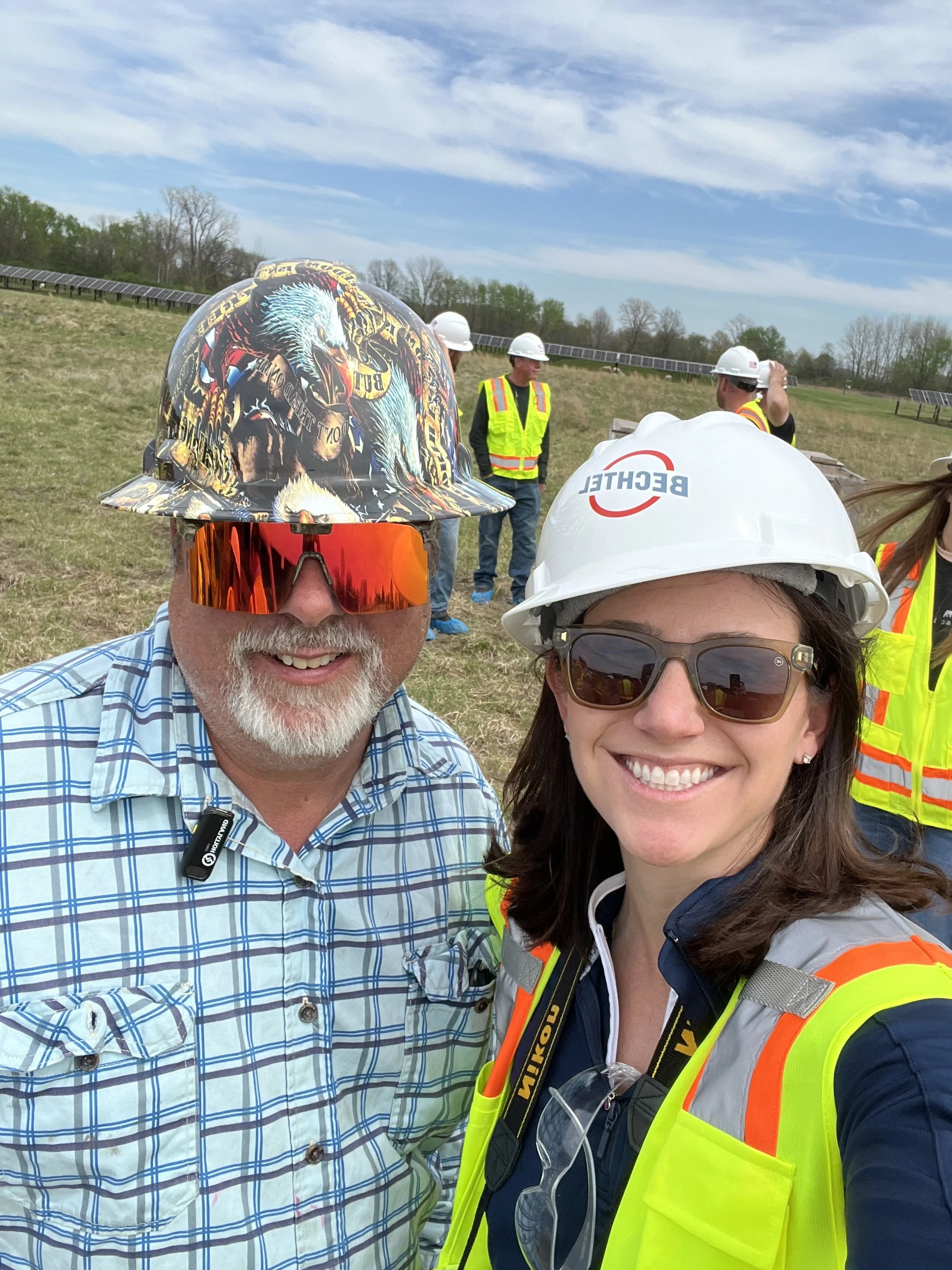
Billy Bope, a local farmer and landowner, is leading the way with agrivoltaics at Mammoth North with a variety of grass-fed livestock enterprises on solar arrays. I’ve been learning so much from him and his family this past six months.
We are still working on this first pilot and time will tell how the vegetation does, how soil health and carbon changes, and how the farm animals adapt. Like most regenerative agriculture efforts, it will be a multi-year process, learning and tweaking along the way.
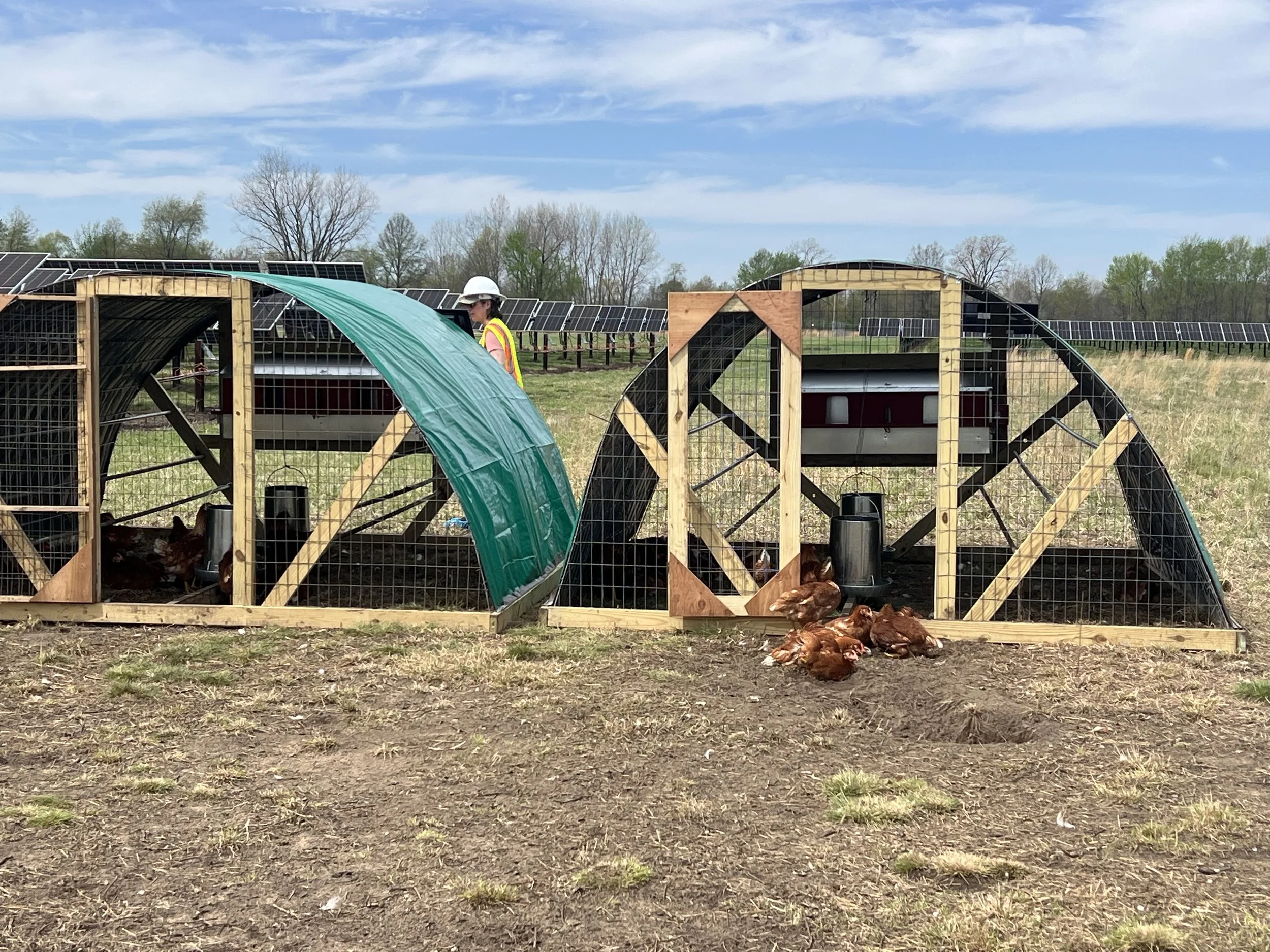
Two mobile, custom-built chicken roosts with laying boxes at Mammoth North.
Land use is a complicated issue, often driven by an economic analysis of what a spreadsheet says is the highest and best use. It’s also incredibly personal and emotional, and often at the root of the opposition to solar projects. Even if people support renewable energy, they may not want it “in my backyard.” Farmers fear losing the ability to farm if they give up their land for energy. I can completely understand that fear of losing the land that you care so much about.
Humans have a deep personal connection to the land. Across any community in the US, urban or suburban or rural, people aspire to own their own home, their own small piece of land—to plant roots, to build their lives, to leave a footprint. Farmers have this same drive—to own their own land, to shape its output and its appearance. The passion for land stewardship and connection to the land should bring us together, not drive us apart.
We have an opportunity to change how millions of acres are used—not just for renewable energy, but also for food production, for community building and education. We have an opportunity to bring kids and families back to farms, producing food, breaking bread with their neighbors, building new fun and exciting businesses. Bringing new opportunity back to rural communities that are rooted in farming. It really makes so much sense that agrivoltaics is the way of the future, not just a niche PR strategy.
It’s clear to me that we can produce renewable energy and grow nutrient-dense food on the same acres, while improving the environment and water around it. The question will be: How do we build the rest of the supply chain to support it? We need local processing, new relationships with wholesalers, and access to regional consumer markets. So much of that infrastructure will be built IN rural communities, not outside of them, in order for the system to thrive. And that is economic opportunity that rural communities desperately need.
How do we scale this agrivoltaics model profitably and in a way that also restores the local ecosystem and powers the grid? We are on a journey to find out.